CRISPR-Edited Cacao Advances to Field Trials for Black Pod Disease Resistance
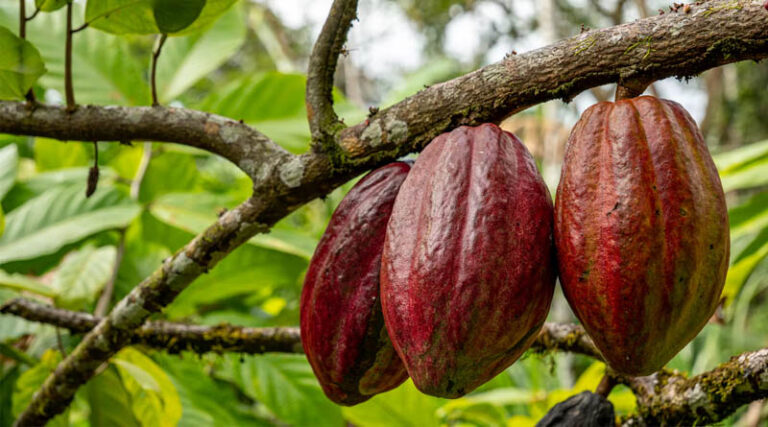
01 November 2026, University Park, US: Pennsylvania State University has moved a CRISPR-edited cacao plant bred to resist black pod disease, one of the biggest threats to the world’s chocolate supply, into field trials run with the US Department of Agriculture in Hawaii and Puerto Rico. The university announced on October 27, 2026, that it had also licensed the technology to AgroNetica, an agricultural biotechnology company focused on cacao, to develop and eventually sell improved varieties to growers.
Black pod disease, caused by species in the Phytophthora family of fungus-like pathogens, destroys roughly 30 percent of the world’s cacao crop every year and can kill up to 10 percent of trees annually in badly affected plantations. Cacao, the raw material for chocolate, is grown mostly by smallholder farmers in West Africa, Southeast Asia and Latin America, and disease losses are a persistent drag on yields and farmer income in all three regions.
The resistant plants come out of Penn State’s Program in the Molecular Biology of Cocoa, an industry-funded research effort that has studied cacao genetics since the 1980s. Mark Guiltinan, the J. Franklin Styer Professor of Horticultural Botany in Penn State’s Department of Plant Sciences, and Siela Maximova, a research professor of plant biotechnology, led the work. Using the CRISPR gene-editing tool, which lets scientists make precise, targeted changes to a specific DNA sequence, the team altered a single gene called TcNPR3, which normally acts as a brake on the plant’s immune system. Switching that brake off partially activates the plant’s natural defenses against disease, without adding any foreign DNA.
“We only changed two bases in the entire genome of the plant,” Guiltinan said, noting that cacao’s genome runs to about 450 million DNA bases in total. The precision of the edit is part of why the resulting plants are not classified as genetically modified organisms under current US and European Union rules for gene-edited crops. After making the edit, the researchers used conventional crossbreeding to remove all the laboratory machinery used to perform it, leaving only the targeted change in the plant’s DNA, with no transgenic material remaining.
Early results and the move to the field
In greenhouse and laboratory testing, the edited plants showed about a 42 percent reduction in disease symptoms compared with unedited cacao when both were exposed to the Phytophthora pathogen. The move into USDA-backed field trials in Hawaii and Puerto Rico is the next step toward confirming that resistance holds up outside controlled conditions, across real growing environments and against the range of Phytophthora strains that cacao farmers actually encounter. Penn State’s release did not give a start date or duration for the trials.
AgroNetica’s commercial license covers more than disease resistance. The company’s development pipeline for cacao, drawing on the same Penn State research program, also includes traits for heat and drought tolerance, lower accumulation of cadmium (a heavy metal that cacao plants absorb from soil and that limits exports to some markets), more compact tree architecture suited to mechanized harvesting, faster time to first harvest, and caffeine-free chocolate varieties.
The underlying scientific study describing the TcNPR3 edit, led by Guiltinan’s group, appeared online in the journal Plant Biotechnology Journal in October 2025, with a print issue following in February 2026. The October 27 announcement from Penn State reflects a later milestone, the move of those plants into USDA field trials and the signing of a commercial licensing agreement, rather than a brand-new scientific discovery.
Why breeders are interested in gene editing
Cacao supply has been under sustained pressure in recent years from disease, aging tree stock and weather extremes, which has helped push cocoa prices higher and squeezed chocolate manufacturers’ margins. Breeding programs that rely only on traditional crossbreeding can take a decade or more to combine disease resistance with good flavor and yield, because cacao trees take years to mature and flower before breeders can even assess the results of a cross. Gene editing tools such as CRISPR let researchers make a single, targeted change without that long wait, which helps explain why a company like AgroNetica would license university research rather than start its own breeding program from scratch.
If the Hawaii and Puerto Rico trials confirm the disease resistance already seen in the lab, the likely next step would be larger, multi-location trials in commercial cacao-growing regions overseas, along with regulatory review in those markets, since rules on gene-edited crops vary widely from country to country. Penn State said the broader AgroNetica pipeline, including the drought-tolerance and low-cadmium traits, is expected to reach growers on a longer timeline than the disease-resistant variety now heading into field trials.
Also Read: New Case IH Puma 185 Tractor to Make Irish Debut at FTMTA 2026
Global Agriculture is an independent international media platform covering agri-business, policy, technology, and sustainability. For editorial collaborations, thought leadership, and strategic communications, write to pr@global-agriculture.com