Biodiversity in Grasslands: How CGIAR Science is Helping Rangelands Sustain Food Systems, Livelihoods, Nature and Resilience
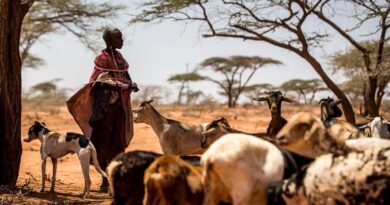
11 June 2026, Africa: Rangelands are often missing from global conversations on biodiversity, climate and food systems. Yet these vast grasslands, savannas, shrublands and drylands cover around 54% of the world’s terrestrial surface, and support millions of pastoralists, ranchers and Indigenous people, sustain wildlife populations, store significant amounts of carbon, and provide ecosystem services that underpin food systems across some of the world’s most climate-vulnerable regions.
Despite their importance, rangelands remain overlooked in policy and investment. The first global Rangelands Atlas found that while rangelands cover more than half of the Earth’s land surface, they appear in only about 10% of national climate plans, compared with forests, which receive far greater attention.
This gap matters because healthy rangelands are far more than grazing lands. They are biodiversity-rich ecosystems that regulate water, support pollinators, protect soils, store carbon and sustain livestock production systems that feed millions of people, and support livelihoods of pastoralists and other livestock value chain actors. Increasingly, CGIAR research is showing that protecting biodiversity in rangelands is not separate from strengthening food systems. The two are deeply interconnected.
More than grazing lands: biodiversity as the foundation of resilient food systems
When biodiversity declines, food systems become more vulnerable.
Through the CGIAR Multifunctional Landscapes Science Program, the Alliance of Bioversity International and CIAT is contributing evidence on how biodiversity and ecosystem services support resilient food systems. Research such as ROOTED: Agriculture Rooted in Biodiversity, Biodiversity in an Agroecological Landscape: Harnessing Ecosystem Services for Agriculture and Nature-Positive Agriculture to Sustain Biodiversity and Build Resilient Agriculture highlights how ecosystem services generated by healthy landscapes such as pollination, soil health, water regulation and carbon storage contribute directly to productivity, resilience and livelihoods. While these findings extend beyond rangelands, they reinforce a key message emerging from CGIAR’s rangeland research: healthy ecosystems are fundamental to sustainable food systems
These findings are especially relevant for rangelands, where biodiversity supports forage quality and diversity to meet the needs of various livestock types (grazers versus browsers), soil fertility, water retention, and ecosystem stability. Healthy rangelands help sustain livestock systems that provide food, income, and nutrition in environments where crop production is often difficult.
According to ILRI’s Ten Interesting Facts About Rangelands, rangelands contain nearly 30% of the world’s terrestrial carbon, most of it stored below ground, highlighting their importance for climate regulation and ecosystem resilience.
The challenge: biodiversity loss, degradation and climate pressure
The ecosystems that support pastoral livelihoods are under growing strain.
Climate change, land fragmentation, biodiversity loss and degradation are reducing ecosystem functionality, weakening livestock productivity and increasing vulnerability across rangeland landscapes.
The Rangelands Atlas identifies climate change, biodiversity loss and land-use change as some of the most significant threats facing rangelands globally.
Evidence from the CGIAR Multifunctional Landscapes Science Program (MFL) shows that rangeland degradation can reduce biodiversity, productivity and soil functionality, while climate change is projected to alter rangeland ecosystem structure and function through 2050. Studies comparing the carbon footprint of rangelands and agricultural systems further highlight the important role healthy rangelands play in climate regulation and ecosystem resilience.
How CGIAR science is helping restore biodiversity and resilience
Across CGIAR, researchers and partners are helping communities, governments and institutions move from evidence to action.
One of the strongest examples is Participatory Rangeland Management (PRM), an approach advanced through CGIAR partnerships that brings communities, customary institutions and government actors together to restore degraded rangelands and strengthen governance. Research shows that PRM can improve governance, rangeland management and productivity.
The approach is now influencing policy at scale. In Kenya, the government has announced plans to implement the CGIAR-supported PRM approach across 2.4 million hectares of rangelands in 21 counties by 2031, supporting approximately 500,000 pastoralists
The influence of this work extends beyond Kenya. In 2025, IGAD ministers agreed to prioritize and apply Participatory Rangeland Management as a regional approach to rangeland governance and restoration reflecting growing recognition of PRM as a pathway for sustainable rangeland management across the Horn of Africa.
Importantly, these efforts are not only strengthening governance. By improving grazing management, protecting key resource areas and reducing pressure on degraded landscapes, PRM helps maintain vegetation cover, support ecosystem recovery and strengthen the biodiversity and ecosystem services upon which pastoral food systems depend. Experiences from East Africa show that putting communities at the centre of rangeland management can improve stewardship of shared natural resources and strengthen landscape resilience.
From local restoration to landscape transformation
Many of these efforts are being connected through the CGIAR Multifunctional Landscapes Science Program (MFL), which brings together expertise from the International Livestock Research Institute (ILRI), the International Center for Agricultural Research in the Dry Areas (ICARDA), the Alliance of Bioversity International and CIAT, the Center for International Forestry Research and World Agroforestry (CIFOR-ICRAF), and other partners to address biodiversity, food production, restoration and livelihoods as interconnected challenges.
Through Agroecological Living Landscapes, researchers, communities and local institutions are co-designing solutions that strengthen biodiversity, improve ecosystem services and support more resilient food systems. Evidence from living landscapes across multiple countries shows that multi-stakeholder approaches can improve natural resource governance, strengthen stewardship of shared ecosystems, and create pathways for more sustainable and nature-positive development.
At the same time, MFL is advancing practical innovations that connect biodiversity conservation with human wellbeing. Through Strengthening One Health through Rangelands Stewardship and Community Rangeland Health Worker systems, CGIAR researchers are helping pastoral communities strengthen ecosystem health, livestock health and human wellbeing simultaneously. Complementary work on participatory mapping of livestock routes in Kenya and Ethiopia is generating evidence that supports pastoral mobility, landscape connectivity and the maintenance of ecosystem functions across large rangeland systems.
Beyond restoration science, MFL is also helping build the economic case for investing in healthy rangelands. Through work on the business case for investment in rangeland restoration and opportunities for rangeland restoration through livestock value chains, CGIAR is demonstrating how restoring biodiversity, and ecosystem services can generate benefits for livelihoods, climate resilience and local economies.
The role of restoration, trees and ecosystem services
Healthy rangelands depend on more than grass alone. Trees, shrubs, soils and water systems all play a critical role in maintaining biodiversity and ecosystem services that support pastoral livelihoods and food production.
Research from the Center for International Forestry Research and World Agroforestry (CIFOR-ICRAF) and partners is helping communities restore degraded landscapes in ways that strengthen both biodiversity and resilience. Through tools such as Diversity for Restoration (D4R), communities can identify locally appropriate species for restoration, helping rebuild ecosystem functions, improve habitat quality, and strengthen resilience to climate shocks.
This work is complemented by MFL-supported research on agro-silvo-pastoral systems, which demonstrates how integrating trees, shrubs and livestock can deliver multiple benefits across rangeland landscapes. These systems can improve forage availability, enhance soil health, support biodiversity, increase carbon storage, and strengthen ecosystem services that underpin food production.
Investing in the ecosystems that feed us
The evidence increasingly points in one direction: restoring rangelands is not simply an environmental objective. It is an investment in food security, resilience, and livelihoods.
The Business Case for Investment in Rangeland Restoration estimates that rangeland restoration can generate returns ranging from USD 4 to USD 35 for every dollar invested, depending on context and ecosystem conditions.
That is why CGIAR’s work is increasingly focused not only on restoration science, but also on governance systems, monitoring tools, finance mechanisms and policy pathways that can help scale impact.
Healthy rangelands support biodiversity. Biodiversity supports ecosystem services. Ecosystem services support food systems.
As countries grapple with climate change, biodiversity loss and food insecurity, the message emerging from CGIAR science is becoming increasingly clear: rangelands are not marginal landscapes. They are part of the ecological foundation upon which resilient food systems depend. And protecting them means investing in both people and nature.
Also Read: UPL Recognized as Top Innovator in AgriBusiness at Clarivate South Asia Innovation Awards 2026
Global Agriculture is an independent international media platform covering agri-business, policy, technology, and sustainability. For editorial collaborations, thought leadership, and strategic communications, write to pr@global-agriculture.com