AI Platform Helps University of Guelph Breed Its First New Dry Bean Line
21 October 2026, Canada: A University of Guelph breeding program has produced its first dry bean line designed with help from a generative AI platform the team calls BeanGPT, a tool that narrows tens of thousands of possible parent-plant crosses down to the handful worth testing in the field.
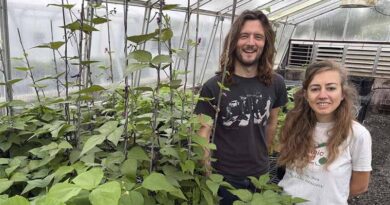
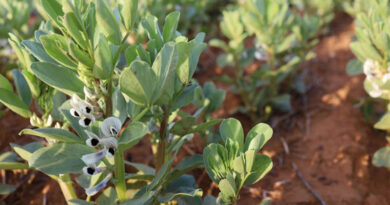
The work comes from the Dry Bean Breeding and Computational Biology Program at the university’s Ontario Agricultural College, led by Mohsen Yoosefzadeh Najafabadi. The program breeds navy, black, kidney, and cranberry beans, all varieties of Phaseolus vulgaris, the common dry bean, for Ontario growers under the Ontario Agri-Food Innovation Alliance, a partnership between the provincial government and the university.
BeanGPT itself is not a gene-editing tool. It is a decision-support system: a generative AI model paired with eight parallel search tools that mine public genetics and plant-biology databases, trained on more than 314,000 scientific articles, roughly 100 million words in total, alongside two decades of the program’s own field trial records dating back to 2006, including phenotyping notes, drone imagery, seed quality tests, and weather and soil data. Breeders describe the traits or growing conditions they want to improve, such as disease resistance or yield under specific field conditions, and the system searches across that combined dataset to recommend which parent lines are most likely to produce a useful cross. For the new line, the platform narrowed the field from tens of thousands of theoretically possible crosses down to a few hundred candidates worth testing, which the team then grew and selected through five generations of conventional breeding, the same crossing and selection process bean breeders have used for decades. The novelty is not in the cross itself but in how the parents were chosen.
Shortening the search, not the breeding cycle
Conventional bean breeding programs typically rely on breeder experience, pedigree records, and increasingly molecular marker data to choose parent combinations, but sorting through decades of trial records and published genetics literature by hand is slow and often misses combinations a human breeder would not think to test. By automating that search step, Guelph’s team says it can evaluate far more candidate combinations than a breeder could manually review, without changing the years-long process of growing out successive generations to fix a new trait combination. The university has not released yield or disease-resistance data for the resulting line, saying only that it was selected for higher yield and disease resistance and that it still needs further seasons of testing before any release decision is made.
Ontario Bean Growers, the provincial grower association, is already using the BeanGPT platform in its own breeding-support work, and Guelph says other breeding programs have expressed interest in applying the same approach to other crops, including soybean, wheat, lentils, and other grains. The university has not set a release date for the new bean line itself, saying only that it expects to bring a commercial variety to market within a few years, pending further field testing at the Ontario Crops Research Centre in Elora.
Also Read: USDA Reports Record Soybean Yield, Bigger Corn Crop in October Forecast
Global Agriculture is an independent international media platform covering agri-business, policy, technology, and sustainability. For editorial collaborations, thought leadership, and strategic communications, write to pr@global-agriculture.com