Robots Are All About People: The Robot Doesn’t Take the Job. It Takes the Part Nobody Wanted
By Charles Andersen, CEO of Burro
01 September 2026, Australia: Every few months, a story runs about robots coming for farm jobs, and every few months, I get the same calls. Investors, lenders, borrowers, growers and laborers; people who have spent a lot of time working where robots will soon go, but who don’t understand the realities of technology today. I understand the instinct. I just think it is aimed at the wrong question.
The right question is not whether a robot is going to take someone’s job. It is why we have been asking people to do these jobs for this long in the first place. The backbreaking, repetitive, dangerous/harsh, thankless parts of outdoor labor that nobody actually wants, and fewer people every year are willing to do at any price. That is the labor market growers are living in right now, from the Central Valley in California to Chile to the Australian outback. The question is not whether automation is coming for agriculture. It is whether the workforce shows up before it has to.
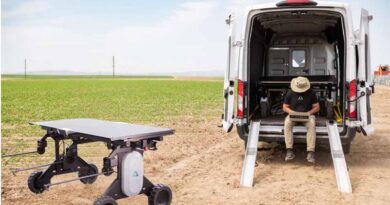
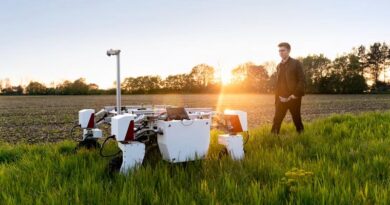
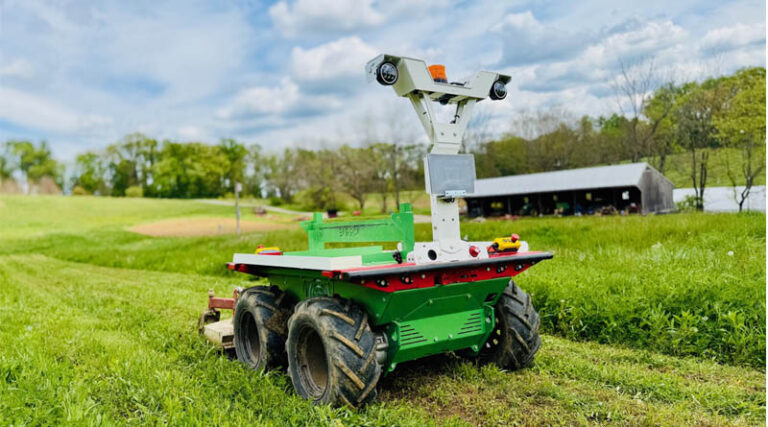
We have built our company around a specific answer to that problem, and it is not the humanoid-robot answer everyone in Silicon Valley wants it to be. It is closer to Wall-E than Terminator. A robot that does not replace the person. It replaces the part of the job that was wearing the person down. The robot moves the product (the pallet, the bin, the load) or it mows,sprays or patrols to monitor crops or assets so the person can do everything that still requires a person.
Start Boring, Stay Boring
I have watched a lot of robotics companies chase the most impressive use case first. Full autonomous harvesting, precision picking, or better yet that humanoid robot that does a backflip on stage. These are the things that get a standing ovation at a conference. Few of them are still around today. The ones that survive tend to start with something boring and get it right before they get ambitious.
We built our business on movement because movement is the foundation layer underneath everything else in outdoor labor. Before you pick something precisely, before you sort it, before you do the task that looks good in a pitch deck, you move it from point A to point B. And out in the field, that movement has to happen near people, because that is where all the labor is that does work outdoors. Movement near people is a fundamentally harder problem than movement away from people. It is the difference between a robot on a warehouse floor at 2 a.m. and a robot working a row alongside a crew at noon. Own that layer, moving reliably, near people, every single day, and you have built the platform everything else gets stacked on. Skip it, and you have built a demo.
That is why we tell every grower the same thing: do not start at the top of the mountain. Start with the single, boring, repetitive task. Hauling bins through a row, moving product from picking zone to staging. Let the crew get comfortable before you ask the technology to do more. Crawl, walk, run. Every operation that has scaled with us did it in that order. The ones that tried to skip straight to run mostly are not customers anymore.
The Australia Stress Test
We are not a company with one flagship customer in one state. We sell and support Burro through over 50 dealers across 15 countries, without a large in-country team behind each one. That is the part of this story I want an international audience to sit with. This is not a Silicon Valley pilot that works in one greenhouse. It is infrastructure that a dealer in a country we do not staff can sell, deploy, and support independently.
In Australia and New Zealand, that model runs through Agri Automation, our longest-standing international dealer relationship, in place since 2023. They sell, deploy, and support every unit in the region without a Burro employee on the ground. Australia matters to this story for more than the unit count. It is the farthest market we sell into, with no Burro engineer or support staff of our own anywhere on the continent. If the dealer-only model was ever going to break, distance is where it would break first. It hasn’t. Agri Automation has now run that market independently longer than any other international dealer relationship we have, which makes Australia less a single customer story and more a stress test we already passed. It is also the sharpest version of the labor problem this piece opens with: the outback is dealing with the same structural decline in willing outdoor labor that most developed agricultural economies are heading toward, just further along the curve. That combination, distance and labor scarcity, is exactly the stress case worth pointing an international audience to.
Here is why that matters more than it sounds like it should. A robot that has only ever run in one climate, one crop, one labor market has not proven anything except that it works there. A robot logging real hours across multiple continents, multiple crops, multiple regulatory and labor environments is a platform other people can bet their operation on. That is the difference between a product and a category.
Where the Window Actually Closes
Every grower has a window that cannot slip. Weather does not negotiate. Labor does not always show up when the calendar says you need it most. The cost of missing that window compounds fast.
The growers we work with describe that pressure most acutely at the production window itself, a step before anything reaches a shipping dock. At Petitti Family Farms, Bell Nursery, Costa Group and Costa Farms, the deadline that cannot slip is the harvest or nursery window: the day the product has to be moved, staged, and ready, regardless of who is or is not available to move it. Miss that window and the shipment problem downstream is already decided. Protecting the production window is protecting the shipment; it just happens a few days earlier than the loading dock.
This is where the people-to-pallet model earns its keep, not as a nice-to-have during a slow month, but as the thing standing between a grower and a blown deadline during the weeks that actually decide the year.
Proof Without a Long Runway
Some of our best proof points are customers who did not need a long runway to get value.
At Petitti Family Farms, Joe Allio’s team put the robots to work immediately. No extended pilot, no months of hand-holding. They started with 10 Grandes at the Ridge Manor site; the company has since scaled to 25 Grandes sold across its ten farms, and Allio has said Petitti’s scale could put 50 or more Burros to work. Part of what made that scaling decision easy is that the same machine that carries product during the rush can mow and spray the rest of the season so it is not sitting idle once harvest ends.That is not just a customer story. It is evidence that the platform travels, because a system that takes months to configure is not one a dealer without a local support team can actually sell. The same rapid adoption that happened at Ridge Manor is what makes this model replicable across markets that look nothing like the Central Valley.
I do not think the winner in this category will be whoever has the flashiest robot. I think it will be whoever has the most deployments, in the most places, generating the most real-world hours, because that data compounds. A mistake one robot makes in Chile gets fixed, and weeks later every robot in the fleet, on every continent, is a little smarter for it. That flywheel is not something a well-funded competitor can shortcut by writing a bigger check. You have to earn it, one deployment at a time, in fields most of Silicon Valley has never set foot in.
The Math Actually Matters
None of this works if the math does not work, and the math is not complicated. Smart operations understand that ROI on a machine like this comes down to leveraging the platform for multiple uses so it doesn’t sit idle. To do that, they look at what it costs, how much value it creates per day it is used, and how many days a year it actually gets used. Carrying or towing will take longer to generate significant ROI, because those tasks alone will not fill enough days on the calendar. However, leveraging a robot to do additional tasks such as mowing and spraying are what change that math. When a farm or nursery starts thinking about towing and carrying during harvest, mowing row middles the rest of the season, and spraying in between, suddenly the robot is working most days of the year instead of a few weeks of it. That is the difference between a machine that pays for itself in season and one that sits in the shed.
The Binary That Never Held Up
The story the press keeps telling about robots and farm labor is a binary: replace the worker, or do not. That has never been how this actually works. It did not work that way with the combine. It did not work that way with the milking robot. It is not working that way now. What is actually happening is narrower and more important: the hardest, most punishing, most disposable part of the job is finally becoming the robot’s problem instead of the person’s. Everything else stays exactly where it belongs, with the people who know how to grow things.
Also Read: Syngenta Welcomes Trevor Watson As Turf Territory Manager For Mid-atlantic And Northeast Region
Global Agriculture is an independent international media platform covering agri-business, policy, technology, and sustainability. For editorial collaborations, thought leadership, and strategic communications, write to pr@global-agriculture.com