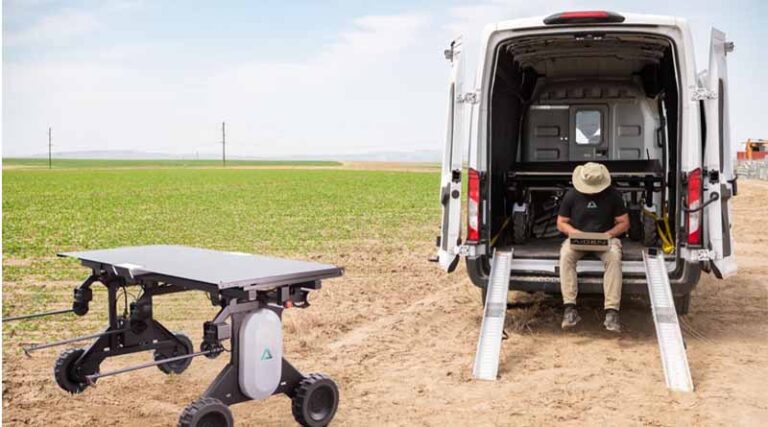
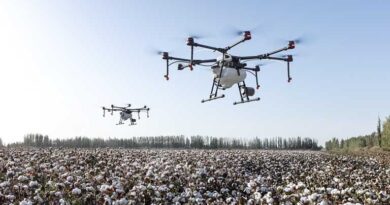
15 October 2026, Seattle: Seattle-based agricultural technology company Aigen has launched a four-armed version of its solar-powered, driverless weeding robot, giving row-crop and organic growers a mechanical alternative to spraying herbicide, the company said in an announcement dated September 29, 2026.
The new machine, called the Element Gen 2 X4, adds a fourth independently operating arm to Aigen’s existing two-arm and three-arm models, which remain available. Each arm works off the same core system: an onboard computer running what the company calls edge artificial intelligence, meaning the processing happens on the robot itself rather than being sent to a remote server, identifies individual plants in real time as the machine moves through a field. The system then directs each arm to the weeds only, pulling them out mechanically at the root, both within the crop row and in the space between rows.
According to Aigen, the robot can handle weeds with foliage up to six inches across, a size at which many postemergence herbicides (chemicals applied after weeds have already emerged) start to lose effectiveness. The company frames this as a response to a widening weed-control problem: it cites roughly 275 documented herbicide-resistant weed species worldwide, a number that has pushed growers toward combining multiple chemistries, more frequent cultivation passes, or hand labor, all of which raise costs.
The Element runs entirely on solar power, backed by a solar-charged battery, and operates without a human driver as part of a coordinated fleet, removing the need for fuel or charging infrastructure in the field. As it works, the robot logs weed density on entry and exit from a field, building a plant-level record that growers can use to track weed pressure pass over pass, in addition to removing the weeds themselves.
Aigen, founded in 2020 by Kenny Lee and Rich Wurden, says it has built more than 100 robots to date and logged over 15,000 cumulative autonomous field hours across its generations of machines. Each unit is engineered for roughly 10,000 operating hours, or about eight years of service, and comes with a two-year bumper-to-bumper warranty covering the motors. Kenny Lee, Aigen’s co-founder and chief executive, said the new model gives growers “herbicide-free weed control, plus plant-level data and field-level analytics,” at what the company describes as a predictable per-acre cost. The company says Fortune 500 growers already use its fleets commercially, and orders are open for the 2027 growing season.
Global Agriculture is an independent international media platform covering agri-business, policy, technology, and sustainability. For editorial collaborations, thought leadership, and strategic communications, write to pr@global-agriculture.com