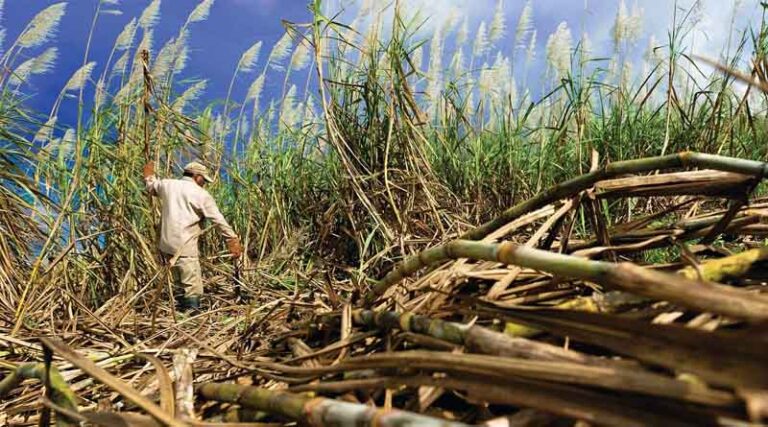
15 October 2026, Belagavi: Sugarcane farmers across six districts of Karnataka blocked national and state highways for a second consecutive day on October 14, intensifying a price dispute that has simmered since late September and now threatens to disrupt the state’s cane-crushing season. Protesters shut stretches of the Pune-Bengaluru highway near Hubballi and Belagavi, the old Bengaluru-Mysuru highway near Mandya, and toll roads in Haveri, Koppal and Dharwad, using stones, logs and their own bodies to stop traffic, according to local reports on October 13 and 14.
The growers, organised chiefly under the Karnataka Rajya Raitha Sangha and the Hasiru Sene farmers’ group, are demanding a sharply higher price for the cane they supply to mills. Their central ask is Rs 5,500 per tonne for the 2026-27 crushing season, against a Fair and Remunerative Price the Union government has fixed at roughly Rs 3,650 per tonne (Rs 365 per quintal) at the base recovery rate. Farmers say that once mills deduct harvesting and transport costs, their net realisation falls well short of what it costs to grow the crop, pointing to rising labour, fertiliser and diesel expenses. They have renewed calls to apply pricing recommendations from the Swaminathan Commission on farmer welfare, to raise the minimum sale price for sugar, and to change how mills account for ethanol sold from cane juice and molasses.
By October 14, protesters in Hubballi had also raised a separate demand for a Rs 60 increase in the minimum support price for sugar, on top of the FRP revision, and threatened to march on the Hubballi residence of Union Minister for Food and Public Distribution Pralhad Joshi if the Centre did not respond. Authorities visibly tightened security around Joshi’s residence as the blockades entered their second day.
A dispute the Centre says is already settled
Joshi, who also represents a Karnataka constituency in Parliament, has pushed back on the farmers’ framing. He has said the FRP for the current season already reflects the recommendations of the price-setting body, which factors in input from the state’s own Cane Commissioner, and that disagreements over harvesting and transport deductions that mills pass on to farmers are a state, not a Union, responsibility to resolve. He has pointed to Karnataka’s ethanol allocation for the season, which he says is larger than state officials have acknowledged, as evidence that the Centre is already supporting cane farmers’ incomes through the ethanol-blending programme. Joshi had earlier invited farmer representatives to Delhi for direct talks rather than continuing the highway blockades, an invitation farmer groups have so far not taken up as the protest has instead spread to more districts.
The standoff continues a near-annual flashpoint in Karnataka’s cane belt, where disputes over FRP calculation, recovery rates and mill payment delays have repeatedly spilled onto highways in past crushing seasons. What distinguishes this round is both its geographic spread, with blockades reported simultaneously in six districts rather than concentrated in one or two, and its timing, coinciding with the start of this year’s crushing operations, raising the risk that prolonged disruption could delay cane deliveries to mills just as the season gets under way.
Why a local price fight has national stakes
Karnataka is India’s second-largest sugarcane-growing state after Uttar Pradesh, and its cane economy underpins both sugar output and the ethanol-blending programme central to the Union government’s biofuel and farm-income strategy. A sustained disruption to crushing in Karnataka would ripple into national sugar production estimates and into ethanol supply commitments to oil marketing companies, at a time when India has been steadily raising its ethanol-blending targets for petrol.
Global Agriculture is an independent international media platform covering agri-business, policy, technology, and sustainability. For editorial collaborations, thought leadership, and strategic communications, write to pr@global-agriculture.com