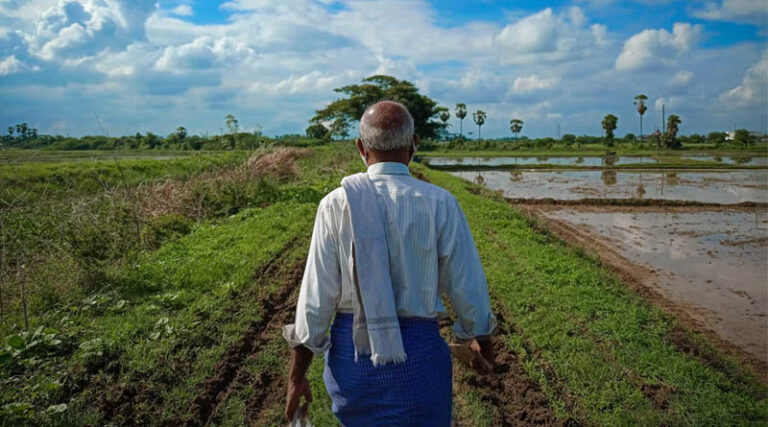
02 October 2026, Karnataka, India: Hundreds of farmers gathered in Mysuru on October 1 to protest the Karnataka government’s lavish spending on the annual Dasara festival at a time when drought has devastated crops across the state, demanding a complete waiver of agricultural loans and significantly higher compensation for crop losses.
The demonstration was organised by the Karnataka State Farmers’ Association, known locally as Raita Bana, and led by its state president, Ingalaguppe Krishnegowda, alongside other farmer leaders including Beerappa Deshanur, Basavanagowda, Chinakurali Somegowda and retired Deputy Superintendent of Police Nanjappa. Protesters argued that public money being spent on Dasara celebrations, one of Karnataka’s biggest cultural events and a significant tourism draw centred on Mysuru, should instead be redirected toward drought relief.
A monsoon season among the worst since 2015
The protest comes days after the India Meteorological Department confirmed that the 2026 southwest monsoon ended with national rainfall at 87 percent of the long-period average, a shortfall of roughly 12.6 percent and the country’s lowest seasonal rainfall since 2015. IMD director general Mrutyunjay Mohapatra said the effect of the developing El Niño pattern was more pronounced in southern and eastern India, though some eastern pockets such as Odisha were cushioned by recurring low-pressure systems. Southern India as a whole received only 76 percent of its long-period average, a deficit of about 24 percent. Union Agriculture Minister Shivraj Singh Chouhan named Karnataka, Maharashtra, parts of Andhra Pradesh, Telangana and Rajasthan as the regions hit hardest, directly implicating the state at the centre of the Mysuru protest.
Farmers’ specific demands went beyond a blanket loan waiver. They asked for compensation of 25,000 rupees an acre for rainfed, dryland cultivation and 50,000 rupees an acre for irrigated land, with the amounts to be based on a scientific assessment of actual cultivation costs rather than a flat administrative figure. The protesters also called for a Lokayukta investigation into what they described as substandard civic works in Mysuru, transparent public disclosure of Dasara festival expenditure, and representation for a Dalit religious seer at future Dasara inauguration ceremonies, broadening the protest beyond strictly agricultural grievances into questions of civic accountability.
Government offers partial relief, promises to push Centre
In response, the state government announced an input subsidy of 2,500 rupees per drought-affected farmer, a measure its own figures suggest will reach approximately 5 million farmers at a total cost of around 1,250 crore rupees. Karnataka Chief Minister D.K. Shivakumar did not commit to a full loan waiver from state funds but offered to lead an all-party delegation to New Delhi to press the central government for financial support toward a broader waiver, effectively shifting part of the fiscal burden and the political decision upward.
The gap between the input subsidy on offer and the loan waiver farmers are demanding is substantial, and it echoes a recurring pattern in Indian state politics where drought years reopen long-standing demands for loan forgiveness that state governments are reluctant to fund alone given the strain on their own budgets. Karnataka has faced similar farmer agitation over loan waivers in past drought years, and the scale of this year’s rainfall deficit, the worst in over a decade, raises the likelihood that pressure on the state and central government will continue through the rabi sowing season rather than dissipate quickly.
Global Agriculture is an independent international media platform covering agri-business, policy, technology, and sustainability. For editorial collaborations, thought leadership, and strategic communications, write to pr@global-agriculture.com