Brazil’s Coffee Export Surge and Weak Real Pull Global Prices in Opposite Directions
21 November 2026, São Paulo, BR: A surge in Brazilian coffee exports and a weakening currency are pulling the two main coffee varieties in opposite directions on the ICE futures market, with arabica climbing to a two-week high and robusta sinking to its lowest level in nearly three years.
December-delivery ICE arabica futures settled up 2.10% on Tuesday, while January-delivery ICE robusta futures fell 2.32% to their lowest level since roughly mid-2024. ICE-certified arabica stocks fell to 186,414 bags on Monday, a 27-year low, even as the amount of Brazilian coffee awaiting grading at ICE-monitored warehouses climbed to 212,959 bags on Tuesday, the largest such backlog in close to four years. Separately, Brazilian-origin coffee held in ICE inventories reached a 14-month high of 112,682 bags last week, and ICE robusta inventories hit a 15-month high of 6,809 lots in late October.
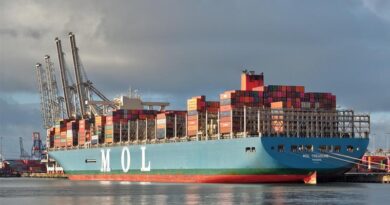
Brazil’s National Supply Company, Conab, raised its forecast for the country’s 2026 total coffee crop to 67.6 million 60-kilogram bags in its September estimate, up from an earlier 66.7 million bags, with arabica output projected to rise 34.8% year on year to 48.21 million bags and robusta output falling 6.6% to 19.39 million bags. Brazil’s trade ministry reported that the country’s coffee exports rose 23% year on year in October to 287,000 metric tons, a surge that has coincided with the Brazilian real trading near a 19-month low against the dollar, a combination that has encouraged growers to sell into the export market even as it adds to the global supply overhang weighing on robusta. The United States Department of Agriculture’s foreign agricultural service had earlier projected Brazil’s 2026-27 crop at a record 71.9 million bags, up 14% from the prior season, and estimates that the country accounts for roughly 35% to 40% of world coffee production and close to 30% of global exports.
Vietnam adds to robusta supply
Vietnam, the world’s largest robusta producer, is also adding to supply. The Vietnam Coffee and Cocoa Association projected 2026-27 robusta output at 2.1 million tonnes, up 5% from the prior season, while the country’s General Statistics Office reported that October coffee exports rose 61% year on year to 114,000 metric tons, lifting exports for the January-to-October period 18.8% year on year to 1.57 million tonnes. Vietnam’s Ministry of Agriculture and Environment had flagged a risk of El Nino-linked drought in the Central Highlands growing region in an October assessment, though that risk has not yet shown up in the export figures.
Elsewhere, India’s Coffee Board trimmed its 2026-27 production estimate to 380,000 metric tons from an earlier 400,000 tons, a cut of 5%, while Colombia’s national coffee federation reported that 2025-26 production fell 15% year on year to 12.65 million bags and exports fell 12% to 11.78 million bags. The International Coffee Organization estimated last month that global coffee production in 2025-26 rose 4.4% to a record 183.6 million bags, while consumption fell 0.9% to 180.6 million bags, producing the first global surplus in five years at roughly 3 million bags. The USDA had separately forecast global 2026-27 output rising 6.0%, or 10.8 million bags, to a record 189.7 million bags, with arabica production up 12% and ending stocks rising by 1.9 million bags to 26.3 million bags.
Also Read: €2.9BN Invested in Biopesticide Innovation, but EU Farmers Still Face Long Waits for New Solutions
Global Agriculture is an independent international media platform covering agri-business, policy, technology, and sustainability. For editorial collaborations, thought leadership, and strategic communications, write to pr@global-agriculture.com