31 March 2026, New Delhi: Global pistachio prices have surged by more than 50% in recent months, sending shockwaves through key consuming markets and exposing the fragility of a supply chain heavily dependent on a few producing countries.
At the center of the disruption is Iran, which accounts for roughly 18–20% of global pistachio production. Ongoing geopolitical tensions and conflict-related uncertainties have effectively slowed or stalled parts of its export pipeline, tightening global availability at a time when overall production is already declining.
A Market Under Pressure
The pistachio market entered the 2025/2026 season with weakening fundamentals. Global production is estimated at 1.09 million metric tons, down from 1.19 million metric tons in 2024/2025—an 8% year-on-year decline.
This drop comes despite a steady long-term growth trend of around 4% annually over the past decade (MY 2016–2025 average: 886,348 metric tons).
Pistachio production is highly concentrated, with two countries dominating global supply: the United States and Iran.
Top Producing Countries (2025/2026)
Country / Region
Share of Global Production (%)
Production (Metric Tons)
United States
65%
712,682
Iran
18%
200,000
Turkey
11%
120,000
European Union
4%
40,000
Syria
2%
20,000
While the United States leads production, Iran plays a disproportionately large role in export markets, particularly in Asia and the Middle East. This makes any disruption in Iranian supply immediately visible in global prices.
Iran Disruption: From Orchards to Ports
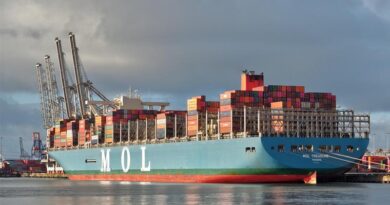
Industry sources indicate that the issue is not just production, but movement. Even where harvests are intact, getting pistachios from farms to international buyers has become increasingly difficult.
Key disruptions include:
Logistics constraints: Shipping routes and port operations are under strain
Trade barriers: Financial and regulatory challenges affecting transactions
Buyer uncertainty: Importers shifting away from Iranian supply due to risk
As a result, a significant share of Iran’s estimated 200,000 metric tons is either delayed or not reaching global markets efficiently.
Price Spike Reflects Structural Imbalance
The more than 50% increase in pistachio prices is not merely a short-term reaction, it reflects a deeper structural imbalance between supply and demand.
Import-heavy markets such as India are among the hardest hit. Iran has historically been a key supplier due to its competitive pricing and preferred varieties. With that supply constrained, buyers are turning to U.S. origins, where availability is limited and often tied up in long-term contracts.
At the same time:
Freight and insurance costs have increased due to geopolitical risks
Traders are building inventories in anticipation of further shortages
Alternative suppliers are unable to scale quickly
Limited Substitutes, Slow Adjustment
Although countries like Turkey are increasing their presence, they lack the scale to offset Iran’s disruption in the short term. Similarly, expanding production in other regions is a long-term process, as pistachio trees take years to mature.
This lack of immediate substitutes means the market is likely to remain tight in the near term.
Outlook: Volatility Likely to Persist
The trajectory of pistachio prices will depend heavily on how the geopolitical situation involving Iran evolves. If disruptions continue:
Prices could remain elevated or rise further
Trade flows may permanently shift toward more stable suppliers
Importers may diversify sourcing strategies
In the longer term, the current crisis may accelerate investments in new pistachio-growing regions, but such changes will take years to materialize.
A Warning for Global Agri Supply Chains
The pistachio price surge highlights a broader issue in global agriculture: overdependence on concentrated supply regions. When production and exports are dominated by a few countries, geopolitical risks can quickly translate into price volatility.
Global Agriculture is an independent international media platform covering agri-business, policy, technology, and sustainability. For editorial collaborations, thought leadership, and strategic communications, write to pr@global-agriculture.com