Creatine Monohydrate Explained: Science Reveals 8% More Strength and 45% More Reps
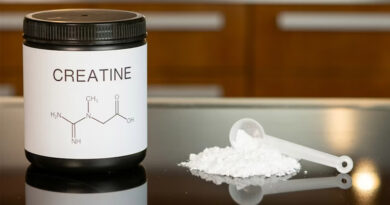
13 April 2026, London: Every human body naturally produces creatine, approximately 1 gram per day endogenously, while another 1 gram is typically obtained through diet, making it a universal compound present across populations. Nearly 95 percent of total creatine is stored in skeletal muscle, forming a pool of about 120–140 grams in an average 70 kg adult, where it plays a central role in energy production. Over decades of scientific research, creatine supplementation has consistently demonstrated measurable outcomes, including 8 percent gains in maximum strength, 14 percent improvements in endurance strength, and up to 45 percent increases in repetition performance during high-intensity exercise.
These findings are based on a comprehensive scientific review titled “Creatine Supplementation with Specific View to Exercise/Sports Performance: An Update”, authored by Robert Cooper, Fernando Naclerio, Judith Allgrove, and Alfonso Jimenez, and published in the Journal of the International Society of Sports Nutrition. The study brings together extensive research to provide a detailed understanding of creatine’s role in performance and health.
The Biology of Creatine: A Built-In Energy System
Creatine is synthesised in the liver, kidneys, and pancreas using amino acids such as glycine, arginine, and methionine. Once produced, it is transported into muscle cells, where it exists in two primary forms, 60 percent as phosphocreatine and 40 percent as free creatine.
Its primary function is to regenerate adenosine triphosphate, the body’s immediate energy source. During high-intensity activity, ATP is rapidly depleted within seconds, limiting performance. Creatine helps restore ATP levels quickly, allowing muscles to sustain force output during repeated efforts.
Measured Gains in Strength, Muscle and Power
The research highlights consistent improvements in strength and muscle mass when creatine supplementation is combined with resistance training. A meta-analysis referenced in the study reports 8 percent higher gains in maximum strengthand 14 percent improvements in endurance strength compared to placebo groups.
At the physiological level, creatine influences key muscle growth pathways. It increases insulin-like growth factor-1 levels by up to 78 percent, reduces myostatin, and promotes muscle fibre growth. In some cases, fast-twitch muscle fibres showed increases in cross-sectional area of up to 971 μm², indicating substantial hypertrophy.
High-Intensity Performance: Clear Numerical Advantages
Creatine’s strongest effects are observed in short-duration, high-intensity activities. According to the study, performance improves by an average of 7.5 percent in exercises lasting under 30 seconds, compared to 4.3 percent in placebo groups.
Repetition performance improved by 45.4 percent from baseline, while weight lifted increased by 24.7 percent, both significantly higher than placebo outcomes. Even in slightly longer anaerobic efforts lasting between 30 and 150 seconds, creatine supplementation resulted in a 4.9 percent improvement, whereas placebo groups showed a decline of 2 percent.
Recovery, Endurance and Metabolic Efficiency
The study also highlights creatine’s role in recovery and metabolic performance. Supplementation of 20 grams per day for five days prior to intense activity was shown to reduce markers of muscle damage, including creatine kinase and lactate dehydrogenase.
Creatine enhances glycogen storage when combined with carbohydrate intake and glycogen-depleting exercise. In endurance scenarios such as two-hour cycling sessions, it helped maintain higher muscle glycogen levels, supporting sustained performance.
While its direct impact on long-duration endurance remains limited, creatine has been shown to improve lactate threshold, reduce blood lactate accumulation, and support overall metabolic efficiency.
Cognitive and Clinical Potential
Beyond physical performance, the research points to creatine’s role in brain function. Increased brain creatine levels have been associated with improved cognitive performance, particularly under fatigue and sleep deprivation.
In older adults, supplementation has been linked to improved strength, increased muscle mass, and better performance in daily activities, indicating broader applications beyond sports nutrition.
Dosing, Variability and Safety
The study outlines commonly used supplementation protocols, including a loading phase of 20 to 25 grams per day for 5 to 7 days, followed by a maintenance dose of 3 to 5 grams per day. Alternatively, a daily intake of 3 to 6 grams without loading can achieve similar results over a period of three to four weeks.
Individual response varies significantly. Some individuals experience increases of up to 27 percent in muscle creatine stores, while others show minimal changes of around 4.8 percent, depending on baseline levels and muscle fibre composition.
In terms of safety, the study confirms that creatine supplementation does not impair kidney function in healthy individuals, even at doses of 20 grams per day. Long-term studies lasting up to four years have reported no adverse effects, including no increase in dehydration, muscle cramps, or injury risk.
Science That Stands the Test of Time
The findings presented by Cooper and colleagues reinforce creatine monohydrate’s position as one of the most reliable and extensively studied supplements in sports nutrition. Its ability to deliver measurable improvements in strength, muscle growth, recovery, and cognitive performance is supported by consistent scientific evidence.
While individual responses may vary and long-term research continues, the existing body of data makes a strong case. Creatine monohydrate is not just widely used, it is scientifically proven.
Global Agriculture is an independent international media platform covering agri-business, policy, technology, and sustainability. For editorial collaborations, thought leadership, and strategic communications, write to pr@global-agriculture.com