Interview by Nimish Gangrade, Editor, Global Agriculture
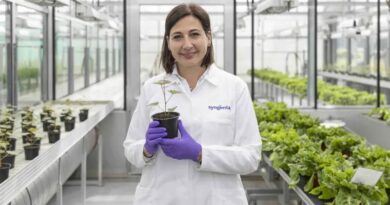
13 July 2026, New Delhi: India has evolved from being merely a large crop protection market to becoming one of the world’s most strategic innovation hubs. During her recent visit to India, Camilla Corsi, Global Head – Crop Protection Research & Development, Syngenta, spoke exclusively with Global Agriculture about the company’s innovation pipeline, resistance management, biologicals, global supply chains, data protection, artificial intelligence, and India’s growing contribution to global R&D.
In an extensive conversation, Corsi explained why Syngenta believes India should receive cutting-edge technologies alongside major global agricultural markets, why biologicals will increasingly complement chemistry rather than replace it, and how artificial intelligence is reshaping the future of crop protection discovery.
India Will Receive Global Innovations at the Same Time as Other Major Markets
Nimish Gangrade: India remains one of the world’s most important crop protection markets. What new chemistries, biologicals or novel formulations is Syngenta planning to introduce in India over the next 12–24 months? Are there specific crop segments or resistance challenges that the company is prioritising?
Camilla Corsi: The first point I would like to make is that the last three to five years have been exceptional for Syngenta in India. We have introduced more innovations during this period than at any comparable stage in our history. Our Indian team has significantly accelerated the introduction of new technologies, reflecting the strategic importance of this market.
One of the most exciting technologies currently being introduced is PLINAZOLIN® technology, a new broad-spectrum insecticide. It has already been registered in several key global markets and addresses some of the most pressing insect management challenges across multiple crops. India presents a uniquely diverse agricultural landscape with more than 25 major crops, alongside a vast range of horticultural and specialty crops, making broad-spectrum innovation particularly valuable.
Another important innovation is TYMIRIUM® technology, a first-of-its-kind solution combining highly effective control of both plant-parasitic nematodes and soil-borne diseases. Nematodes are microscopic worms living in the soil that severely affect crop establishment and productivity. During my visit, I met several Indian growers who demonstrated remarkable awareness of nematode-related challenges.
TYMIRIUM sets a completely new benchmark because no currently available product offers such a high level of simultaneous control over both nematodes and soil-borne pathogens. Beyond efficacy, the technology has been designed to be highly selective towards beneficial soil organisms, supporting broader soil health objectives. This represents an important step towards delivering technologies that not only increase yield and crop quality but also contribute positively to long-term ecosystem sustainability.
The technology has already been launched in crops such as rice and peanuts in India, with additional crop registrations planned in the near future.
On the biologicals front, Syngenta has already introduced several biostimulant technologies, supported by our manufacturing facility near Hyderabad established following the acquisition of Valagro. Products such as Isabion® continue to perform strongly, and we are working to further tailor these technologies to Indian agricultural conditions.
Our innovation pipeline is equally strong in weed management. Indian growers have repeatedly expressed the need for new herbicide solutions after many years of limited innovation. We are preparing to introduce a new rice herbicide based on a completely new mode of action being co-developed with FMC. Beyond rice, we also have promising pipeline products targeting resistant weeds in cereals.
Another exciting technology is VIRESTINA™, which we are launching first in Argentina, followed by Brazil. It has been specifically developed to control resistant grass weeds in soybean. Since soybean is also a significant crop in India, our local teams are actively evaluating its suitability for Indian farming systems.
Overall, we have more than 20 significant crop protection innovations planned globally over the next decade, supported by an expanding network of strategic partnerships.
When discussing innovation, however, I believe the emphasis should not simply be on the number of products introduced. What truly matters is whether these technologies solve the major pain points faced by growers. These are not incremental improvements or existing chemistries in new formulations—they are genuinely game-changing technologies.
Historically, innovative crop protection products often reached India 10 to 15 years after launches in North America, Europe or Australia. That situation is changing. Our objective is to ensure Indian growers gain access to advanced technologies alongside farmers in the world’s leading agricultural markets.
I would also highlight that Syngenta remains committed to every agricultural market globally, including India and many smaller countries across Asia and Africa. While several multinational companies have reduced their presence in certain markets, we continue investing and tailoring innovation specifically to local agricultural needs.
Resistance Management Requires Both New Modes of Action and Smarter Chemistry
Nimish Gangrade: Resistance management has become one of the defining challenges in global agriculture. From an innovation perspective, which IRAC or HRAC groups is Syngenta focusing on? Are new modes of action becoming more important than incremental chemistry improvements?
Camilla Corsi: Resistance has developed partly because the industry experienced long periods with relatively limited innovation, particularly in weed control and, to some extent, insect control. Syngenta’s R&D strategy addresses disease control, insect control and weed control simultaneously.
New modes of action are certainly essential for resistance management. Resistant weeds such as Phalaris in cereal systems clearly require new solutions. However, innovation should not be viewed solely through the lens of entirely new mode-of-action groups.
Sometimes it is possible to deliver major advances within. known mode of actions -VIRESTINA is a good example. Although it belongs to an established herbicide class targeting ACCase, it represents a new subgroup that interacts differently at the molecular level. This creates new resistance management opportunities while extending the useful life of existing chemistry.
Our innovation strategy therefore spans entirely new modes of action as well as meaningful advances within existing chemical classes across herbicides, fungicides and insecticides.
Biologicals Will Complement Chemistry, Not Replace It
Nimish Gangrade: Do you see biologicals becoming an important component of future resistance management?
Camilla Corsi: Absolutely. Syngenta strongly believes the future lies in fully integrated crop protection programmes combining chemistry and biologicals. Biological solutions will become increasingly important for resistance management.
However, we should also be realistic. Today’s biological control segment still offers relatively limited truly differentiated innovation, both in India and globally. Many available products address only niche applications and do not yet fully solve the industry’s larger resistance management or residue challenges.
Residue management is becoming increasingly important, particularly for Indian growers producing fruits and vegetables for export markets. Although several biofungicides are available today, there remains considerable room for technological improvement.
Our research efforts span multiple biological platforms, including microbial products, peptides, RNA-based technologies and naturally derived products. The objective is to develop biologicals with efficacy approaching conventional chemistry while overcoming current limitations such as product stability, cost and field consistency.
Equally important is ensuring compatibility between biologicals and chemical products from the earliest stages of development. We are designing integrated protocols rather than individual products. Growers should receive complete crop protection programmes where chemistry and biologicals work together seamlessly.
We already implement this integrated approach in crops such as pomegranate and table grapes, and during my visit to India I had the opportunity to observe these systems directly with growers. Over the next five years, we expect to introduce many more biological innovations that fit within these integrated crop protection strategies.
Global Supply Chains Have Become More Resilient Despite Geopolitical Risks
Nimish Gangrade: The agrochemical industry has experienced major supply disruptions over the past few years. With geopolitical tensions, including developments around the Strait of Hormuz, how resilient are global crop protection supply chains today?
Camilla Corsi: At present, Syngenta is not experiencing significant supply challenges.
Our global manufacturing footprint, combined with our strong presence and longstanding relationships in Asia, enables us to maintain reliable product availability across regions. This global network provides considerable resilience.
Naturally, we continue monitoring geopolitical developments very closely because situations such as conflicts in the Middle East remain unpredictable. Nevertheless, our primary objective remains ensuring timely product delivery to growers worldwide.
COVID-19 demonstrated the importance of supply chain resilience. During that period, Syngenta was able to continue delivering products globally despite unprecedented logistical constraints. Today we continue leveraging our worldwide manufacturing and distribution network to minimise disruptions and ensure growers receive products when they need them.
Data Protection Encourages Innovation, But India Continues Receiving New Technologies
Nimish Gangrade: Does the absence of regulatory data protection in India affect Syngenta’s willingness to introduce cutting-edge crop protection technologies?
Camilla Corsi: Data protection is an extremely important issue, not only for Syngenta but for the entire research-based crop protection industry.
Despite these challenges, our actions clearly demonstrate our commitment. We are introducing more innovation into India than ever before, including our most advanced technologies rather than secondary products.
Naturally, we continue advocating for stronger intellectual property protection and appropriate regulatory data protection mechanisms alongside industry associations and policymakers. Protecting innovation before product launch remains an important priority for both chemical and biological technologies.
At the same time, India is deeply integrated into Syngenta’s global R&D network. We conduct research activities in Goa, development programmes in Hyderabad, and biological production and development within the country. These capabilities allow us to remain closely connected to Indian agriculture while continuing to deliver innovative solutions.
Our primary responsibility is to growers. We want them to benefit from breakthrough technologies while ensuring those innovations remain sustainable over time through effective stewardship and resistance management.
Encouragingly, discussions around data protection continue to evolve. We see increasing openness from policymakers, and we remain committed partners in helping develop an effective regulatory framework rather than standing in opposition.
Data protection is becoming even more significant in the era of artificial intelligence and digital agriculture. The enormous amount of agronomic data generated in India has value not only for Indian agriculture but also for global crop protection innovation.
With more than 127 agro-climatic zones and extraordinary crop diversity, India provides an unparalleled environment for studying resistance management, product positioning, disease pressure and commercial deployment. The data generated here contribute directly to innovations benefiting agriculture worldwide.
Although data protection remains an important policy issue, it has not prevented Syngenta from bringing leading technologies to India.
Artificial Intelligence Is Transforming Crop Protection R&D
Nimish Gangrade: Artificial Intelligence has come in the last 5 years in a big way. Previously, it used to take 10 -15 years to introduce chemistries, do the trial, accumulate data. What differences are you seeing and what kind of new involvements do you see in the coming years of this prediction of timelines in introducing new molecules?
Camilla Corsi: Artificial intelligence is fundamentally transforming how we conduct research and development. One major opportunity lies in accelerating discovery through predictive modelling. Instead of generating every piece of experimental data physically, we can increasingly predict outcomes using sophisticated computational models.
Syngenta is particularly well positioned because of the extensive global datasets accumulated over many decades of crop protection research and development. These data provide the foundation for increasingly powerful predictive models.
Within research, we believe AI could reduce early discovery timelines by approximately 30%, potentially shortening programmes by at least one year, depending on the technology area and the availability of historical information.
Development presents different challenges because regulatory studies remain mandatory and their duration cannot easily be reduced. Here, AI contributes primarily by improving quality and reducing failure rates.
Predictive toxicology and safety modelling allow us to identify potential issues much earlier, enabling better decision-making and reducing unnecessary investment in products unlikely to succeed.
Field profiling represents another area where digital technologies can significantly accelerate development. By predicting optimal product combinations and performance before extensive field testing, we can shorten profiling programmes and move promising molecules into development more quickly.
One challenge, however, is that regulatory timelines in many parts of the world continue to increase. Even as R&D becomes faster, regulatory requirements often become more extensive.
Nevertheless, digital technologies improve the overall quality of regulatory submissions. Better datasets and stronger predictive capabilities increase the likelihood that regulatory authorities receive complete, robust dossiers, ultimately supporting smoother approval processes.
Productivity is equally important. Syngenta invests more than US$800 million annually in crop protection R&D. We must continuously improve efficiency so we can invest even more strongly in emerging areas such as biologicals, digital agriculture and automation while maximising the value of our scientific capabilities.
India Is Becoming a Global Innovation Hub
Nimish Gangrade: Finally, how important is India within Syngenta’s global research and development strategy?
Camilla Corsi: India is far more than one of our largest commercial markets.
Today, Syngenta holds leading positions in crop protection, biologicals and vegetable seeds in India. More importantly, India’s extraordinary diversity of agro-climatic conditions, crops, pests, diseases and weed species makes it an invaluable platform for global innovation.
The progress I have seen during this visit compared with just three years ago has been remarkable. Syngenta has significantly strengthened its logistics and digital infrastructure capabilities across the country.
India is rapidly positioning itself at the forefront of digital agriculture and technological innovation. The country’s strength in information technology and digital transformation creates opportunities extending far beyond its domestic market.
The knowledge generated in India increasingly supports innovation for growers around the world. In many ways, India has become not only a destination for agricultural innovation but also one of its most important sources.
Global Agriculture is an independent international media platform covering agri-business, policy, technology, and sustainability. For editorial collaborations, thought leadership, and strategic communications, write to pr@global-agriculture.com