Complete Guide to Herbicides Recommended for Soybean in India
07 July 2026, New Delhi: Soybean has become one of India’s most valuable oilseed crops, contributing significantly to edible oil production, livestock feed and export earnings. However, despite improvements in varieties, mechanisation and agronomic practices, weeds continue to remain among the most serious biological constraints limiting productivity. Research across India’s soybean-growing belt has consistently shown that uncontrolled weed growth during the first 40-45 days after sowing can reduce yields by as much as 30 to 80 percent, depending on weed pressure, rainfall and crop establishment.
The first month after sowing is considered the critical period of crop-weed competition. During this phase, weeds compete aggressively with soybean plants for sunlight, nutrients, moisture and growing space. Once the crop loses this early competition, even subsequent weed control measures may not fully recover the yield potential. For this reason, weed management in soybean is no longer viewed as a single herbicide application but as a carefully planned programme involving pre-plant incorporation (PPI), pre-emergence (PE) and post-emergence (PoE) herbicides.
Recognising the need for scientific guidance, the ICAR–National Soybean Research Institute (NSRI), Indore, has published an updated list of herbicides recommended for soybean cultivation based on the Central Insecticides Board (CIB) label claims as on 31 March 2026. The advisory offers farmers a wide range of herbicide options suited for different stages of crop growth and varying weed situations.
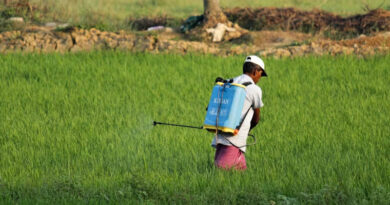
The institute also recommends using adequate spray volume for effective weed control. Farmers should use 450-500 litres of water per hectare with knapsack sprayers or around 120 litres per hectare with power sprayers. For post-emergence herbicides, flood-jet or flat-fan nozzles are advised to ensure uniform coverage.
The recommended herbicides are classified into three broad application windows—Pre-Plant Incorporation (PPI), Pre-Emergence (PE) and Post-Emergence (PoE). Each stage plays a distinct role in maintaining a weed-free environment during the crop’s most vulnerable growth period.
Table 1. Herbicides Recommended for Soybean (PPI & PE)
Application Stage
Herbicide/Formulation
Recommended Dose/ha
Pre-Plant Incorporation (PPI)
Diclosulam 0.9% + Pendimethalin 35% SE (22.5 + 875 g a.i./ha)
2.51 L
Pendimethalin + Imazethapyr
2.5-3.0 L
Fluchloralin 45 EC
2.22-3.33 L
Pre-Emergence (Immediately after sowing)
Pyroxasulfone 63.75% + Diclosulam 13% WG
200 g
Metolachlor 35.98% + Sulfentrazone 11.51% EC
2.5 L
Diclosulam 0.9% + Pendimethalin 35% SE
2.51 L
Diclosulam 84 WDG
26-30 g
Sulfentrazone 39.6 SC
0.75 L
Clomazone 50 EC
1.50-2.00 L
Pendimethalin 30 EC
2.50-3.30 L
Pendimethalin 38.7 CS
1.50-1.75 kg
Flumioxazin 50 SC
0.25 L
Metribuzin 70 WP
0.75-1.00 kg
Sulfentrazone + Clomazone
1.25 L
Pyroxasulfone 85 WG
150 g
Metolachlor 50 EC
2.00 L
Source: ICAR–National Soybean Research Institute, based on CIB label claims (31 March 2026).
The PPI herbicides are designed to be incorporated into the soil before sowing so that weed seeds encounter the active ingredient immediately after germination. These products are particularly useful where fields have a history of heavy weed infestation or delayed sowing. Incorporation also reduces herbicide losses due to volatilisation or photodegradation.
Pre-emergence herbicides, on the other hand, are applied immediately after sowing before weeds emerge. They form a protective herbicide layer near the soil surface and prevent weed seedlings from establishing. Their performance depends heavily on adequate soil moisture following application, making timely rainfall or irrigation important for optimum activity.
Over the past decade, the diversity of pre-emergence herbicides available to soybean growers has expanded considerably. Earlier recommendations relied heavily on pendimethalin and metribuzin. Today, newer molecules such as pyroxasulfone, sulfentrazone, diclosulam and flumioxazin, along with several premixed formulations, provide broader weed control and improved flexibility under different field conditions. These newer chemistries also help diversify modes of action, an increasingly important consideration for delaying herbicide resistance.
NSRI also advises farmers to integrate herbicides with cultural practices. Fields should be well prepared before sowing, delayed sowing should preferably be preceded by cultivation, and herbicides should be used as part of an integrated weed management programme rather than as standalone solutions. Adequate spray volume and proper nozzle selection further improve herbicide efficacy and reduce the likelihood of escapes.
In recent years, weed flora in soybean fields has become increasingly diverse, comprising annual grasses, broadleaf weeds and sedges. Consequently, no single herbicide provides complete control under all situations. The wider portfolio of herbicides now available allows farmers to select products according to prevailing weed species, soil type, rainfall pattern and cropping history while also rotating herbicide modes of action to minimise resistance development.
Post-Emergence Herbicides: Providing Flexibility Against Escaped Weeds
Even the best pre-emergence herbicide programme may not provide complete weed control under every field condition. Delayed rainfall, staggered weed emergence, prolonged monsoon conditions and mixed weed populations often allow some weeds to escape the initial herbicide barrier. This is where post-emergence (PoE) herbicides become an essential component of soybean weed management.
The ICAR–National Soybean Research Institute recommends applying post-emergence herbicides after assessing the weed population and crop stage. Farmers are also advised to combine chemical weed control with inter-cultivation, hand weeding or mechanical operations wherever feasible. The institute recommends spraying with adequate water—450–500 litres per hectare using knapsack sprayers or 120–150 litres per hectare using power sprayers—and using flood-jet or flat-fan nozzles for better coverage.
Unlike soil-applied herbicides, post-emergence products act on actively growing weeds and therefore require careful timing. Delayed spraying often reduces herbicide efficacy because larger weeds become more difficult to control.
Source: ICAR–National Soybean Research Institute recommendations based on CIB label claims as on 31 March 2026.
An Expanding Herbicide Basket for Indian Soybean Farmers
The latest recommendations illustrate how weed management options in soybean have evolved over the past decade. Earlier, growers depended on only a handful of herbicides, largely targeting either grasses or broadleaf weeds. Today, the availability of several new active ingredients and premixed formulations enables broader-spectrum control and provides farmers with greater flexibility in managing complex weed flora.
Premixed herbicides are particularly significant because they combine two or more modes of action, allowing simultaneous control of grasses and broadleaf weeds while reducing the need for multiple spray operations. Such combinations can also contribute to herbicide resistance management when used judiciously within an integrated weed management programme.
However, experts caution that herbicides should not be viewed as the sole solution for weed management. Their effectiveness depends on timely application, correct dosage, appropriate spray equipment, soil moisture and the growth stage of weeds. Delayed application or repeated reliance on the same chemistry may reduce effectiveness and encourage the development of resistant weed populations.
For this reason, the National Soybean Research Institute continues to advocate an integrated approach that combines timely sowing, proper field preparation, crop rotation, mechanical weed control where feasible and stage-specific herbicide use. Farmers are also encouraged to rotate herbicides with different modes of action across seasons to preserve the effectiveness of existing molecules and ensure sustainable soybean production.
With one of the most comprehensive herbicide portfolios available to Indian soybean growers, the latest recommendations provide producers with multiple options to tackle diverse weed challenges. Selecting the right herbicide at the right stage, following the recommended dose and ensuring proper application practices remain the keys to protecting yield potential and improving profitability in soybean cultivation.
Global Agriculture is an independent international media platform covering agri-business, policy, technology, and sustainability. For editorial collaborations, thought leadership, and strategic communications, write to pr@global-agriculture.com