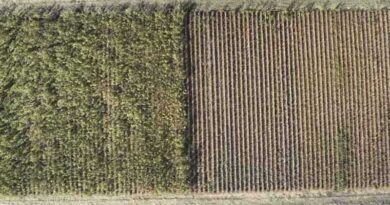
07 July 2026, New Delhi: Successful soybean cultivation depends not only on selecting superior varieties or adopting balanced nutrient management but also on ensuring that the crop establishes itself in a weed-free environment. The first few weeks after sowing are widely recognised as the most critical period for soybean growth. During this phase, weeds emerge alongside the crop and compete intensely for moisture, nutrients, sunlight and space. If not managed effectively, this competition can severely reduce plant population, suppress early growth and ultimately compromise yield potential.
Pre-emergence (PE) herbicides have therefore become an indispensable component of modern soybean production systems. Applied immediately after sowing but before the emergence of either the crop or weeds, these herbicides form a protective chemical barrier in the upper layer of the soil. Germinating weed seedlings absorb the herbicide as they emerge, preventing them from establishing and allowing soybean seedlings to grow without early competition.
The ICAR–National Soybean Research Institute (NSRI), Indore, has updated its recommendations for soybean weed management based on the Central Insecticides Board (CIB) label claims as on 31 March 2026. The latest advisory lists thirteen pre-emergence herbicide options, offering farmers greater flexibility in selecting products according to their weed spectrum, soil conditions and cropping systems.
A Growing Portfolio of Pre-Emergence Herbicides
Over the past two decades, soybean weed management has evolved considerably. Earlier recommendations were largely confined to a limited number of herbicides such as pendimethalin and metribuzin. Today, advances in herbicide chemistry have introduced several new molecules and premixed formulations capable of controlling a broader spectrum of grasses, broadleaf weeds and sedges.
This diversification is particularly significant because weed flora in soybean-growing regions has become increasingly complex. Continuous cultivation, changing rainfall patterns and repeated use of similar herbicide molecules have altered weed populations in many production areas. The availability of multiple herbicide options enables growers to rotate chemistries, delay herbicide resistance and tailor weed management programmes according to field conditions.
The National Soybean Research Institute recommends applying pre-emergence herbicides immediately after sowing and ensuring adequate soil moisture for optimum performance. Since these herbicides act in the soil rather than on emerged weeds, rainfall or irrigation shortly after application greatly enhances their effectiveness. The institute also recommends using sufficient spray water—450 to 500 litres per hectare with knapsack sprayers or about 120 litres per hectare with power sprayers—to achieve uniform soil coverage.
The following herbicides are recommended by the ICAR–National Soybean Research Institute for application immediately after sowing.
Table 1. Recommended Pre-Emergence (PE) Herbicides in Soybean
Herbicide/Formulation
Recommended Dose per Hectare
Pyroxasulfone 63.75% + Diclosulam 13% WG
200 g
Metolachlor 35.98% + Sulfentrazone 11.51% EC
2.50 L
Diclosulam 0.9% + Pendimethalin 35% SE
2.51 L
Diclosulam 84 WDG
26–30 g
Sulfentrazone 39.6 SC
0.75 L
Clomazone 50 EC
1.50–2.00 L
Pendimethalin 30 EC
2.50–3.30 L
Pendimethalin 38.7 CS
1.50–1.75 kg
Flumioxazin 50 SC
0.25 L
Metribuzin 70 WP
0.75–1.00 kg
Sulfentrazone + Clomazone
1.25 L
Pyroxasulfone 85 WG
150 g
Metolachlor 50 EC
2.00 L
Source: ICAR–National Soybean Research Institute recommendations based on CIB label claims as on 31 March 2026.
The list reflects the increasing emphasis on combination herbicides that bring together complementary modes of action. Products combining pyroxasulfone with diclosulam or metolachlor with sulfentrazone provide broader-spectrum weed control than many single active ingredients. Such combinations not only improve field performance but also contribute to herbicide resistance management by reducing repeated dependence on a single mode of action.
Pendimethalin continues to occupy an important place in soybean weed management and remains available in multiple formulations, including emulsifiable concentrate (EC), capsule suspension (CS) and premixed combinations with diclosulam. Likewise, newer herbicides such as flumioxazin and pyroxasulfone have expanded the choices available to farmers, particularly where difficult-to-control weed species have become problematic.
Timely Application Determines Success
Although pre-emergence herbicides are among the most effective weed management tools available to soybean growers, their performance depends heavily on proper application. Delayed spraying, uneven field preparation or inadequate soil moisture can significantly reduce herbicide efficacy and allow weeds to escape.
The National Soybean Research Institute therefore recommends that herbicide application should be completed immediately after sowing, before weeds begin to emerge. Disturbing the soil after spraying should be avoided because it may disrupt the herbicide layer formed near the soil surface. Uniform spray coverage, correct dosage and proper calibration of equipment are equally important to achieve consistent weed control across the field.
Experts also emphasise that pre-emergence herbicides should be viewed as one component of an integrated weed management programme rather than a standalone solution. Mechanical weeding, crop rotation, timely sowing and post-emergence herbicides remain important complementary practices. Rotating herbicides with different modes of action further helps preserve the effectiveness of existing chemistries and reduces the risk of resistant weed populations becoming established.
As soybean cultivation expands and weed challenges continue to evolve, pre-emergence herbicides remain one of the most economical and reliable investments farmers can make. By preventing weeds from emerging during the crop’s most vulnerable growth stage, these herbicides help ensure better crop establishment, improved resource utilisation and higher productivity. The latest recommendations from the ICAR–National Soybean Research Institute provide soybean growers with a diverse portfolio of scientifically validated options to achieve effective and sustainable weed management.
Global Agriculture is an independent international media platform covering agri-business, policy, technology, and sustainability. For editorial collaborations, thought leadership, and strategic communications, write to pr@global-agriculture.com