Why Are Farmers Not Adopting Technology in India?
By Nimish Gangrade, Editor – Global Agriculture
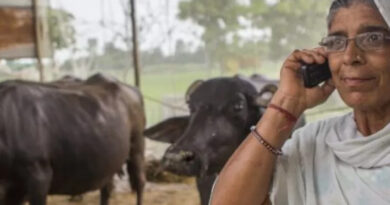
16 May 2026, New Delhi: India has witnessed waves of agricultural technologies like drones, IoT devices, mobile applications, smart meters, and digital advisories and yet large-scale adoption among farmers remains limited. The question is: why? Are we trying to tell farmers something they already know through years of experience in the field? Many applications launched for farmers were downloaded under pressure or promotional campaigns, only to be uninstalled just as quickly. Technology alone cannot increase yields if the foundation of farming itself remains weak.
What Is the Real Issue
The real issue lies much deeper. No matter how advanced the gadget or advisory platform may be, crop productivity will not rise significantly unless farmers receive high-quality seeds and planting material. In many cases, farmers continue using low-quality seed kits distributed through schemes, cheaper seeds purchased from the market, or recycled seeds from previous seasons. When the genetic potential of the seed itself is low, no amount of digital intervention can dramatically improve output.
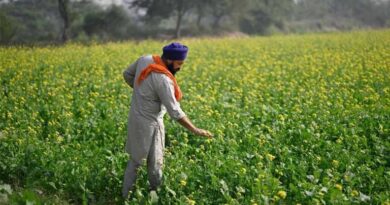
Farmers adopt technology only when they see a clear and immediate benefit. Technology cannot succeed in agriculture unless it solves a genuine problem. In Punjab and Haryana, farmers have started using automation systems to switch irrigation motors on and off remotely. This adoption did not happen because of a technology campaign; it happened because of necessity. Labour shortages and practical difficulties forced the shift. A landowner is understandably reluctant to step out at 5 a.m. during winter temperatures of 5 degrees Celsius simply to operate an irrigation pump. Yet even this adoption remains limited because every expense made by a farmer is carefully calculated.
Economics of ‘Smart Farming’
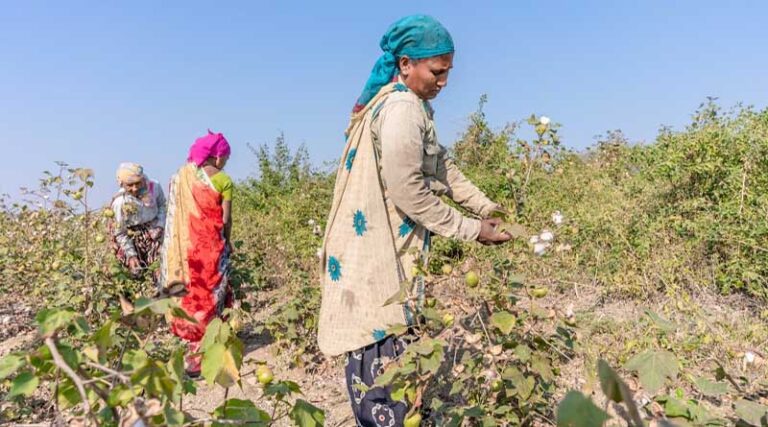
This economic reality is often ignored while discussing “smart farming.” A farmer with 1 hectare land, earning less than Rs. 20,000 from a crop season cannot be expected to invest in expensive electronic gadgets, paid advisory subscriptions, or premium seeds without certainty of returns. Even with three cropping seasons, an annual income of around Rs. 60,000 – Rs.80,000 leaves very little room for experimentation. How can policymakers or agri-tech companies expect farmers to spend Rs. 600 on advisory services or purchase expensive technologies while also facing the constant threat of crop loss due to unseasonal rainfall, drought, or market volatility?
The struggle of the smallholder farmer in India is real and often underestimated. Only a few states mainly Punjab, Haryana, and Madhya Pradesh consistently benefit from procurement at Minimum Support Price (MSP) for major field crops such as wheat, paddy, and soybean. A significant portion of this produce is procured to maintain India’s buffer stock, which forms the backbone of the country’s food security system. The grain distributed through the Public Distribution System (PDS) feeds nearly 80 crore people. Farmers are not merely producers; they are sustaining one of the world’s largest food security programs.
Bread Basket of the World Really!
Today, the world is more connected than ever. A farmer in India can speak directly with a farmer in Brazil and understand global agricultural challenges. Scientists, policymakers, and industry leaders are all aware of the underlying issue. Everything in agriculture begins with planting material. Yet millions of Indian farmers continue to cultivate decade-old seed varieties with limited productivity potential. Under such conditions, expecting a substantial rise in farm income is unrealistic.
The single most effective way to improve farm incomes in India is through widespread access to high-yielding, high-quality seed varieties. The central government must seriously focus on large-scale production and distribution of improved seeds across major field crops, particularly those with export potential. India often describes itself as the “bread basket of the world,” but the reality is more complicated. Wheat exports can be halted overnight through policy decisions, directly affecting farmers. Much of India’s agricultural output still struggles with issues related to quality, consistency, and global competitiveness.
Digital Apps or Seeds
There is no denying that India also produces world-class agricultural commodities. Basmati rice is a prime example. However, premium produce is often selectively sourced from farms and exported to international markets, while the average Indian consumer receiving grains through the PDS rarely sees such quality. This highlights the growing divide between export-oriented agriculture and domestic food systems.
Meanwhile, countries like China have started focusing aggressively on branding their agricultural produce, with agricultural branding announced as a national priority for FY 2026–27. In contrast, India often celebrates consumption trends rather than strengthening production systems. We proudly discuss imported crops such as avocados, even though domestic productivity challenges in pulses and oilseeds remain unresolved.
If one were to conduct an honest survey among agricultural scientists and experts, many would privately admit that India’s most urgent need is better seeds capable of delivering two to three times higher yields along with superior quality produce. If Indian farmers can consistently produce export-grade grains and commodities, they can benefit from higher productivity even if market prices remain below MSP levels.
Narrative about Soil Health
Another major narrative often pushed in agriculture is soil health. While it is true that soil quality has deteriorated over the years due to excessive and imbalanced use of chemical fertilisers, farmers increased fertiliser usage believing it would lead to higher productivity. However, one uncomfortable truth is rarely discussed openly: many of the seeds being cultivated simply do not possess high-yield potential. Without improving seed genetics, discussions around fertiliser efficiency, precision farming, or digital agriculture can only achieve limited success.
Technology in Indian agriculture will succeed only when it complements the farmer’s core needs rather than attempting to replace experience with digital solutions. Farmers do not reject technology because they are unwilling to change. They reject technology when it fails to improve profitability, reduce risk, or solve practical problems. The future of Indian agriculture does not depend on how many apps are downloaded, but on whether farmers are given the tools, beginning with quality seeds that genuinely improve productivity and income.
Also Read: UPL Limited FY26 Revenue Climbs 11% to ₹51,839 Crore, Advanta Surges 23% YoY
Global Agriculture is an independent international media platform covering agri-business, policy, technology, and sustainability. For editorial collaborations, thought leadership, and strategic communications, write to pr@global-agriculture.com