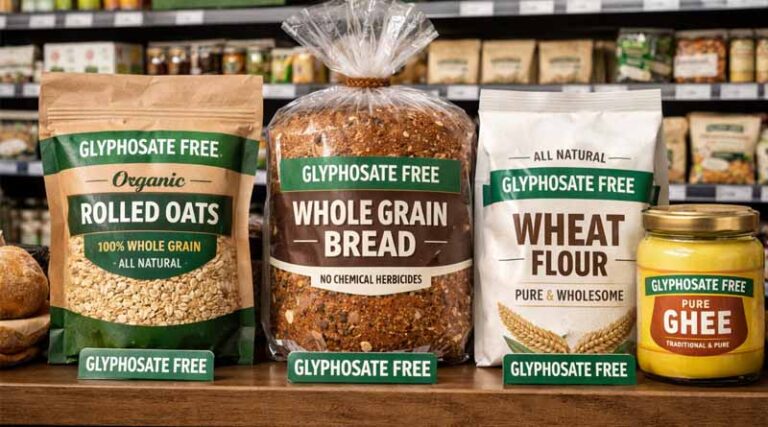
21 April 2026, London: A new trust signal is quietly entering the vocabulary of food branding: Glyphosate Free. What was once a technical conversation limited to agriculture, regulation, and scientific circles is now finding space on packaging, brand websites, social media campaigns, and premium product storytelling. Across categories such as oats, bread, flour, dairy, and fresh foods, brands are increasingly using the phrase to connect with health-conscious consumers.
This shift is important because modern food marketing is no longer driven only by taste, convenience, or price. Consumers are now influenced by sourcing practices, transparency, and what they believe has been kept out of the product. In that environment, glyphosate-free is emerging as a strong emotional and commercial proposition.
From Nutrition Claims to Invisible Ingredient Claims
For years, FMCG brands built campaigns around visible benefits such as high protein, low sugar, gluten free, preservative free, and organic. Today, the conversation is moving further upstream. Shoppers want to understand what happened in the field before the food reached the shelf.
That is why claims such as glyphosate-free resonate. Many consumers may not know the full technical definition of glyphosate, but they understand the meaning of avoidance. The phrase communicates a sense of caution, cleanliness, and conscious sourcing. Much like antibiotic-free or no added sugar, it functions as a shortcut to trust.
Search Behaviour Is Shaping Shelf Behaviour
One of the strongest indicators behind this trend is digital search activity. Increasingly, consumers are looking online for terms such as glyphosate free oats, glyphosate free bread, glyphosate free flour, and glyphosate free dairy products. This matters because online search behaviour often becomes a preview of future retail demand.
When shoppers actively search for a claim, marketers respond quickly. Product titles, paid advertisements, e-commerce descriptions, influencer content, and marketplace listings begin to mirror the exact language consumers use. In that sense, glyphosate-free is no longer just a farming term; it is becoming a valuable keyword in modern food commerce.
Europe: Where Clean-Label Sensitivity Is Shaping Global Food Marketing
It is important to understand the influence of the Europe market, where consumers are among the most sensitive in the world to agrochemical-related issues. Across many European countries, food purchasing decisions are strongly linked with perceptions of safety, sustainability, traceability, and environmental responsibility.
Buyers often respond positively to claims around residue-free sourcing, organic production, regenerative farming, and reduced chemical exposure. This has pushed brands, retailers, and private labels to communicate cleaner supply chains more aggressively. Because Europe often sets the tone for premium food trends, regulatory discussions, and consumer expectations, its sensitivity toward agrochemicals is influencing branding strategies far beyond the region, including in emerging markets such as India.
India’s Urban Consumer Is Leading the Shift
In India’s urban markets, consumers are becoming more label-aware and research-driven. Young families, working professionals, fitness-focused households, and premium grocery buyers are increasingly reading ingredient lists, comparing brands, and asking questions about food origins. They are not simply purchasing a product; they are purchasing reassurance.
This trend is particularly relevant in metros and large cities where disposable income, digital awareness, and health aspirations are rising together. For these buyers, a cleaner sourcing narrative can justify a higher price point and stronger brand loyalty.
A notable example is Two Brothers Organic Farms, which has positioned its ghee as glyphosate-free. The brand claims that the product is India’s First certified Glyphosate-free A2 Cultured Ghee. This is significant because it extends the conversation beyond cereals and grains into traditional Indian staples. When a heritage product such as ghee adopts a modern clean-label claim, it shows how broad and commercially relevant this trend can become.
What Is Glyphosate?
Glyphosate is a widely used weed-control chemical applied in farming to manage unwanted plants and improve crop-field efficiency. Over time, it has become one of the most discussed agricultural inputs in the world, not only because of its widespread use but also due to ongoing debates around residues, regulation, and long-term health and environmental concerns.
For consumers, the term has increasingly moved from farm jargon to a food-label issue, which is why brands are now using “glyphosate-free” as a trust-building message.
Why Marketers Like the Glyphosate-Free Tag
From a branding perspective, the appeal of this message is clear. First, it creates immediate differentiation in crowded categories where many products appear similar. A bag of flour or pack of oats can stand apart when supported by a stronger sourcing story.
Second, it supports premiumisation. Consumers who value health and transparency are often willing to pay more for products they perceive as safer or cleaner.
Third, it helps storytelling. Founders, influencers, and content marketers can build richer narratives around farming choices, trust, family health, and responsible sourcing rather than relying only on price promotions.
Finally, it builds emotional confidence. In an age of information overload, simple claims reduce decision fatigue and make products easier to choose.
The Paraquat Parallel
A smaller but meaningful pattern is also visible around paraquat-free products. While still far less mainstream than glyphosate-free, the interest reflects a wider consumer shift. People are beginning to notice names of agricultural chemicals and connect them with food choices.
Even if the market remains niche today, it suggests that future food branding may include a wider range of residue-related or farming-practice claims. The language of food labels is expanding beyond nutrition into agricultural transparency.
Global Restrictions Add Marketing Momentum
Consumer narratives are often strengthened when global policy actions enter public discussion. Several countries have banned, restricted, or tightly controlled glyphosate use in different forms or contexts.
For brands, the commercial takeaway is not regulation alone. It is that consumers notice these developments and often interpret them as a signal to seek better alternatives. That makes clean-label positioning more powerful.
What FMCG Brands Should Do Next
Food companies should view this trend as more than a passing niche. The opportunity lies in owning the supply story, explaining sourcing in clear language, and converting complex agricultural issues into simple consumer trust messages. Brands that move early can become synonymous with the category before larger competitors react.
At the same time, authenticity matters. Consumers increasingly expect proof, transparency, and consistency. Claims without substance may attract attention briefly, but trust is what builds repeat purchase.
The Future of Food Branding
The next era of FMCG and fresh food marketing may not be defined only by taste, convenience, or calories. It is likely to be shaped by how products are grown, what they avoid, and how honestly brands communicate that journey.
Glyphosate-free is therefore more than a label. It represents a deeper change in consumer psychology. People are no longer buying food only for hunger or flavour. They are buying peace of mind.
Global Agriculture is an independent international media platform covering agri-business, policy, technology, and sustainability. For editorial collaborations, thought leadership, and strategic communications, write to pr@global-agriculture.com