20 July 2026, AU: Safe livestock handling relies on more than experience alone. It requires good infrastructure, ongoing training, strong leadership and a commitment to continually improving the way people work with animals.
As one of Australia’s largest agribusinesses, Elders recognises that livestock handling presents some of the most common and potentially serious risks faced by people working in agriculture. Through practical training, investment in safer yards and infrastructure, and a strong focus on safety leadership, Elders is working to ensure that safety remains an integral part of good livestock management.
This commitment extends across the organisation, from internal training programs and practical on-the-job learning through to the Elders Livestock Academy, which helps develop the next generation of livestock professionals. Recognising that safe practices are learned through both formal training and everyday role modelling, Elders places significant emphasis on ensuring experienced staff lead by example and create environments where safety is visible, valued and consistently reinforced.
As part of this commitment, Elders has recently developed a livestock handling safety video to support awareness, education and practical conversations around working safely with livestock. The resource complements broader training initiatives focused on animal behaviour, yard design, communication, risk assessment and safe work practices.
At Elders, safety is not viewed as a separate activity from livestock production. It is a fundamental part of professional stock handling, effective leadership and building a sustainable workforce for the future.
Farmsafe Australia recently spoke with Elders’ National Livestock Manager, Peter Homann, about the importance of livestock handling safety, the role training plays in shaping safer behaviours and how Elders is helping set the standard across the industry.
Livestock handling remains one of the most common causes of injury on Australian farms. What do you see as the biggest risks people underestimate when working with livestock?
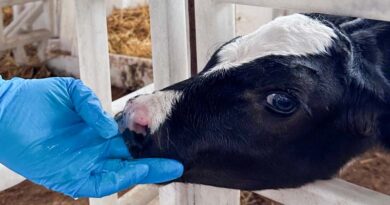
One of the biggest risks is underestimating animal behaviour and the impact of pressure and stress, both for the livestock and the handler. For example, calves separated from their mothers can be unpredictable, particularly if they or their handler is rushed or agitated. Low-stress handling is critical; the calmer the operator, the calmer the livestock, and the safer the outcome.
Another common issue is time pressure. People often try to move too quickly, which increases risk. In reality, “slow is fast” when handling livestock, and taking the time to let animals settle leads to safer and more efficient handling.
We also see variability in infrastructure across regions. While conditions are improving, particularly in saleyards, risks are often higher on farms where facilities may not be maintained as rigorously. A key part of safe handling is stopping to assess livestock, allowing them to settle, and ensuring infrastructure and equipment are fit for purpose before starting work.
Elders has invested heavily in training and capability development through initiatives such as the in-house Livestock Academy. Why is practical training so important in helping people develop safer livestock handling habits?
Practical training is essential because it builds both capability and confidence in real-world conditions. At Elders, our focus is simple: everyone should go to work and return home safely, while also maintaining a strong duty of care to the livestock we manage.
Hands-on training, supported by targeted, high-quality eLearning, has been effective in improving behaviours across the business. We also place strong emphasis on mentoring, pairing experienced operators with less experienced team members to build capability on the job. Over time, this creates a positive cycle where better skills lead to safer outcomes, reinforcing strong safety habits across teams.
As you’ve mentioned, good livestock handling is often linked to good infrastructure. What role do yard design, maintenance and facility improvements play in creating safer outcomes for both people and animals?
Well-designed and maintained infrastructure is critical to safe livestock handling. Good yard design supports natural animal movement, reduces stress, and enables handlers to work safely without putting themselves in high-risk positions.
Maintenance is equally important. Before starting any work, we assess facilities to ensure yards, crushes, gates and access points are in safe working order. Addressing issues early, whether it’s repairs, adjustments or simple maintenance significantly reduces risk.
Ultimately, well-designed and well-maintained facilities create a safer, more controlled environment, improving outcomes for both people and animals.
Elders has recently developed a livestock handling safety video and continues to provide practical internal training for staff. What are the key messages you hope people take away from these resources?
The key message is understanding how livestock behave and using that knowledge to work safely. Concepts such as an animal’s field of vision, pressure points, and flight zone are critical to effective handling. When people understand these fundamentals, they can move livestock more safely, with less stress.
The training also reinforces real-life experiences from our teams, which helps bring the message home. These are practical, relatable insights that highlight how quickly things can go wrong and how applying the right techniques can prevent incidents.
This year’s National Farm Safety Week theme is “Set the Standard – Show ’em how it’s done”. What does safety leadership look like in a livestock handling environment, and how can experienced operators help influence safer behaviours across the industry?
Safety leadership in livestock handling is about setting the standard every day, demonstrating the right behaviours, taking the time to do things properly, and reinforcing that safety is non-negotiable.
As an industry, we’ve made significant progress, but there is more to do. Collaboration is critical, whether that’s sharing knowledge, best practice, training approaches or lessons learnt. At Elders, we actively support this by investing in training and mentoring and working closely with saleyard operators and industry partners to continue lifting standards.
Importantly, we’ve also made the decision to publicly release our Livestock Handling eLearning to help build capability across the industry and raise awareness of safe livestock handling practices more broadly.
Experienced operators have a critical role to play by mentoring others, influencing behaviours on the ground, and leading by example to help drive safer outcomes across the industry.
Global Agriculture is an independent international media platform covering agri-business, policy, technology, and sustainability. For editorial collaborations, thought leadership, and strategic communications, write to pr@global-agriculture.com