Insect Eavesdropper Lets Kansas Researchers Hear Hidden Soybean Pests
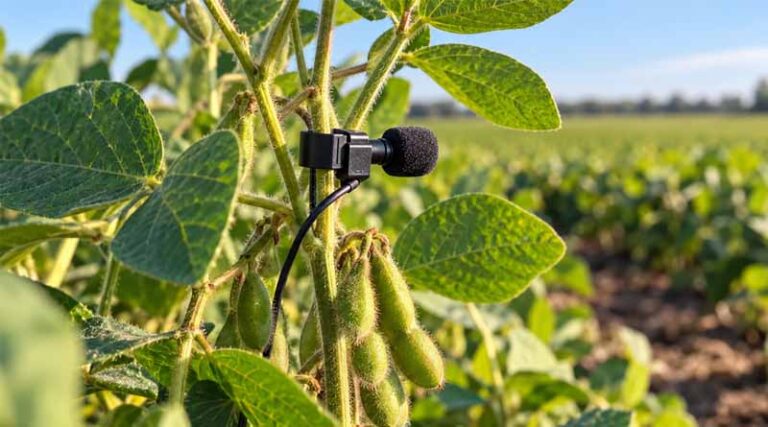
19 October 2026, Kansas: Entomologists at Kansas State University are testing whether microphones clipped to soybean plants can catch pests that feed hidden inside stems long before a farmer would otherwise notice a problem. The tool, called the Insect Eavesdropper, picks up the faint vibrations and sounds insects make while chewing or moving inside plant tissue, then uses machine learning to match those sounds to specific pest species. K-State shared an update on the project on September 24, 2026.
The work is led by Emily Sur, a master’s student in K-State’s Department of Entomology, under the supervision of department head and professor Brian McCornack. The device itself was invented by Emily Bick, an entomology professor at the University of Wisconsin-Madison, who leads a multistate research effort to adapt the tool for different crops and regions. K-State’s role this year was to test the device under Great Plains field conditions and to build a larger library of insect sounds that Bick’s lab can use to train its detection software.
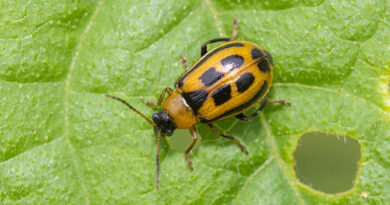
The target pest for this season’s trial was the soybean stem borer (Dectes texanus), a beetle larva that tunnels inside soybean stems and is notoriously difficult to detect because it causes little visible damage until late in the season, when infested stems can break and fall over before harvest. Many of agriculture’s costliest pests share this hidden habit: they spend all or part of their life cycle inside stems, roots or soil, where visual crop scouting simply cannot find them until the damage is already done.
How the listening system works
The Insect Eavesdropper itself is a small, battery-powered recording unit built around a vibration sensor or microphone that clips directly onto a plant stem or is driven into the soil near plant roots. In the K-State trials, researchers attached these units to soybean plants in open fields and to plants grown in cotton-filled greenhouse cages, then left the equipment running continuously for several days at a stretch. Afterward, the team retrieved the devices and dissected the plants to confirm which insects, if any, were actually present inside the stems, a step that lets them check the recordings against ground truth.
To build a cleaner reference library of pest sounds, the researchers also built small netted cages around some of the sensors and released specific insects inside them, including the Japanese beetle, so that the resulting recordings could be confidently attributed to a single, known species. Those labelled recordings are sent to Bick’s lab in Wisconsin, where a separate team is building and refining the machine learning models that interpret the acoustic data and flag likely pest activity. The division of labor is intentional: K-State focuses on generating large volumes of high-quality field data under regional conditions, while the Wisconsin team concentrates on the software side.
K-State has not yet published detection accuracy figures or a side-by-side comparison with conventional scouting, and the September update was explicit that this season’s work was about collecting data rather than producing final performance numbers. That is a meaningful caveat: the technology remains a research tool rather than a proven commercial product, and McCornack describes the near-term goal as putting the device into wider academic use before it moves toward industry. Bick’s laboratory has already made the tool freely available to other academic research groups, which should accelerate testing across different crops and pest species.
What it could mean for growers
If the acoustic approach continues to prove reliable, it would give growers a way to monitor pests that feed inside plant tissue on a near-continuous basis, rather than relying on periodic visual scouting that, by its nature, tends to catch an infestation only after visible symptoms such as wilting, discoloration or stem breakage appear. In principle, earlier and more specific pest detection could sharpen decisions on insecticide timing, help growers and crop consultants allocate scouting labor more efficiently, and support integrated pest management thresholds that currently rely on indirect signs of infestation.
Also Read: USDA Reports Record Soybean Yield, Bigger Corn Crop in October Forecast
Global Agriculture is an independent international media platform covering agri-business, policy, technology, and sustainability. For editorial collaborations, thought leadership, and strategic communications, write to pr@global-agriculture.com