Denmark Passes Contested Nitrogen Law After Tractor Protests Fill Copenhagen
10 September 2026, Copenhagen, Denmark: Denmark’s parliament, the Folketing, passed a sweeping new law regulating nitrogen and greenhouse gas emissions from farming on September 3, by a vote of 119 to 34, two days after hundreds of farmers drove tractors into central Copenhagen and Aarhus to oppose it. The law, formally titled the Act on Sustainable Management of Nutrients and Greenhouse Gases in Agriculture and Forestry and known locally as the gødskningslov, replaces Denmark’s decades-old system of field-by-field nitrogen limits with a new model that regulates how much nitrogen actually reaches lakes, fjords and coastal waters. It takes effect January 1, 2027.
The bill drew support from a broad coalition spanning the governing Social Democrats through the Socialist People’s Party, most of Venstre, the Liberal Alliance, the Moderates, the Conservatives, the Red-Green Alliance, the Social Liberals and the Alternative party. Notably, five of Venstre’s 18 members of parliament broke ranks to vote against the measure, including senior figures Peter Juel-Jensen and Søren Gade, exposing a rift inside the party over how far Denmark’s agricultural sector should be pushed on emissions.
Protests before the vote
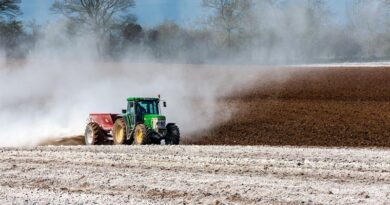
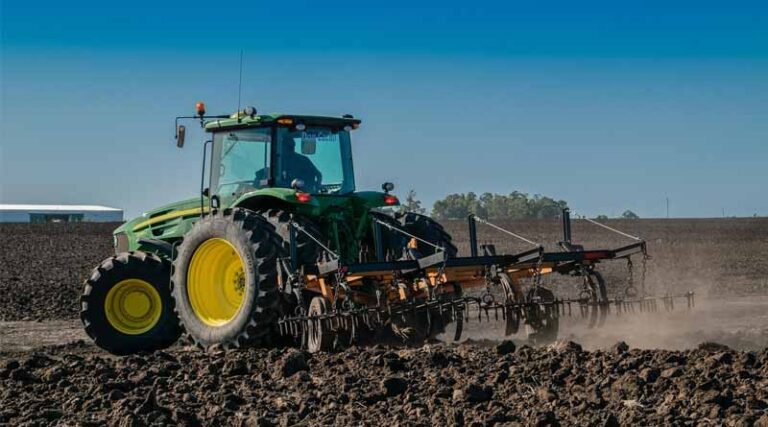
Two days before final passage, farmer groups organised under the banners “No Farmers, No Food, No Future” and the Bæredygtigt Landbrug association brought tractor convoys to Copenhagen’s parliament square and to Aarhus, snarling traffic across both cities. Many protesters wore green caps printed with the phrase “Fired by the state.” The agricultural consultancy Agrocura estimated the sector could face annual losses of around 7.1 billion kroner, roughly 1.1 billion dollars, once the new rules bite. Niels Hauge Mikkelsen, chairman of Bæredygtigt Landbrug, argued the scientific basis for the targets was “extremely uncertain,” while Denmark’s Minister for Nature and Animal Welfare, Christian Rabjerg Madsen, said he remained “open to dialogue” but only within the framework parliament had already agreed.
The dispute is the latest chapter in Denmark’s 2024 Green Tripartite agreement between the government, farm groups and green organisations, which already committed the country to taxing agricultural emissions from 2030, a global first among major farming nations. The new nutrient law operationalises the environmental side of that deal by building in an adjustment mechanism: if water-quality targets are missed, restrictions tighten further; if reductions run ahead of target, farmers get more flexibility on fertiliser and manure use.
A bellwether for EU farm policy
Denmark is a small producer in global terms, but its clash over nitrogen rules is being watched closely elsewhere in Europe, where similar nitrate-driven disputes have already destabilised farm politics in the Netherlands and fed into broader farmer protest movements across the continent over the past two years. Denmark is also a major exporter of pork and dairy products, so a nitrogen regime that squeezes livestock density or feed and fertiliser practices could ripple into EU meat and dairy supply chains over the next several years, even if the immediate effect in 2027 is limited to compliance costs on Danish farms.
Also Read: Corteva and Globachem to Form Joint Venture for New Crop Protection Solutions
Global Agriculture is an independent international media platform covering agri-business, policy, technology, and sustainability. For editorial collaborations, thought leadership, and strategic communications, write to pr@global-agriculture.com