Trump-Xi Summit Set to Test US-China Soybean Trade Truce
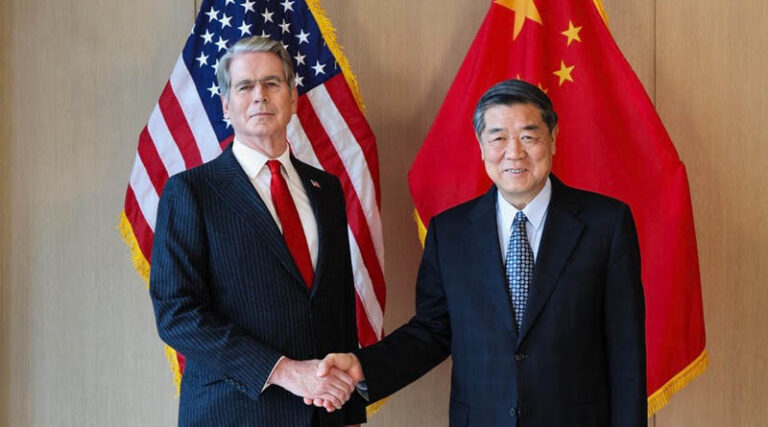
21 September 2026, Washington, D.C.: A Chinese delegation led by Vice Premier He Lifeng arrived in Washington on September 19 for four days of trade talks ahead of a planned meeting between President Donald Trump and President Xi Jinping on September 24, with agricultural purchases and a tariff truce due to expire in November among the main items on the table.
He Lifeng, a member of the Communist Party’s Political Bureau, is expected to meet US Treasury Secretary Scott Bessent, with US Trade Representative Jamieson Greer also involved in the preparatory talks. China’s commerce ministry said the two sides would hold consultations on economic and trade issues of mutual concern, though as of September 18, Beijing had not formally confirmed Xi’s travel to Washington. The talks are also expected to cover rare earth magnet supplies, artificial intelligence cooperation, and the broader tariff relationship between the two countries.
Soybeans sit at the center of the agricultural agenda. China has committed to buying 25 million metric tons of US soybeans annually through 2028, up from a prior-year target of 12 million metric tons that Beijing reportedly met with 12.35 million metric tons actually shipped. Chinese buyers purchased roughly 1 million metric tons of US soybeans in the week before the talks began, moving the country close to the halfway mark of its new annual pledge even before the summit takes place. China currently maintains a 10 percent tariff on US agricultural imports, and trade analysts expect any tariff relief agreed at the summit to encourage more private Chinese buyers back into the market.
The renewed buying has already moved prices. US soybean futures climbed to their highest level in nearly three years in the run-up to the talks, and USDA raised its projected 2026-27 average farm price for soybeans to 12 dollars a bushel in its latest estimate, an increase of 60 cents from the previous month, while trimming its forecast for ending stocks to 310 million bushels. Jim Sutter, chief executive of the US Soybean Export Council, has described agricultural trade, and soy in particular, as a long-standing stabilizing factor in the US-China relationship.
Tariff truce and drone duties complicate the picture
The two governments are working against a deadline. A trade truce reached in 2025 that paused major tariff escalation is due to expire in November, and both sides are under pressure to extend it even as new friction points emerge. On September 3, the Trump administration used Section 232 authority to impose a 100 percent tariff on Chinese drones weighing more than 25 kilograms or fitted with thermal imaging equipment, and a 25 percent tariff on smaller drones without thermal capability. Agricultural drones, widely used for spraying and crop monitoring and heavily supplied by Chinese manufacturers, fall within the scope of this action, adding a mechanisation dimension to a summit that is nominally about soybeans and tariffs.
Analysts covering the talks caution that Washington is aiming to manage the relationship rather than negotiate a sweeping new trade agreement, with negotiators reportedly working toward quantified purchase targets for agriculture, energy, and aircraft rather than a comprehensive deal. Rare earth export controls, semiconductor restrictions, and rhetoric on Taiwan are all seen as capable of derailing the narrower agricultural and trade understanding that both sides appear to want. This is a different meeting from the Trump-Xi summit held in Busan, South Korea, in October 2025, underscoring how frequently the two leaders have needed to meet to keep the trade relationship on track over the past year.
Also Read: CropLife India Flags Narrowing Crop Protection Options for Farmers
Global Agriculture is an independent international media platform covering agri-business, policy, technology, and sustainability. For editorial collaborations, thought leadership, and strategic communications, write to pr@global-agriculture.com