Romanian Farmers Clash With Police Over EU Livestock Export Ban
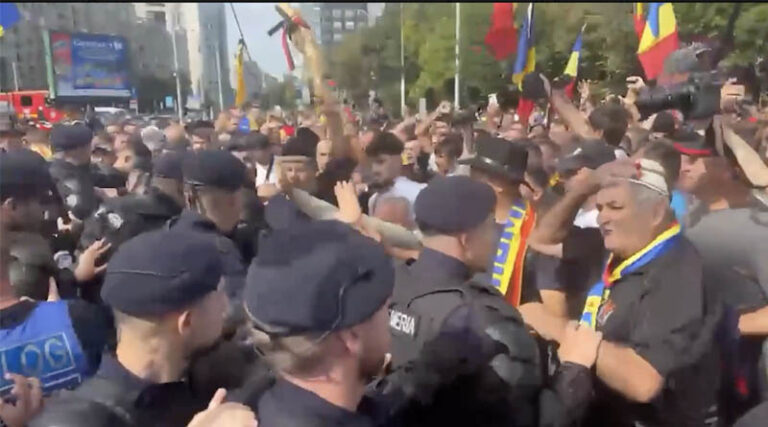
19 September 2026, Bucharest, Romania: Violent clashes broke out outside Romania’s government headquarters in Bucharest on September 15 when roughly 2,000 farmers and shepherds protesting an EU-mandated livestock export ban and inadequate drought compensation threw rocks and metal barriers at police, who responded with tear gas. Twenty-six people were detained and twenty-four demonstrators and officers needed medical treatment, with four hospitalized and some sustaining broken bones.
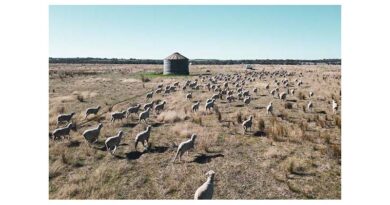
The protest centered on the European Union’s decision to extend a ban on live sheep exports through December 31, 2026, a measure introduced after outbreaks of Peste des Petits Ruminants, a viral disease affecting sheep and goats, and sheep and goat pox were detected in the region. Romanian shepherds, who depend heavily on exporting live animals to markets in the Middle East and North Africa, say the extended ban is cutting off their main source of income during the autumn selling season without adequate compensation or a clear timeline for when trade might resume.
Crop farmers joined the demonstration over a separate grievance: drought compensation that fell far short of what had been promised. Farmers said they were told to expect 100 euros per hectare in support after a dry growing season but received only 19 euros per hectare, a shortfall that farming associations say leaves many growers unable to cover even basic input costs for the coming season.
A protest that turned violent
What began as a planned demonstration outside government buildings escalated when some participants began throwing objects at riot police guarding the site. Romanian President Nicusor Dan condemned the violence as extremely serious, warning against any attempt to turn a legitimate protest into street fighting. His comments reflected an effort to separate the underlying policy grievances, which officials broadly acknowledge, from the clashes themselves, which cut across party lines in their condemnation.
The protest also carried a political undercurrent. George Simion, leader of the far-right AUR party, voiced support for the farmers’ demands while urging demonstrators to keep the protest peaceful, and some participants were seen chanting support for Calin Georgescu, a presidential candidate whose earlier candidacy was annulled amid controversy. The scenes in Bucharest come as Romania grapples with political instability and the highest inflation rate in the European Union, conditions that have made rural discontent an increasingly potent political issue.
Romania is far from alone in this. Farmer unrest has flared across the EU periodically since 2023 over a mix of environmental rules, cheap imports and shrinking margins, and Bucharest’s protest adds to a pattern seen this year in other member states where growers have pushed back against Brussels-driven regulation they see as disconnected from their economic reality.
Why livestock health rules keep colliding with farm incomes
The EU’s live-export restrictions illustrate a recurring tension in European agricultural policy: animal disease controls that make sense from a biosecurity standpoint can still devastate the finances of farmers whose business models depend on live trade rather than processed meat exports. Sheep and goat producers in Romania, one of the EU’s larger sheep-farming nations, have comparatively few alternative markets for live animals, since much of the demand from Middle Eastern buyers specifically requires live shipment for religious slaughter practices rather than frozen or chilled meat. Brussels has signaled the ban will be reviewed once the animal health situation stabilizes, but farmers say the current compensation framework does not reflect the scale of income lost in the meantime.
The clash also puts a spotlight on how EU member states calculate and disburse drought aid, a process that has drawn criticism in multiple countries this year as extreme weather events become more frequent and national budgets strain to keep pace with promised support levels.
For companies supplying seeds, fertilizer and crop protection products into Eastern Europe, sustained farmer unrest over compensation and market access is a signal worth tracking closely, since it often precedes reduced input spending as growers hold back on next season’s purchases pending clarity on both drought relief and export markets. The pattern also offers a useful comparison point for India and other markets where farmer movements have similarly centered on the gap between government-promised support and what actually reaches growers, a grievance that tends to recur regardless of geography once compensation systems are seen as unreliable.
Romanian authorities have not announced changes to either the export ban or the drought compensation formula following the protest, though the scale of the violence is likely to keep pressure on both Bucharest and Brussels to revisit the terms before the ban’s current December 31 expiry.
Also Read: CropLife India Flags Narrowing Crop Protection Options for Farmers
Global Agriculture is an independent international media platform covering agri-business, policy, technology, and sustainability. For editorial collaborations, thought leadership, and strategic communications, write to pr@global-agriculture.com