06 November 2026, London: Crop protection sales fell at every major agri-input company in the July to September 2026 quarter, while seed sales grew at three of the four that sell seeds. Syngenta Group’s sales dropped 10% to $5.2 billion and BASF’s Agricultural Solutions segment slid 19.7% to about $1.62 billion. FMC Corporation’s revenue collapsed to $106 million after a one-off reset of its North American pricing model. Bayer’s Crop Science division edged up 0.7% to about $4.47 billion on a reported basis, but fell 2.4% once currency and portfolio effects were stripped out.
India’s UPL Limited, which reports on an April to March year, posted agribusiness sales of about $1.13 billion for the same three months, down roughly 4%. The split between the two halves of the industry was stark. Bayer’s seed businesses grew 7.1% to about $1.78 billion while its crop protection units shrank 4.0%, and BASF’s seeds rose 3.3% even as its crop protection sales fell almost a quarter. Corteva, the fourth of the big four, reports its third-quarter results on November 11.
Agribusiness sales comparison, July to September 2026 (US$)
Company
Total agri sales (reported change)
Underlying change
Crop protection (change)
Seeds (change)
Syngenta Group
$5.2 billion (-10%)
-12% at constant currency
$4.0 billion (about -7%)
$0.8 billion (level)
Bayer Crop Science
$4.47 billion (+0.7%)
-2.4% currency and portfolio adjusted
$2.39 billion (-4.0%)
$1.78 billion (+7.1%)
BASF Agricultural Solutions
$1.62 billion (-19.7%)
-22% (volume -17.3%, price -4.8%)
$1.30 billion (-23.8%)
$313 million (+3.3%)
UPL (agri segments)
$1.13 billion (about -4%)
-10% group volume, price flat
$930 million (about -7%)
$196 million (+12%)
FMC Corporation
$106 million (-80%)
-22% like-for-like
$106 million (-80%)
No seeds business
US$ values are converted at average exchange rates for July to September 2026; percentage changes are in each company’s own reporting currency. The methodology note at the end explains what each figure includes.
Stripping out currency and one-off charges changes the ranking: FMC’s reported collapse is mostly its pricing reset, while Bayer’s reported gain turns into a decline once favourable currency effects are removed.
Underlying agri sales fell at all five companies, by 2% to 22%Change vs July to September 2025, stripping out currency and one-off effects as each company reports it
Underlying changeReported
Bayer Crop Sciencecurrency and portfolio adjusted
-2.4%
+0.7%
UPL (agri segments)group volume, price flat
-10%
-4%
Syngenta Groupconstant currency
-12%
-10%
FMC Corporationlike-for-like, ex India and one-offs
-22%
-80%
BASF Agricultural Solutionsvolume plus price
-22.1%
-19.7%
Source: Company Q3 2026 results and quarterly filings. Underlying basis as defined by each company. Reported change in each company’s own currency.
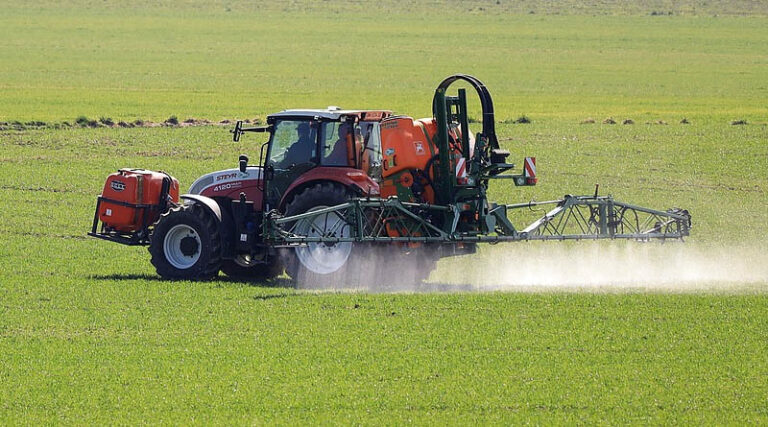
BASF suffered the steepest fall among the big players. Its crop protection sales dropped 23.8% to about $1.30 billion, with herbicides down 31.3%, seed treatment down 29.7%, fungicides down 22.2% and insecticides down 11.0%. Volumes fell 17.3% and prices 4.8%, while currency added 2.1%. The segment swung to an EBITDA loss before special items of about $55 million, against a profit of about $92 million a year earlier at this quarter’s rates.
Bayer’s crop protection units lost 4.0% on a reported basis to about $2.39 billion. Fungicides and herbicides excluding glyphosate each fell 8.6% on an adjusted basis, glyphosate slipped 5.3% and insecticides held level. Crop Science EBITDA before special items dropped 41.3% to about $116 million, a margin of 2.6%. Syngenta Crop Protection fell to $3.1 billion from $3.4 billion, while ADAMA held at about $0.9 billion.
UPL’s global crop protection platform lost 8% to about $834 million, and its India unit grew 1% to about $96 million after price increases of 9% outweighed an 8% drop in volume. FMC’s North America revenue was negative $371 million, against $244 million a year earlier, because it booked the reset of its pricing and rebate model as a deduction from sales. Its Latin America revenue fell to $264 million from $463 million, EMEA to $121 million from $155 million and Asia excluding India to $91 million from $99 million.
The regional pattern was consistent. Bayer’s Crop Science sales in Europe, Middle East and Africa fell 22.5% on an adjusted basis and Asia-Pacific fell 11.8%, while Latin America grew 5.6% on seed demand. Syngenta’s nine-month crop protection sales grew 20% in China but fell 6% in Brazil and 14% in Latin America.
Seeds cushion the fall
Seeds were the industry’s safety net this quarter, lifted by the Latin American summer planting season. Bayer’s seed businesses grew 7.1% to about $1.78 billion, making them the largest seed sales in the comparison, and UPL’s Advanta grew fastest, up 12% to about $196 million.
Table 2: Seeds performance, July to September 2026 (US$)
Company
Q3 2026 seed sales
Change vs Q3 2025
What drove it
Bayer Crop Science
$1.78 billion
+7.1% reported
Latin American corn and soybean demand for the summer season
Syngenta Seeds
$0.8 billion
level
Brazil and Latin America growth offset by North America restructuring and lower US corn acres
BASF Seeds and Traits
$313 million
+3.3%
Higher field crop seed volumes in North America
Advanta (UPL)
$196 million
+12%
Pricing, currency, corn in Argentina, Latin America and Indonesia
Within Bayer, corn seed sales of about $911 million were level on an adjusted basis, as strong Latin American growth offset lower volumes in the other three regions where farmers planted less corn. Soybean seed rose 4.5% on an adjusted basis to about $663 million, while vegetable seeds fell 5.1% to about $190 million on lower European plantings. Bayer also flagged El Niño damage to its rice seed business in Asia.
Syngenta’s nine-month field crops figures show the same north-south divide. Brazil grew 13%, Latin America 5% and Europe 3%, while North America fell 11% on restructuring, now largely complete, and an industry-wide drop in US corn acres. China slipped 1% as Syngenta deliberately cut grain trading at its Winall unit.
Advanta’s growth came from pricing and favourable currency, led by corn in Argentina, other Latin American markets and Indonesia, plus sunflower and grain sorghum in Argentina. Its seed sales in India and Thailand suffered from El Niño and late monsoon rains. Advanta EBITDA rose 19% to about $53 million, a 27.2% margin, and the company has agreed to buy 99.98% of Egypt’s Misr Hytech Seed International for about $110 million.
What management said
Executives blamed the same three forces: hot, dry weather in Europe and Asia, price competition and timing shifts in Latin America, and distributors cutting stock while borrowing stays expensive. Where sales grew, they credited southern hemisphere seed demand, new active ingredients and biologicals.
Table 3: Reasons management gave for the sales trend
Company
What pulled sales down
What held sales up
Outlook given
Syngenta Group
Planned exit from low-margin grain trading; Latin American purchases delayed into Q4 by high interest costs and extreme weather; off-patent price pressure in Brazil, worsened by a stronger Brazilian real; European drought; cautious buying as farm incomes stay squeezed
Newly launched technologies at above-average prices; double-digit biologicals growth; China
Underlying nine-month sales up 1% excluding low-margin businesses; nine-month EBITDA margin up 100 basis points to 18.4%
Bayer Crop Science
Regulatory impacts and adverse weather in Europe, Middle East and Africa and Asia-Pacific; crop protection volumes phased into Q4; generic price pressure in Latin America and North America; prolonged heat cutting European glyphosate demand
Corn and soybean seed demand for the Latin American summer season; higher herbicide volumes in Latin America after price adjustments
Cut its estimate for global seed and crop protection market growth in 2026 to 0 to 2% (from 0 to 3%); kept Crop Science guidance of 0 to 3% adjusted sales growth
BASF Agricultural Solutions
Sales pulled forward into Q2 ahead of a South American IT system migration; tough South American market and competitive pricing; adverse weather in Europe; El Niño hitting Asian herbicide demand
Higher field crop seed volumes in North America; currency added 2.1%
Seasonally stronger Q4 expected; business on track to be ready for a stock market listing by mid-2027
FMC Corporation
Distributors sharply cutting replenishment orders in the last weeks of the quarter amid high financing costs, ample supply and uncertain demand; $639 million revenue hit from the pricing and rebate reset
Currency added 1%
Q4 revenue excluding India $1.04 to $1.14 billion, flat at midpoint; full-year revenue excluding India $2.75 to $2.85 billion, down 28%
UPL
Group volumes down 10%; unfavourable weather and sales timing in Brazil and Latin America; drought-like conditions in Europe; dry spells in India; higher input costs
Currency added 9%; new launches in North America; price increases in India; Advanta seeds
Kept fiscal 2027 guidance of 7 to 11% revenue growth and 10 to 14% EBITDA growth
FMC chief executive Pierre Brondeau said the company is acting to cut the value of its inventory held by distributors and get products moving to growers, adding that weaker than expected demand compounded the hit. He said completing that work should set FMC up for better results in 2027 and stronger growth in 2028. Of the roughly $672 million EBITDA impact, about $500 million relates to the move to a new North American pricing and rebate model from October 1, and about $175 million to price cuts on high-priced products already with distributors in Brazil, the US, Canada and Argentina.
Bayer said that in crop protection, generic competition, weather and farmers’ financial strain are weighing on the market more than it had expected, though it still projects moderate growth for seeds and traits. BASF finance chief Dirk Elvermann told analysts that unfavourable weather had hit volumes in South America, Europe, Asia and North America. Syngenta pointed to its deliberate shift towards higher-margin sales, which lifted profitability even as nine-month sales fell 5% to $17.3 billion.
UPL chairman and group CEO Jai Shroff said the results showed the strength of the group’s diversified model while its crop protection units managed phased demand and difficult weather, and suggested rising commodity prices could improve farm economics. Group CFO Bikash Prasad said capital priorities remain cash conversion, debt reduction and better returns. UPL’s net debt stood at $2.99 billion at the end of September, and net working capital stretched to 145 days from 118 days on higher inventory.
Global Agriculture is an independent international media platform covering agri-business, policy, technology, and sustainability. For editorial collaborations, thought leadership, and strategic communications, write to pr@global-agriculture.com