Syngenta Expands Zivalgo, Incipio Insecticide Use In Florida
04 November 2026, Orlando, US: Florida strawberry growers have gained a new emergency option against chilli thrips, a fast-spreading pest that has become an increasing problem in berry crops, after regulators recently approved use of Syngenta’s Incipio insecticide on the crop under an emergency exemption.
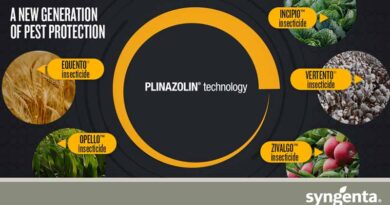
The approval extends the reach of Syngenta’s Plinazolin platform, built around the active ingredient isocycloseram, which the company has been rolling out under different brand names depending on the crop since bringing the underlying technology to market over the past year. In citrus, the same active ingredient is sold as Zivalgo, while in strawberries it is marketed as Incipio. Syngenta classifies the chemistry as a Group 30 mode of action, a classification it describes as the first new one introduced for resistant pest control in nearly four decades, giving growers an additional rotation option as resistance builds against older insecticide classes.
In citrus, Zivalgo targets Asian citrus psyllids, leafminers, mites and thrips, a combination of pests that growers have traditionally needed multiple separate products to manage across a season. Geoff Roe, whose family operates the fresh citrus producer Noble Ag in Florida, said a single spring application of Zivalgo controlled rust mites effectively enough that he avoided the reactive spraying he would otherwise have needed, adding that the product could replace three to four separate active ingredients in one pass through the grove.
Rising input costs weigh on growers
The expanded availability of Incipio and Zivalgo comes as Florida growers face broader cost pressure across their input budgets. Jeff Cecil, regional director of North American crop protection at Syngenta, said tariffs and elevated fuel prices are pushing up costs for Syngenta and other agricultural chemical manufacturers, and he expects that input price inflation to persist rather than ease in the near term. Syngenta representatives Scott Johnson and Zach Langford also took part in grower discussions of the Plinazolin platform at an agricultural trade media summit held in Orlando in October.
Chilli thrips have become a growing concern for strawberry growers in Florida and other parts of the southeastern United States in recent seasons, feeding on new growth and developing fruit in ways that can scar berries and reduce their marketability. Emergency use exemptions, granted on a time-limited basis when growers face a pest problem without an adequate registered control option, allow a product to be applied to a crop before its standard registration for that specific use is finalized. The exemption covering Incipio’s use on strawberries for chilli thrips gives growers access to the chemistry this season while the broader registration process continues through regulatory channels.
Syngenta has positioned the Plinazolin platform as a long-term investment in specialty crop pest control, arguing that having a single active ingredient available under different formulations and brand names for different crops simplifies supply chains and stewardship training even as the underlying chemistry addresses a range of pests across citrus, berries and other high-value crops. Having one mode of action registered across several crop and pest combinations also gives resistance management programs a broader base to rotate against, a consideration that has grown more important as fewer genuinely new insecticide chemistries have reached commercialization over the past decade. The company has continued to expand the list of crops and pests covered under the platform’s various registrations since the technology’s initial introduction, with growers and distributors watching for further emergency and standard registrations ahead of next season.
Also Read: India Says Finalized US Trade Deal Will Shield Its Farmers
Global Agriculture is an independent international media platform covering agri-business, policy, technology, and sustainability. For editorial collaborations, thought leadership, and strategic communications, write to pr@global-agriculture.com