El Niño Cuts Rains Short in Nigeria: An Emerging Agricultural Concern
Joel Benson, Agricultural Scientist, Nigeria
05 November 2026, Abuja, NG: Over the past few weeks, El Niño has been widely discussed, with projections of its potential global impacts, including increased heat-related deaths, raising concerns and prompting adjustments to daily lifestyles.
Farmers, however, have continued with their usual agricultural activities, guided by their seasonal expectations. But in 2026, some farmers in parts of Nigeria’s Federal Capital Territory (FCT) have been confronted with a troubling reality, as the rains appear to have stopped earlier than they normally expect.
The Reality on the Ground Through Farmers’ Eyes
Mrs Laraba Jonathan and her husband, Mr Jonathan Ishaya, are part of a farming household in Giri, Gwagwalada Area Council, FCT, Nigeria.
From farm to fork, the food we eat carries the often-untold sacrifices of African farmers. For Mrs Laraba, one of these sacrifices is walking over six kilometres to access her farmland. Along the way, she also gets to observe the condition of other farmers’ fields.
According to Mrs Laraba Jonathan, it last rained in the second week of October 2026.
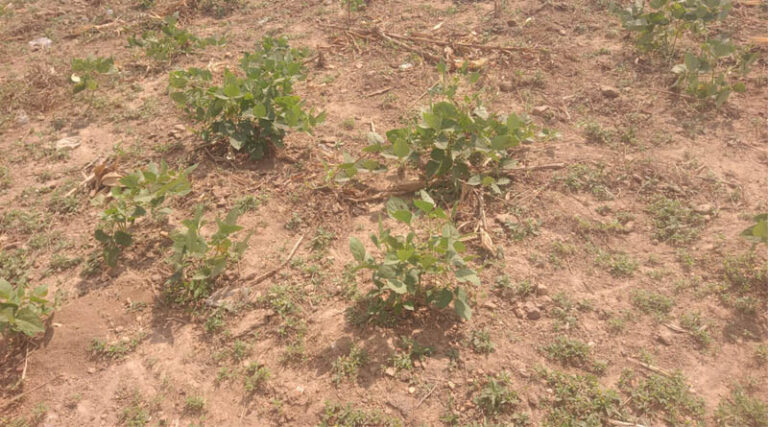
Describing what she had observed on other farmers’ fields, she said, “I have seen negative impacts on the fields where beans were planted late, towards the end of September and in the first week of October. They are not growing well and the beans are stagnant. They will not harvest anything.”
Mr Jonathan Ishaya also recounted his observations, noting that rice fields across the area were drying up, particularly those where the rice had not produced grains before the rains stopped.
He then shared his personal experience:
“I planted rice in July, then the dry spell affected its growth and slowed down the maturity period. My wife had to replant after the dry spell. Although I expected the upland rice to mature in three months by the end of October, the rains stopped in the second week of October. Much of my rice has not matured, and yields will reduce drastically because of the lack of water. The dryness also led to caterpillar and grasshopper infestations,” he explained.
Furthermore, Mr Bulus Joseph, a farmer from Pai, Kwali Area Council, FCT, confirmed that rainfall had stopped in his area around the second week of October. He noted that some of his guinea corn crops were approaching the heading stage. However, he was uncertain about how the absence of rainfall would affect his crops.
A similar account came from Anagada, Gwagwalada Area Council, FCT, where Mrs Habiba Kasuwa shared her experience.
“The rains stopped around the second week of October, although we normally expect the rains to last until the end of October. My guinea corn crops have begun showing signs of drying, and I suspect that the lack of rainfall will affect the yield,” Mrs Habiba reported.
El Niño and Other Climate Pressures
In the FCT, rainfall is generally expected to continue until the end of October. However, the early cessation of rainfall this year has raised concerns among farmers whose crops were still developing. El Niño, a natural climate phenomenon, can influence rainfall patterns and contribute to changes in seasonal conditions. Its effects are not limited to shorter rainy seasons; it can also contribute to moisture stress through adverse temperature conditions and increased evapotranspiration.
Beyond natural climate drivers, human activities also contribute to climate change. One example is the burning of waste passenger car tyres during livestock processing. This practice emits over 1.5 million kgCO₂e annually, according to the study titled “Climate Impact Assessment of the Defurring Section of Anagada Livestock Market, Federal Capital Territory, Nigeria”. These human-induced pressures contribute to the accumulation of greenhouse gases in the atmosphere, driving global warming and potentially compounding the risks associated with El Niño and other climate drivers.
Addressing these challenges requires attention to both climate change mitigation and agricultural adaptation. There is a need to reduce greenhouse gas emissions from activities such as livestock processing while promoting more sustainable practices.
Equally important is improving farmers’ access to timely climate information and practical adaptation measures that can support climate-smart agricultural decisions. These include improved crop varieties, particularly early-maturing varieties, and appropriate water-management practices that can help farmers cope with shorter rainy seasons. However, some farmers still have limited access to such information and improved agricultural options. Promoting access to these measures is important for strengthening agricultural resilience in the face of changing and emerging climate conditions.
Also Read: Syngenta Expands Zivalgo, Incipio Insecticide Use In Florida\
Global Agriculture is an independent international media platform covering agri-business, policy, technology, and sustainability. For editorial collaborations, thought leadership, and strategic communications, write to pr@global-agriculture.com