05 November 2026, Piracicaba, BR: Bayer has entered a 12-month research and development partnership with Brazilian biotechnology company IdeeLab to develop biological fungicides for farmers in Brazil, the companies said this week. The agreement sits inside a wider push by the German company to bring 17 new biological crop protection products to Latin America by 2030, eight of them earmarked for Brazil.
Under the partnership, IdeeLab will apply its bioprocess engineering expertise to evaluate candidate biofungicides for qualities such as efficacy and shelf life, while also providing access to local partnerships and regulatory pathways across Latin American markets. Three candidate products are already undergoing field trials in Brazil, and the companies said they aim to show results and move toward commercialization once the 12-month term concludes, with registration work and further field studies to follow.
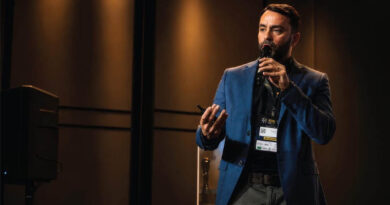
Ronaldo Dalio, founder and chief executive of IdeeLab, said the arrangement builds on work the companies are already doing together. “It’s a job that never ends, and this is just the beginning of a big partnership,” Dalio said.
IdeeLab, based in Piracicaba in Sao Paulo state and founded about eight years ago, operates as a contract development and manufacturing organization built around a bank of microorganisms collected from Brazilian soils, which it screens with the help of artificial intelligence tools to narrow down candidates. Dalio said the company already has more than 30 products on the market and works with more than 60 partners, including Syngenta and ICL. Bayer, which has operated in Brazil for more than a century, said IdeeLab’s screening work will provide it with new candidates beyond the three already in field trials.
Brazilian row-crop growers have faced mounting pressure from fungal disease, including Asian soybean rust, white mold and target spot in soybean, leaf rust and brown eye spot in coffee, and witches’ broom in cassava, as pathogens build resistance to repeated chemical applications. Benoit Hartmann, who leads insights, innovation and partnerships for Bayer’s Crop Science division, said biological products are meant to supplement rather than replace existing chemistries. “Growers need more and better options to manage these problems,” Hartmann said, adding that biologicals are “another way we address these challenges by integrating these solutions into full-farm systems complementing the crop protection toolkit.”
Part of a wider Latin America push
The IdeeLab partnership comes alongside a rebranding of Bayer’s biologicals business in the region under the name “Biologicos Bayer.” Of the 17 planned launches across Latin America by 2030, eight are earmarked for Brazil, split evenly between four biocontrol products and four aimed at improving how plants take up nutrients already present in the soil. Antonio Soares, who leads Bayer’s biologicals business for Latin America, and Luis Offa, senior vice president for crop protection and biologicals in the region, are overseeing the rollout.
The first of the Brazilian launches, a nitrogen and phosphorus uptake product called Curvet, reached the market this year ahead of the 2026/27 soybean season. Curvet was co-developed with Sound Agriculture, a United States company in which Bayer has invested. Applied to the plant, it releases compounds that attract soil microorganisms capable of fixing nitrogen and solubilizing phosphorus already present in the ground. Trials conducted across eight Brazilian states over four growing seasons showed an average yield increase of three sacks of soybean per hectare, the companies said.
Bayer’s discovery strategy for new biological products in the region rests on three approaches: licensing existing commercial products, co-developing new ones with partners such as IdeeLab, and screening for entirely new microorganisms on its own. Soares said a single tablespoon of soil can hold 15 billion microorganism cells, compared with roughly 1,000 microorganisms mapped across all pesticide products currently registered in Brazil.
Global Agriculture is an independent international media platform covering agri-business, policy, technology, and sustainability. For editorial collaborations, thought leadership, and strategic communications, write to pr@global-agriculture.com