India’s Free Trade Agreements Open New Export Opportunities for Farmers Says Shivraj Singh Chouhan
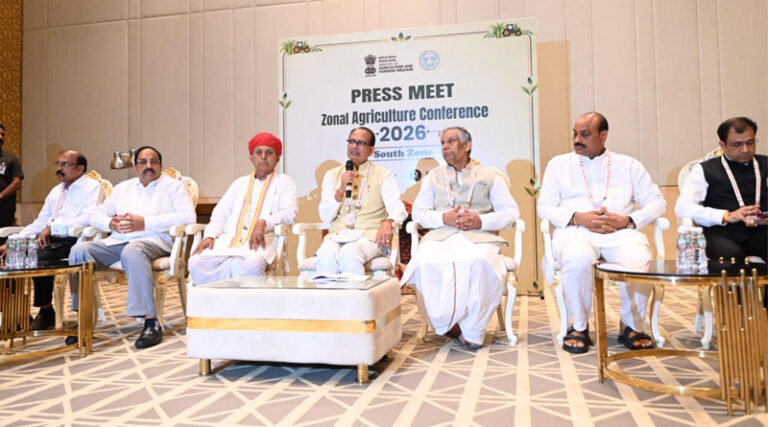
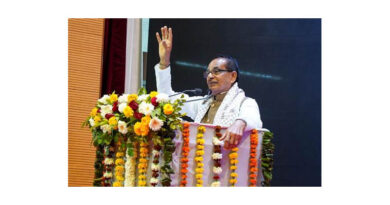
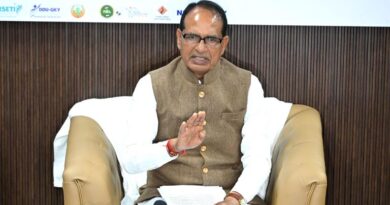
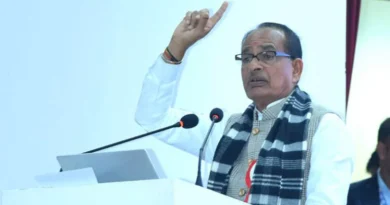
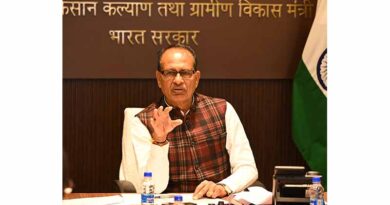
19 September 2026, Hyderabad: India’s Free Trade Agreements (FTAs) are creating new opportunities for farmers to access international markets, Union Minister for Agriculture and Farmers’ Welfare and Rural Development Shivraj Singh Chouhan said at the Southern Regional Agriculture Conference in Hyderabad.
Chouhan called for a detailed assessment of India’s trade agreements to identify agricultural products in demand in international markets and align domestic production with those opportunities. He said farmers should be encouraged to produce fruits, vegetables and grains that meet international quality and market requirements.
“Markets of the world are opening up for India, and this is an opportunity for farmers,” Chouhan said, according to the Ministry of Agriculture and Farmers’ Welfare.
FTAs to be linked with farm production and global demand
Chouhan said India has entered into several FTAs with countries around the world and that these agreements have facilitated market access for agricultural products, including fruits, vegetables and grains.
He called for a closer examination of the opportunities created through these agreements so that farmers and other stakeholders can understand which products have growing demand in overseas markets. Production strategies, he said, should increasingly take into account international quality standards and consumer requirements.
The emphasis on export-oriented agriculture comes as India’s trade partnerships enter a new phase, with FTAs forming an important part of the country’s broader trade strategy aimed at expanding market access and reducing trade barriers.
Southern states urged to expand high-value horticulture
The Agriculture Minister highlighted the potential of southern India in high-value horticulture, particularly spices, coffee, cashew, cocoa, coconut and other crops. He said these sectors can contribute to both farmers’ incomes and India’s nutritional security.
He also highlighted the growth in India’s coconut exports. According to the Minister, coconut and coconut-based product exports increased from ₹4,349 crore to ₹7,038 crore in one year, representing a 62% increase. The government has also announced a new scheme for promotion of the coconut sector.
The Coconut Development Board data cited by the government shows that exports of coconut and coconut-based products reached ₹4,349.03 crore in 2024–25, up 25% from ₹3,469.44 crore in 2023–24.
Chouhan urged southern states to prepare to take advantage of the new coconut promotion initiative and develop strategies to rejuvenate ageing coconut plantations. He also asked states to prepare in advance for promotion schemes covering cashew and cocoa.
Region-specific planning needed for agriculture
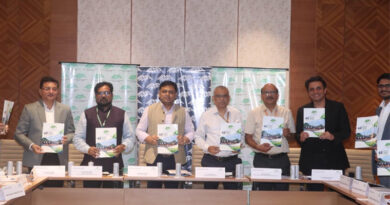
The Minister said India’s diverse agro-climatic conditions make region-specific agricultural planning essential. The Southern Regional Agriculture Conference brought together the Centre, southern states and Union Territories, agricultural experts, ICAR institutions, progressive farmers and other stakeholders.
The conference focused on issues including digital agriculture and Farmer Registry, high-value horticulture and value addition, self-reliance in edible oils and pulses, natural farming, integrated farming systems, balanced fertilizer management and measures to address spurious pesticides and fertilizers.
Chouhan said agricultural plans cannot follow a uniform approach across the country because states differ in climate, soil, water availability and cropping systems. Regional conferences, he said, provide an opportunity for states to present their specific challenges and for the Centre and states to jointly develop appropriate strategies.
Focus on food, livelihood and nutritional security
Chouhan outlined three priorities for Indian agriculture: food security, farmers’ livelihood security and nutritional security.
He said India must ensure food security for its population of more than 140 crore while reducing dependence on external sources for essential food requirements. At the same time, he said farmers who contribute to the country’s food supply need stronger and more secure livelihoods.
The Minister also stressed the importance of nutritional security and pointed to the potential of horticultural crops to contribute to more diverse and nutritious diets.
He said technological developments such as artificial intelligence, machine learning and robotics would continue to transform agriculture, but agricultural production would remain dependent on farmers and natural resources.
Centre-state coordination on agricultural reforms
Chouhan also called on states to review outdated laws, rules and procedures affecting agriculture and farmers. He said states should communicate issues requiring intervention by the Union government, while undertaking reforms within their own jurisdiction.
The conference also provided a platform for states to present best practices that could potentially be adapted elsewhere. The government said the objective is to strengthen Centre-State coordination and develop strategies suited to the agricultural conditions of the southern region.
The conference was attended by representatives of the Centre and southern states and Union Territories, along with agricultural experts, ICAR institutions, progressive farmers and other stakeholders.
Chouhan also said Telangana would receive support for the construction of 2 lakh houses under the Pradhan Mantri Awaas Yojana-Gramin, with the first instalment from the Centre already handed over to the state government.
Global Agriculture is an independent international media platform covering agri-business, policy, technology, and sustainability. For editorial collaborations, thought leadership, and strategic communications, write to pr@global-agriculture.com