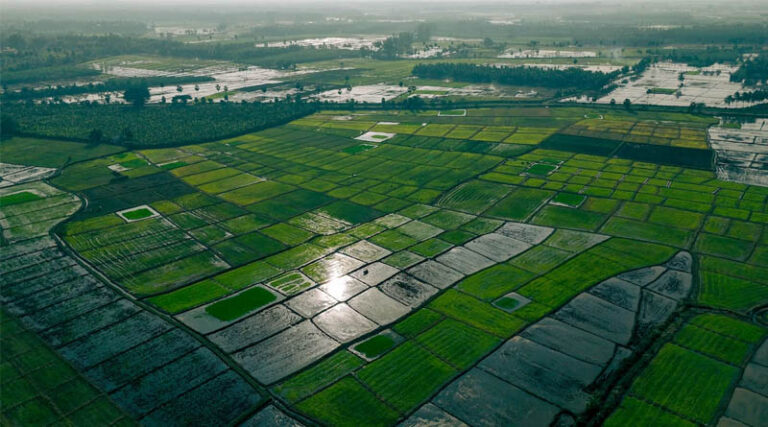
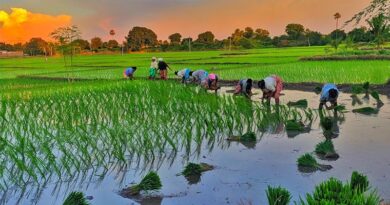
19 September 2026, New Delhi, India: India’s southwest monsoon is winding down with a nationwide rainfall deficit of around 14 percent as of September 7, the sharpest shortfall in recent years, leaving kharif crops stressed across large parts of the country just as the season’s withdrawal begins from western Rajasthan around September 19.
The shortfall has been most severe in the southern peninsula, which recorded rainfall 27 percent below normal between June 1 and September 7, according to India Meteorological Department data reported this month. The India Meteorological Department has also forecast continued below-normal rainfall through the remainder of September, meaning the deficit is likely to persist rather than narrow significantly before the season officially ends. As of September 4, kharif crops had been sown across roughly 108.6 million hectares, about 1.63 percent below the normal sown area of 110.4 million hectares, a gap that reflects both delayed planting decisions and outright crop stress in the driest regions.
A season of sharp regional swings
The national figures mask significant swings at the state level. Maharashtra offers perhaps the starkest example: the state entered August with rainfall 40 percent above normal after a strong July, then saw conditions reverse sharply, with August rainfall coming in 46 percent below normal. By the end of August, Maharashtra’s cumulative seasonal rainfall stood 12 percent below normal, a reversal from the 6 percent surplus recorded just a month earlier. Seventeen districts fell into the deficient rainfall category, with shortfalls ranging from 20 to 59 percent, and the Marathwada region recorded a 30 percent deficit. Pune logged its driest August since 2015, with just 24.7 millimeters of rainfall for the month.
Haryana has faced a similarly uneven season. India Meteorological Department data show ten districts with rainfall deficits between 22 and 59 percent, including Jind at 59 percent, Sirsa at 56 percent, Kaithal at 53 percent, Ambala at 48 percent, Karnal at 47 percent and Rohtak at 46 percent, with only Palwal district recording above-normal rainfall. Paddy, cotton, moong and bajra crops have all been affected, and farmers in the worst-hit districts have had to increase irrigation spending to compensate for the missing rain, even as expectations for this year’s yields have been revised downward.
Weather experts tracking the season say conditions could improve modestly before the withdrawal is complete, though warm conditions over the Bay of Bengal introduce uncertainty into the exact timing and could either delay the retreat or bring late-season rain that arrives too close to harvest to help standing crops and instead risks damaging them.
Why a weak monsoon still matters even with irrigation gains
India’s monsoon dependency has eased somewhat over the past two decades as irrigation coverage has expanded, but rainfed cultivation still accounts for a substantial share of kharif acreage, particularly for pulses, coarse cereals and oilseeds, crops that are far more exposed to a below-normal season than irrigated paddy or sugarcane belts. A season combining a below-normal national deficit with sharply uneven regional distribution, some areas flooded early, others parched later, tends to produce patchy crop damage that is harder for policymakers to address through blanket relief measures than a uniformly poor monsoon would be.
Economists tracking the season have flagged food price inflation as the most immediate risk, since a shortfall concentrated in staples and pulses tends to show up in retail prices within weeks of harvest disappointment becoming clear. That risk will shape how the government approaches minimum support price procurement and stock release decisions over the coming months, decisions that ripple through fertilizer and crop protection demand planning for the rabi season that follows.
For the broader agri-input industry, a weak and uneven monsoon carries practical consequences well beyond this season’s yields. Input companies use sowing area and rainfall deficit data to calibrate rabi season sales forecasts, and a kharif season this uneven typically prompts more cautious near-term purchasing behavior among farmers in the worst-affected districts, even as better-irrigated regions proceed largely unaffected. India’s scale as a rice, sugar and cotton exporter also means a weaker kharif harvest tends to tighten global supply margins in those commodities, a dynamic that Latin American and African importers of Indian grain and sugar watch closely each year around this time.
The India Meteorological Department is expected to issue its final seasonal rainfall assessment once withdrawal is complete, typically in early October, which will give a clearer national picture of how this year’s deficit compares with the below-normal seasons of the recent past.
Global Agriculture is an independent international media platform covering agri-business, policy, technology, and sustainability. For editorial collaborations, thought leadership, and strategic communications, write to pr@global-agriculture.com