Gene-Stacked Rice Lines Show Up to 82% Yield Gain Under Drought
19 September 2026, Telangana, India: Indian researchers have developed rice breeding lines that combine four separate drought-tolerance genes, producing yield improvements of 36 to 82 percent over their parent variety when grown under water-stressed conditions, according to a study published in the Indian Journal of Genetics and Plant Breeding.
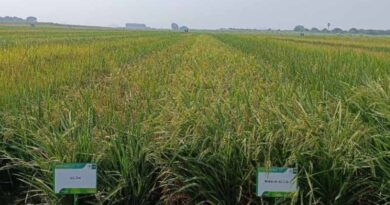
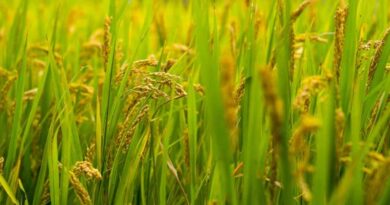
The research, carried out by scientists at Malla Reddy University in Hyderabad, the ICAR-Indian Institute of Rice Research, Central Agricultural University in Umiam and the ICAR-National Institute for Plant Biotechnology in New Delhi, evaluated 40 breeding lines that had been developed through a technique called QTL pyramiding, in which multiple genetic regions linked to a desired trait are combined into a single plant through conventional, marker-assisted crossing rather than genetic engineering. The lines carried combinations of four drought-tolerance QTLs, known as qDTY2.1, qDTY3.1, qDTY1.1 and qDTY2.2, bred into the genetic background of DRR Dhan 50, a widely grown Indian rice variety.
Five of the 40 lines, identified as QTV 108-4, QTV 108-3, QTV 189-2, QTV 128-4 and QTV 105-1, stood out from the rest, delivering grain yield improvements of 36 to 82 percent over the unmodified DRR Dhan 50 variety when subjected to drought stress during the study. The researchers also found high heritability and genetic advance values for the traits underlying this performance, an indicator that the improvements should transfer reliably to future breeding generations using standard selection methods rather than requiring repeated re-engineering.
Why breeding, not editing, made this possible
Because QTL pyramiding relies on marker-assisted conventional breeding rather than transgenic modification or gene editing, the resulting varieties do not carry the same regulatory hurdles that have historically slowed the commercialization of genetically engineered crops in India and many other markets. India has approved only one genetically modified crop, Bt cotton, for commercial cultivation, and no GM food crop has cleared regulatory approval in the country, a gap that has made conventional breeding techniques like this one an important pathway for delivering climate-resilient rice varieties to farmers without waiting on a shift in India’s GM crop policy.
The study also identified spikelet fertility and harvest index as the two secondary traits most closely associated with protecting yield under water stress, giving breeders a clearer set of measurable targets to select for in future crossing programs rather than relying solely on end-of-season yield data. Principal component analysis of the 40 lines showed that the first two components accounted for close to half of the observed genetic variation among the breeding population, reinforcing that meaningful, selectable diversity exists within this set of pyramided lines for further refinement.
A technique with reach beyond one variety
Rainfed rice, grown without assured irrigation, covers vast areas across eastern and central India, as well as large stretches of rice-growing regions in Africa and Southeast Asia, where yield losses during dry spells remain one of the biggest constraints on farm income. A breeding approach that can reliably lift yields by well over a third under drought stress, using only conventional crossing techniques, offers a template that rice research institutions elsewhere could adapt relatively quickly, since it does not depend on the regulatory infrastructure, biosafety approvals or public acceptance hurdles that have slowed transgenic rice varieties in many countries.
The timing of the findings is notable given how uneven this year’s monsoon has already proven across large parts of India, with several states reporting significant rainfall deficits during the current kharif season. Varieties bred using this kind of QTL pyramiding approach are intended precisely for years like this one, when rainfall arrives late, stops early, or simply falls short of what rainfed paddy needs to reach full yield potential.
Also Read: CropLife India Flags Narrowing Crop Protection Options for Farmers
Global Agriculture is an independent international media platform covering agri-business, policy, technology, and sustainability. For editorial collaborations, thought leadership, and strategic communications, write to pr@global-agriculture.com