Thailand Needs Clearer EPR Rules to Lift Recycled Plastics Use – Union J Plus
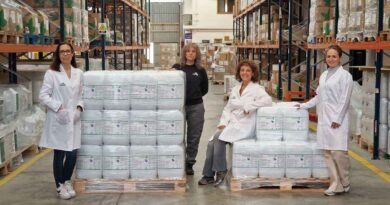
03 November 2026, Singapore: Clearer extended producer responsibility (EPR) requirements and incentives are needed to encourage wider recycled plastics use in Thailand, where feedstock costs, price competition and lengthy customer testing remain barriers, according to Thailand polyolefins recycler Union J Plus (UJP).
- Thai EPR discussions yet to produce clear outcome – UJP
- Natural-coloured resins, cosmetics packaging attract interest
- Feedstock competition and customer qualification pose challenges
Thai government agencies, brand owners and industry stakeholders have held discussions on EPR, but the outcome remains unclear, UJP representative Patcharin Thamasirianunt said in an interview with ICIS.
Brand owners have questioned what benefits – including possible tax reductions – they would receive for using recycled material, as the usage of recycled material does not necessarily improve their margins, Thamasirianunt said.
The brand owners remain reluctant to use recycled plastics without government requirements, Thamasirianunt added.
UJP produces post-consumer recycled (PCR) and post-industrial recycled (PIR) plastic pellets. Its combined capacity is around 25,000 tonnes/year, according to ICIS’ Recycling Supply Tracker, which lists it as a recycler for polyolefins and polyethylene terephthalate (PET), the latter of which is about a third of its total output.
Plastics recycled include high-density polyethylene (HDPE), polypropylene (PP), low-density polyethylene (LDPE), linear low-density polyethylene (LLDPE) and high-impact polystyrene (HIPS), while the company also imports and distributes virgin plastic resins.
The company has processing capacity of 5,000 tonnes/year for food-grade recycled HDPE and PP, alongside 7,200 tonnes/year for PCR LDPE and LLDPE.
UJP identified brand-owner commitments and national plastic-waste policies as important drivers of recycled resin demand, while its customers’ own recycled-content targets typically start at 30%, with ambitions to reach 100%.
Discussions in Thailand also cover changes to packaging design to facilitate recycling, according to Thamasirianunt. Options being discussed include using white or natural-colored – or unpigmented – high-density polyethylene (HDPE) and making bottle bodies and caps from the same plastic, as well as the removal of labels.
Also Read: India Says Finalized US Trade Deal Will Shield Its Farmers
Global Agriculture is an independent international media platform covering agri-business, policy, technology, and sustainability. For editorial collaborations, thought leadership, and strategic communications, write to pr@global-agriculture.com