19 May 2026, Spain: Seipasa, a Spanish company specialized in the development, formulation, and manufacture of bioinsecticide, biofungicide, bioherbicide, biostimulant, and nutritional treatments for agriculture, reaffirms its commitment to decarbonization and the circular economy on World Recycling Day. Over the past year, the company has consolidated two key milestones in its production process that have prevented the emission of 32.2 tons of CO2 into the atmosphere, transforming the management of its packaging and distribution materials
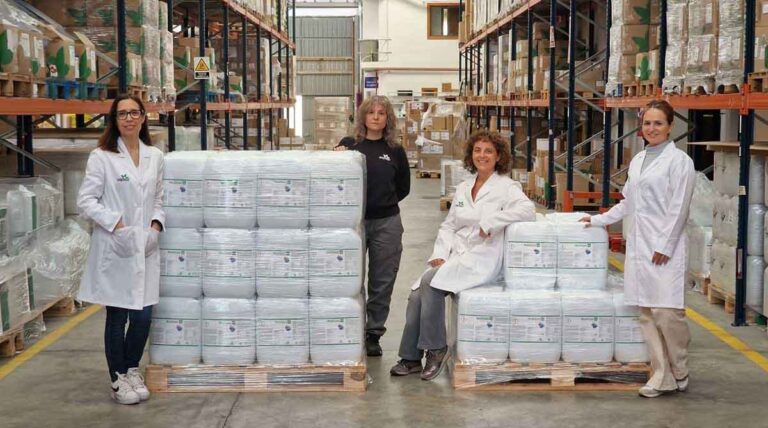
Within its sustainability policy, Seipasa has successfully implemented two actions aimed at reducing the amount of plastic the company places on the market each year. On one hand, the 20-liter containers used for the global distribution of its products now incorporate 50% recycled plastic. This measure, applied consistently throughout the 2025 financial year, has resulted in a direct savings of 26.6 tons of CO2, representing a 35% reduction in the carbon footprint associated with this packaging format compared to the use of 100% virgin plastic material.
To put this impact into perspective, the reduction of these 26.6 tons of CO2 is approximately equivalent to 94,100 kWh of electricity, or in other words, the electricity consumption of 27 Spanish households for an entire year.
Added to this advancement is a second strategic measure: the transition toward the use of strapping (materials used for packaging and securing pallets) manufactured with 90% recycled plastic. Thanks to this initiative, Seipasa prevented the emission of an additional 5.65 tons of CO2 in 2025, achieving a 46% reduction compared to a virgin material scenario. This decrease is equivalent to driving approximately 53,100 km by car, which represents more than one full lap around the Earth’s circumference (approx. 40,075 km).
For María del Puig Mora, Director of Quality and Environment at Seipasa, these figures are the result of an integral vision that seeks coherence between the product and its packaging:”At Seipasa, we do not only develop Natural Technology for agriculture. Our responsibility begins in the laboratory and ends at the product’s final destination, ensuring that every step is as respectful of the environment as possible.”
Mora highlights that these actions are part of a broader roadmap on the path to sustainability, which began in 2023 with the market implementation of 1-liter containers with a lower plastic weight and the introduction of recycled plastic in the packaging provided by suppliers.
“These measures are fundamental pillars within our ESG policy. Reducing reliance on virgin plastic and committing to materials with high recycling rates—such as the 90% achieved in our strapping—is a statement of intent. It is not just about complying with regulations, but about leading real change that minimizes our environmental impact and provides added value to our customers and society”, said María del Puig Mora.
Commitment to the circular economy
Seipasa’s commitment to the circular economy is integrated into its business model, which is geared toward offering effective solutions for agriculture based on botanical and microbiological active ingredients. By reintroducing recycled plastic into its value chain, the company not only reduces emissions but also promotes a cycle of resource utilization that decreases pressure on ecosystems.
With these achievements, Seipasa continues to position itself as a benchmark in the agrobiotechnology sector, demonstrating that technical innovation and environmental sustainability are two inseparable assets for the growth of modern agriculture.
Global Agriculture is an independent international media platform covering agri-business, policy, technology, and sustainability. For editorial collaborations, thought leadership, and strategic communications, write to pr@global-agriculture.com