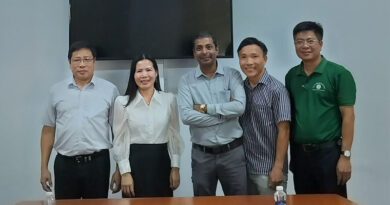
20 August 2026, Vietnam: By integrating the perspectives of both women and men, the International Rice Research Institute (IRRI), in collaboration with the International Potato Center (CIP), is refining precision nutrient management scaling strategies to reach to previously under-served groups, especially women farmers.
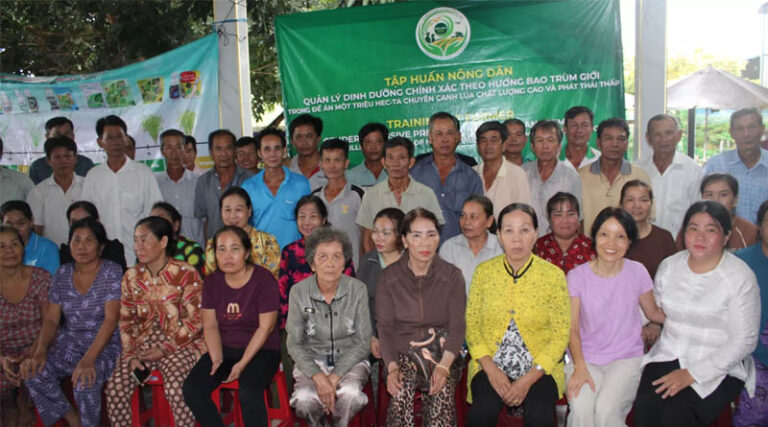
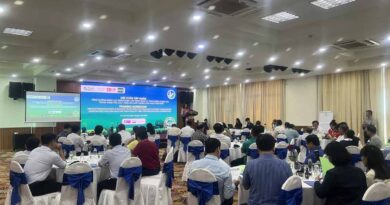
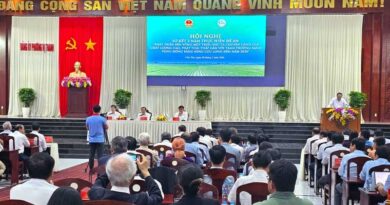
More than 70 participants, including women and men farmers, agricultural experts, and government extension officials, gathered at Kien Thanh Cooperative in Vi Thanh 1 Commune, Can Tho City, for co-designing gender inclusive and farmer-centered scaling strategies in precision nutrient management (PNM) for Vietnam One Million Hectares of High-quality and Low-emission Rice (1Mha) Program.
PNM involves applying the right type and amount of fertilizer at the right time and place, using the appropriate method. As a key component of high-quality, low-emission rice production, PNM can optimize input use, reduce waste, and improve the efficiency and sustainability of rice farming as well as green house gas reduction. Promotion of PNM has been implemented through diverse communication channels such as extension programs, farmer cooperatives, and the private sector such as fertilizer and rice seed companies. However, these communication channels are mainly male-dominated, limiting women’s access to information. In Vietnam, women play significant roles in household financial decisions, including agricultural investment and technology adoption. Women’s lack of access to information on PNM can potentially limit adoption of PNM.
Organized by IRRI and CIP in cooperation with the Can Tho Department of Agriculture and Rural Development, the activity supports scaling of the 1Mha Program.
The co-designing workshop began with understanding women’s and men’s roles and decision-making in rice production, from fertilizer application to rice straw management. Through participatory group discussions, women and men farmers also shared their concerns on applying PNM and preferred communication channels for learning PNM. It highlighted women’s importance, but often under-recognized roles in household decision making.
IRRI and CIP emphasized that technical solutions are more likely to be widely adopted when they reflect the practical realities of farmers. However, inviting women in the workshop was a challenge as they are very shy to interact with people in an unfamiliar environment. The workshop was therefore held directly at Kien Thanh Cooperative, enabling women participants to discuss their experiences in small groups and present their findings during a plenary session.
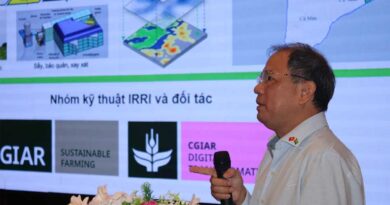
Ms. Dinh Thi Kim Dung, Head of Partnerships and Engagement at the IRRI Vietnam Office, explained that conducting the workshop within the cooperative area created a constructive space for open dialogue. Understanding household dynamics, including the allocation of tasks, decision-making authority, and everyday operational challenges, can help researchers design inclusive support programs that respond to the needs of previously under-served household members.
Discussion with farmers highlighted that fertilizer-related decisions often involve both husband and wife. Consulting only one household representative may therefore limit household decisions toward more sustainable farming.
Dr. Nozomi Kawarazuka, a scientist and gender specialist at CIP, observed that discussions about fertilizer management often focus primarily on technical considerations, such as application rates and timing. Equally important, however, is understanding who performs the work, who makes or influences decisions, and what motivates women and men to adopt new practices. Addressing their distinct roles, needs, and constraints can improve program effectiveness and expand access to agricultural technologies.
Integrating gender considerations into technology design and extension can help ensure that scientific solutions are both accessible and practical for local farmers.
Mr. Pham Van Son, a member of Kien Thanh Cooperative, emphasized that precision farming techniques must be suited to specific field conditions to be effective. He supported the use of direct dialogue to address women and men farmers’ concerns about adopting PNM compared to conventional practices, such as potential changes in cost and productivity.
Women participants also expressed strong support for the inclusive approach. Although women contribute significantly to farming activities and household decisions about agricultural expenses, training activities have traditionally invited only one household representative-often the husband. This practice can limit women’s direct access to technical knowledge.
Ms. Pham Thi Nhu Phuong, a local farmer, suggested that future community meetings and research activities consistently invite both spouses. She noted that participating directly in these activities equips women with technical knowledge and strengthens their voice in agricultural planning and decision-making.
Ms. Truong Ngoc Minh, Vice Chairwoman of the Vi Thanh 1 Commune Women’s Union, reiterated that rural women play an indispensable role in agricultural production and household finances. Providing them with direct access to technical knowledge helps ensure that new production practices reflect the everyday realities of farming households.
The group discussions revealed that, although fewer women than men perform physically demanding fieldwork, a growing number of households make joint decisions on seed selection, fertilizer use, and field management. Participant voting also indicated that women manage household finances in 80 percent of the households represented at the training. This finding underscores the importance of including women in technical training to support the effective adoption of new agricultural technologies.
In his special closing message, Mr. Le Thanh Tung, Vice Chairman and Secretary-General of the Vietnam Rice Association and a women empowerment advocate himself, noted that this farmer-centered model supports the inclusive implementation of the 1Mha Program by creating more equitable opportunities for women and men to access information, which facilitate adoption of improved practices. He stressed that women’s important roles in sustainable rice production should be recognized and women should be empowered as agents of change in rice production across the Mekong Delta.
Global Agriculture is an independent international media platform covering agri-business, policy, technology, and sustainability. For editorial collaborations, thought leadership, and strategic communications, write to pr@global-agriculture.com