Precision Nutrient Management: A Breakthrough for Rice Farming in Vietnam
20 May 2026, Vietnam: Agricultural authorities and international research organizations (including IRRI and CIP) convened a specialized workshop in Can Tho City to assess pathways for scaling precision nutrient management in the Mekong Delta. The event focused on addressing technological bottlenecks, introducing digital readiness tools, and fostering a synchronized “Four Pillars” collaboration to transition the Vietnamese rice industry toward a climate-resilient future.
Amid rising agricultural input prices and increasingly stringent global standards for sustainable production, precision nutrient management is emerging as a transformative solution for rice cultivation in Vietnam’s Mekong Delta. This innovative approach serves as a cornerstone of the Vietnamese government’s ambitious project to develop one million hectares of high-quality, low-emission rice by 2030. By integrating digital tools with mechanical precision, the model is proving that environmental stewardship and farmer profitability can go hand-in-hand.
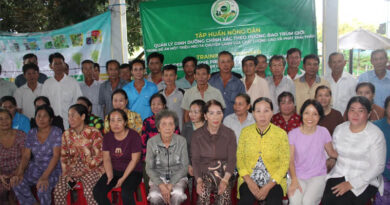
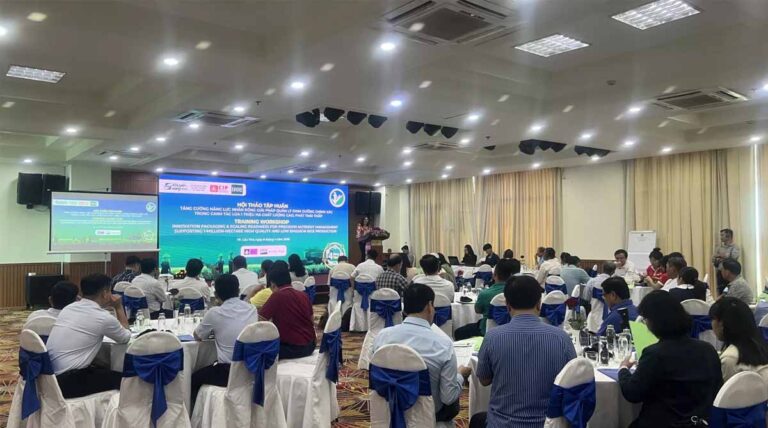
On April 8th, the International Rice Research Institute (IRRI), International Potato Center (CIP), National Agricultural Extension Center, and Can Tho Department of Agriculture and Environment convened a specialized workshop in Can Tho City. The workshop convened 65 representatives from provincial Departments of Plant Production and Protection, agricultural extension centers, farmer cooperatives, and private companies involved in the One-Million-Hectare Program to assess pathways for scaling the precision nutrient management bundle.
Drawing on field experience, participants identified nine key bottlenecks and related solutions across the technology diffusion process, from farmer awareness and enabling policies to stakeholder coordination. The most discussed challenge was the compatibility of the innovation with existing farming practices, market conditions, and policy systems.
The workshop also introduced two CGIAR-developed digital tools for assessing innovation readiness and use. The National Agriculture Extension Center expressed interest in applying these tools to evaluate existing technologies and potentially integrate them into national training programs. Initial results showed that the precision nutrient management bundle is well developed, but its use remains limited. Awareness-raising and training emerged as the most mature and widely used solutions, while actions to improve women’s engagement were the least developed, highlighting the need for more gender-inclusive scaling approaches. Dr. Nguyen Van Hung, senior scientist at IRRI, leader of the CGIAR-Scaling for Impact – Precision Nutrient Management and USDA-Fertilize Right Vietnam Projects, presented a breakthrough integrated technical package at the workshop. This package centers on the “Fertilize Right” digital application used in tandem with mechanized technologies.
Based on practical implementation across Mekong Delta cooperatives from 2024 to 2026, the results of this approach are striking. Dr. Hung shared that seed usage decreased by 50 to 60 kg per hectare, nitrogen fertilizer use dropped by over 30%, and pesticide use was reduced by 20%. Simultaneously, productivity increased by approximately 5% while greenhouse gas emissions were significantly lowered.
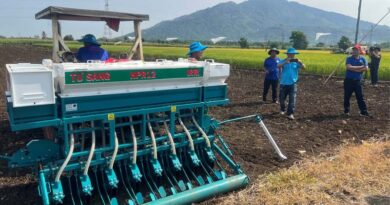
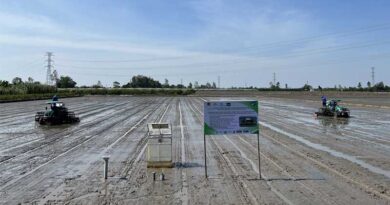
A core component of this success is mechanized Direct Seeded Rice (mDSR) combined with deep fertilizer placement. Mr. Truong Huu Tri, Director of Go Gon Agricultural Cooperative, explained that applying fertilizer deep into the soil right from the sowing stage helps rice plants absorb nutrients optimally. This reduces losses and dramatically lowers costs for the farmers.
For these technologies to move from pilot plots to a million hectares, human capital is essential. Dr. Rica Flor, a scientist at IRRI and one of the leads of the CGIAR Scaling for Impact Science Program, emphasized that the work aims to build a core workforce at the local level consisting of technical experts capable of mastering and disseminating these advanced models.
Ms. Huynh Kim Dinh, Deputy Director of the National Agricultural Extension Center, highlighted that precision management is the crucial link in Vietnam’s green growth strategy. By enhancing the capacity of extension staff, the project ensures that digital solutions reach the hands of the farmers who need them most.
Sustainability in the Mekong Delta is also a social and structural challenge. CGIAR focuses on gender mainstreaming, as women are vital to the rice value chain but often face barriers to technology. Dr. Nozomi Kawarazuka, a gender expert from the International Potato Center (CIP), argued that equipping women with technical skills amplifies the effectiveness of these models across the entire community. She emphasized that “Increasing women’s participation in accessing and operating new farming technologies will contribute to the efficiency and sustainability of agricultural models within the community.”
The event affirmed that success depends on a synchronized “Four Pillars” approach involving management agencies, agricultural extension systems, businesses, and cooperatives. This collaboration forms the foundation for the synchronized implementation of high-quality, low-emission rice farming models. The transition to precision nutrient management represents more than just a change in farming technique; it is a restructuring of the Vietnamese rice industry toward a modern, efficient, and climate-resilient future. Through the continued partnership of CGIAR, IRRI, and Vietnamese local authorities, the Mekong Delta is set to remain a competitive and sustainable breadbasket for the world.
This activity is part of the CGIAR Scaling for Impact Program and USDA Fertilize Right Program.
Also Read: Insecticides (India) Limited Launches New Paddy Insecticide ‘Granuvia’
Global Agriculture is an independent international media platform covering agri-business, policy, technology, and sustainability. For editorial collaborations, thought leadership, and strategic communications, write