2026 ORYZA Training Workshop Advances Sustainable Rice Research Through New User-friendly Interface
20 May 2026, Philippines: As climate change places increasing pressure on global rice systems, researchers are turning to digital innovations that can improve productivity while reducing environmental impacts. At the center of this effort is ORYZA, IRRI’s globally recognized rice growth and yield simulation model, now made more accessible through the newly developed ORYZA User Interface (UI).
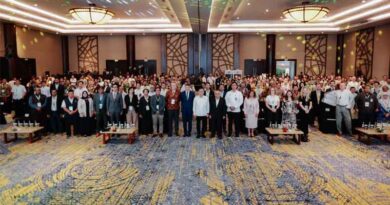
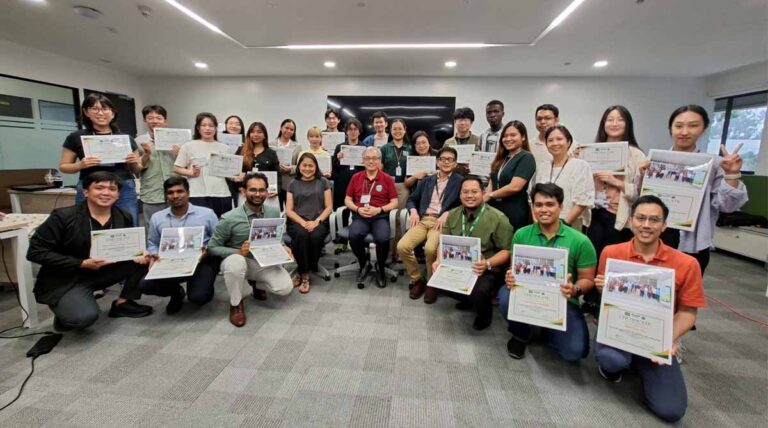
To strengthen global capacity in sustainable rice research, the International Rice Research Institute (IRRI) conducted the five-day “Practical Applications of ORYZA in Rice Research” training workshop from 11–15 May 2026 at IRRI Headquarters in the Philippines. The workshop gathered researchers, graduate students, and agricultural professionals from across Asia and Africa for intensive hands-on training on ORYZA crop modeling applications for sustainable rice production.
During the welcome remarks, Dr. Virender Kumar, IRRI Sustainable Impact through Rice-based Systems Department Research Director, emphasized the growing importance of ORYZA model in addressing climate change challenges and advancing sustainable and resilient rice systems. He highlighted the role of crop modeling in understanding greenhouse gas (GHG) emissions, evaluating mitigation strategies, and supporting sustainable rice production under changing environmental conditions. Dr. Kumar also acknowledged the support of the Ministry of Agriculture, Forestry and Fisheries of Japan (MAFF) through “Accelerating development and scaling of agricultural innovations for reducing greenhouse gas (GHG) emissions in ASEAN Countries (AGRI)” Project, which enabled the development of the ORYZA UI and significantly improved the accessibility of the model for researchers worldwide.
A major highlight of the workshop was the launch and hands-on use of the ORYZA UI, developed to simplify simulation workflows, input preparation, and data management. Designed in response to feedback from previous trainees, the UI reduces the complexity of preparing model inputs and running simulations, allowing researchers to focus more on scientific analysis and interpretation.
Since its development in the early 2000s, ORYZA has become one of the world’s leading ecophysiological rice growth models, supporting research on yield prediction, climate adaptation, resource management, and sustainability. Beyond crop productivity, the model plays an increasingly important role in assessing environmental impacts, particularly methane emissions from rice production systems. Through ORYZA, researchers can evaluate how irrigation practices, nitrogen management, and climate scenarios influence both yield and greenhouse gas emissions, helping identify pathways toward low-emission and climate-resilient rice systems.
Training sessions explored greenhouse gas generation and emissions, soil carbon and nitrogen dynamics, drought and nitrogen stress simulations, and the trade-offs between productivity, adaptation, and mitigation strategies under extreme climate conditions.
The workshop also strengthened the connection between digital modeling and field research through a Day 4 facility tour that included IRRI’s Long-Term Continuous Cropping Experiment (LTCCE), the Lloyd Evans Plant Growth Facility, and the International Rice Genebank. These visits provided participants with a deeper understanding of real-world experimental and genetic data that support model calibration and validation.
The training was facilitated by a multidisciplinary ORYZA development and support team led by IRRI Senior Scientist Dr. Tao Li together with Assistant Scientists Emmali Manalo and Hannah Jose, Researcher Lizzida Llorca, and technical and logistical support from Rosendo Gutierrez. The team reflected the collaborative nature of modern agricultural research, bringing together expertise in crop modeling, data management, field experimentation, and digital innovation. Through lectures, troubleshooting sessions, hands-on exercises, and scenario-based simulations, the ORYZA team fostered a highly interactive learning environment that strengthened collaboration between developers and users from diverse institutions and countries.
According to Dr. Tao Li, the ORYZA UI represents more than a technical improvement — it is part of a broader effort to democratize access to advanced crop modeling tools for scientists working on climate and sustainability challenges worldwide.
“ORYZA is not only a tool for predicting rice growth and yield, but also a platform for understanding how management practices influence environmental outcomes,” said Dr. Li. “By making the model more accessible through the ORYZA UI, we hope to empower more researchers to evaluate climate adaptation and greenhouse gas mitigation strategies that support sustainable rice production.”
The workshop drew participants from Côte d’Ivoire, Japan, China, South Korea, India, and the Philippines, reflecting the growing international demand for tools that can support sustainable intensification and climate resilience in rice systems.
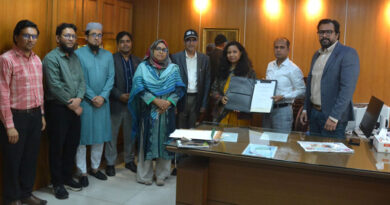
During the opening session, Dr. Kazuki Saito, IRRI Senior Scientist and AGRI Project Lead was presented with a certificate of appreciation in recognition of the support provided to the training workshop and, most importantly, to the development of the ORYZA UI through the MAFF-funded AGRI Project. In his remarks, Dr. Saito emphasized the importance of ensuring that participants would be able to apply the ORYZA model in their own research and continue learning beyond the workshop. This message of sustained collaboration and continuous capacity development was reinforced once more during his closing remarks.
A defining feature of the workshop was its emphasis on practical application and collaborative learning. Participants were divided into five groups and tasked with developing their own ORYZA simulation scenarios. During the final afternoon session, each group presented its findings and discussed how crop modeling could support research on productivity, climate adaptation, and greenhouse gas mitigation in different rice systems. The activity encouraged teamwork, critical thinking, and scientific exchange while allowing participants to directly apply the concepts learned throughout the week.
During the closing session, Dr. Alice Laborte, IRRI Senior Scientist, invited participants to describe the training in one word. Many responses reflected both the intensity and value of the experience — challenging, intensive, inspiring, and rewarding. Dr. Laborte shared that she was pleased to hear that although participants found the workshop demanding, they also recognized it as highly worthwhile and meaningful for their professional growth. The moment underscored the workshop’s success in building not only technical capacity, but also enthusiasm for continued learning in crop modeling and sustainable rice research.
For many participants, the workshop provided not only technical skills but also a broader understanding of how crop simulation models can support future agricultural decision-making.
“The training provided practical insights into real-world crop modeling and helped us understand how experimental data can be simulated across different environments,” shared Kadapa Sreenivasa Reddy of IRRI-SARC, India.
“The ORYZA UI and training provided a practical and user-friendly experience in crop simulation modeling that can greatly support the initiatives of DOST-SINAG in developing science-based agricultural decision support systems,” said Mark Anthony D. Hemetera of DOST-Central Luzon, Philippines.
As global rice systems face mounting challenges from climate instability, resource scarcity, and environmental degradation, tools like ORYZA are becoming increasingly critical for building resilient and sustainable food systems. Through the continued support of the MAFF of Japan – AGRI Project and the development of the ORYZA UI, IRRI is equipping a new generation of scientists with accessible, science-based tools to improve rice productivity while advancing greenhouse gas mitigation and sustainable rice production.
Also Read: Insecticides (India) Limited Launches New Paddy Insecticide ‘Granuvia’
Global Agriculture is an independent international media platform covering agri-business, policy, technology, and sustainability. For editorial collaborations, thought leadership, and strategic communications, write