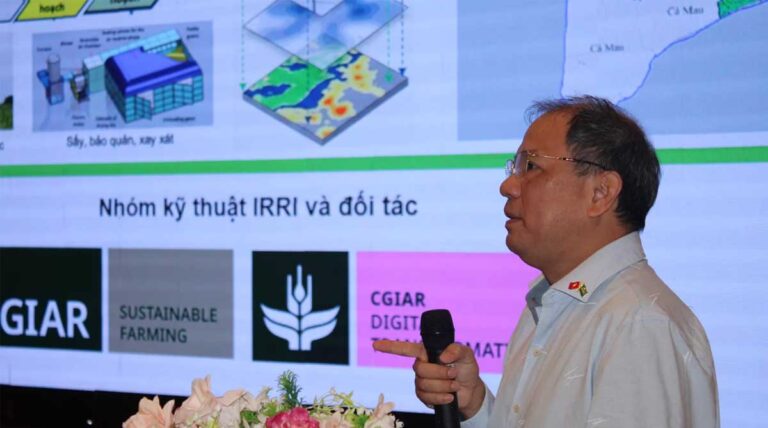
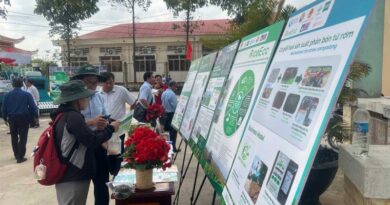
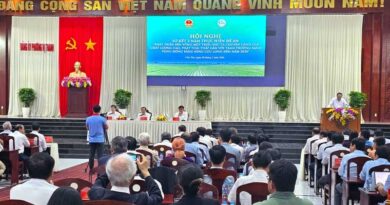
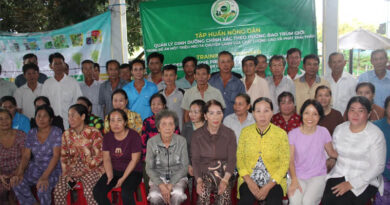
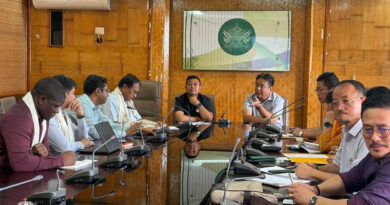
20 May 2026, Vietnam: Under the CGIAR Science Programs on Sustainable Farming and Digital Transformation, the International Rice Research Institute (IRRI), in cooperation with the Department of Cooperatives and Rural Development (DCRD) and the Can Tho Department of Agriculture and Environment (DAE), organized a consultation workshop titled “Digitalizing Agricultural Mechanization for Optimized Investment, Improved Management, and Enhanced Rice Production Efficiency.”
The event gathered numerous experts, enterprises, and cooperatives to discuss how digital data and mechanization maps are becoming the new foundation for helping the Mekong Delta optimize machinery investment, enhance rice production efficiency, and drive green development and low-emission goals. They highlighted that digitalizing mechanization would serve as a crucial pillar for restructuring the rice industry toward modern and sustainable development
A major highlight of the workshop was the live demonstration of digital tools, including the EasyFarm platform, alongside mechanization suitability maps used for production management and decision-making in rice farming. The workshop was organized based on the implementation results of the research activity “Digitalizing Rice Farming Mechanization in the Mekong Delta” across three pilot communes in Can Tho City: Long Hung, Thanh Quoi, and Thuan Hoa. Through detailed field surveys in these areas, the implementation team successfully developed a comprehensive dataset for 2025 covering cultivated areas, seasonal calendars, and the precise level of machinery usage for each production stage. Concurrently, a mechanization suitability map was created to assess the compatibility of various types of machinery with the specific geographic and environmental conditions of each locality.
Dr. Nguyen Van Hung, scientist at IRRI, stated that digitalizing mechanization helps form a centralized database for optimized management while effectively connecting supply and demand between farmers and mechanization service providers. It also supports the formulation of equipment investment strategies precisely tailored to local needs and the specific farming efficiency of each area. Furthermore, Dr. Hung noted that this data platform supports the creation of suitable mechanization maps for rice cultivation across the Mekong Delta, directly serving the Sustainable Development of 1 Million Hectares of High-Quality, Low-Emission Rice Cultivation Associated with Green Growth in the Mekong Delta Region by 2030 (1mHa) Program. It also establishes a vital foundation for developing artificial intelligence in smart farming and electronic agricultural extension systems.
Ms. Nguyen Thi Giang, Deputy Director of Can Tho DAE, observed that mechanization is no longer just about replacing manual labor but is actively transitioning into a synchronized, precise, and digital data-based mechanization model. This shift represents one of the core solutions serving the implementation of 1mHa Program. In recent years, many localities in the region have heavily adopted advanced mechanized equipment, such as combine harvesters, transplanting machines, agricultural drones for spraying, fertilizer applicators, and specialized straw-handling equipment.
The progress in Can Tho City alone illustrates this rapid shift, where soil preparation and irrigation pumping have already achieved 100% mechanization. Sowing (blower seeders) and transplanting meet over 90% of the demanded area, crop care using knapsak sprayers reaches about 90%, and harvesting alone has achieved a full 100% mechanization rate. Unmanned aerial vehicles used for spraying, fertilizing, and sowing currently cover approximately 30% of the production area. Beyond improving productivity, this advanced mechanization is also driving the circular agriculture model in the Mekong Delta. Many local models that utilize straw to cultivate straw mushrooms, produce organic fertilizer, or reuse it directly in rice farming have yielded clear economic returns. According to data from Can Tho City’s DAE, the total added value from the circular straw chain can reach approximately 33.5 million VND per hectare per year, aligning perfectly with the region’s broader green growth goals.
Despite these achievements, Dr. Hung stated that while surveys in the three pilot communes show mechanization has reached an industrial level in stages like land preparation, sowing, spraying, harvesting, drying, and rice processing, the transition to full digitalization and automation faces limitations. Studies remain largely uncoordinated, lack strong connections, and frequently overlap between different research projects. Experts at the workshop pointed out that one of the biggest bottlenecks currently is the lack of a unified digital database for agricultural mechanization management. While data is rapidly becoming the essential soft infrastructure of modern agriculture, many localities have yet to build a synchronized data system regarding growing zones, seasonal schedules, emissions, or the actual demand for mechanization services. This lack of data makes coordinating machinery, building suitability maps, and connecting farmers with service providers highly challenging.
Additionally, small-scale and fragmented land production continues to reduce the investment efficiency of modern machinery. Many farming households lack the financial capacity to invest in high-tech equipment on their own, while the formation of professional mechanization service groups remains uneven across different localities. Experts strongly believe that mechanization must start right from the fields and be tied directly to large-scale production organizations to achieve sustainable, long-term efficiency. Alongside this restructuring, it is necessary to accelerate agricultural digital transformation and build reliable databases for traceability, granting growing zone codes, and managing emissions.
To complete the mechanization and digital data ecosystem, workshop participants proposed several pathways forward. Experts suggested increasing direct support for businesses involved in researching, innovating, and localizing agricultural mechanical equipment to fit the unique field conditions of the Mekong Delta. Concurrently, they emphasized the necessity of building comprehensive data collection and analysis systems, digital maps, and production management dashboards to create a foundation for a modern, smart, and low-emission rice production model.
Dr. Cao Duc Phat, former Minister of Agriculture and Rural Development, observed during the event that the inevitable trend of today’s agricultural sector is mechanization, automation, and digitalization. The ultimate destination is a synchronized, smart, green, and sustainable agriculture built firmly across all three pillars: economy, society, and the environment. Through this workshop, the organizers aim to further refine their operational approach while promoting the strategic application of digital data in policy planning and mechanization investment, creating a solid foundation for large-scale expansion across the entire Mekong Delta.
Global Agriculture is an independent international media platform covering agri-business, policy, technology, and sustainability. For editorial collaborations, thought leadership, and strategic communications, write