Guest Author: Rajan Kshirsagar, President, All India Kisan Sabha (AIKS)
19 May 2026, New Delhi: India’s one crore (ten million) tractor-owning farmer families pay approximately ₹56,500 crore in taxes on diesel every year — this includes road cess, even though tractors are prohibited from using highways. In nine major agricultural nations of the world, agricultural diesel is either tax-free or subsidised; in India, it is not. Enough is enough. The farmers’ demand is clear: abolish all taxes on diesel used in agricultural tractors.
1. A Tractor Is Not a Mercedes
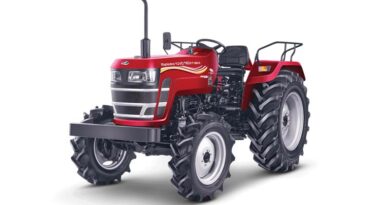
India’s diesel taxation system has a fundamental flaw — tractors have been placed within the same fiscal framework that was designed for luxury cars and SUVs. A tractor is not an instrument of personal luxury; it is a means of production — it tills the soil, sows crops, and grows food for 140 crore people. And yet an expressway cess is levied on it, even though tractors are prohibited from using expressways. While a Mercedes or BMW is a commodity of consumption and luxury, a tractor contributes to the national income. Viewing both through the same fiscal lens is economically incoherent.
2. A Tale of Two Fuels — ATF vs. Diesel
The government maintains a completely different attitude towards Aviation Turbine Fuel (ATF) and agricultural diesel. Uttar Pradesh charges only 1% VAT on ATF; Bihar reduced it from 29% to 4%. Central ministers write letters to states recommending cuts in ATF VAT. On the other side, Maharashtra charges 21% VAT on diesel, Gujarat 14.90%, and Goa 18.09% — and not a single minister has written one letter about this. Despite Delhi charging 25% VAT on ATF, ministers request states to keep it at 1%; yet for Maharashtra’s 21% diesel VAT burden on farmers, not a single letter has been written. This is not neglect — it is a deliberate, sustained class bias.
3. The Tax Structure Behind ₹90 Diesel (as of April 2026)
On 27 March 2026, the Central Government had temporarily reduced excise duty, but from 11 April 2026, SAED was restored to ₹24/litre and RIC to ₹36/litre:
Component
Amount (₹/Litre)
Remark
Retail Selling Price (RSP)
₹90.03
Final consumer price
Special Additional Excise Duty (SAED)
₹24.00
Effective from 11 April 2026
Road and Infrastructure Cess (RIC)
₹36.00
Tractors are banned from expressways!
Agriculture Infrastructure Dev. Cess (AIDC)
₹2.68
Funds agriculture by taxing farmers — a cruel contradiction
The gravest injustice: tractors pay ₹36/litre in road cess — even though they are completely prohibited from using expressways. The AIDC finances agriculture by taxing farmers — a cruel paradox. The NCCD was introduced as a temporary measure in 2001; it continues to this day with no parliamentary review.
Source: Petroleum Planning and Analysis Cell (PPAC), Government of India.
Component
Figure
Total diesel consumption (2025–26)
~94 lakh metric tonnes (110 billion litres)
Tractor’s share
~7.4% (7.86 billion litres)
Central tax revenue from tractor diesel
~₹47,000 crore
State tax revenue from tractor diesel
~₹9,500 crore
Total Annual Tax Burden
₹56,500 crore
Per-tractor annual burden
~₹56,500 (15–20% of many families’ annual income)
5. Double Burden — Diesel Tax and Tractor Loans
More than one crore tractor-owning farmers purchased their tractors through loans from banks or financial institutions. Nationalised banks charge 9.50–11.50% interest; private banks charge 10–28%; and some non-banking finance companies charge up to 30.50%. Tractor loans are routinely excluded from loan waiver schemes. In Punjab, 82% of tractor-owning farmers are in debt; in Maharashtra 78%, in Uttar Pradesh 71%, and in Telangana 69%. On one hand, diesel taxed at luxury-car rates; on the other, interest rates that are a noose around the neck — this is the farmer’s daily reality.
GST Reduction — Welcome, But Insufficient
In September 2025, the 56th GST Council reduced tractor GST from 12% to 5%, and also reduced GST on tractor tyres, tubes, and spare parts from 18% to 5%. This contributed to retail tractor sales reaching a record 10.50 lakh units in FY 2025–26, a 19% jump over the previous year. However, buying a tractor is a one-time event; burning diesel is a daily one. Over a tractor’s 15–20-year lifespan, the cumulative diesel tax burden is many times greater than the GST savings on the purchase price. Buying a tractor at 5% GST and running it on fuel taxed at over 50% is like subsidising the lamp and taxing the sunlight.
6. What the World Does — Why Can’t India?
Germany: Agricultural diesel exemption of 21.48 euro cents/litre from 1 January 2026 — annual relief of approximately ₹4,000 crore to farmers and forestry.
France: All excise duties on agricultural diesel suspended for the month of April 2026 in response to rising fuel prices.
United Kingdom: ‘Red Diesel’ for off-road farm use taxed at 10.18 pence/litre vs. 52.95 pence for regular diesel — an 80% concession for farmers.
Ireland: A special fund of €100 million (₹1,000 crore) — subsidy of 20 cents/litre for eligible farmers (March–July 2026).
Australia: Fuel Tax Credit (FTC) scheme — full excise duty refunded on diesel used in agriculture, fishing, mining, and off-road activities.
Canada (Saskatchewan): Farm Fuel Programme provides farmers an 80% tax concession on diesel purchases.
South Africa: 100% diesel refund for agriculture and forestry from 1 April 2026 (previously 80%).
United States and Canada: Lower rates on coloured (dyed) diesel for off-road farm use.
Serbia: Euro-diesel supplied to registered farmers at a fixed price within a per-hectare limit.
India has the tools — what is lacking is political will.
7. The Economics of Tax Reform
The excise duty cut of March 2026 is estimated to cause a revenue loss of approximately ₹1 lakh crore in FY 2027 — it was under precisely this fiscal pressure that SAED and RIC were raised again in April 2026. The question is: is it justified to bridge this deficit at the cost of farmers? A solution exists: the Central Government can compensate states for their revenue loss from agricultural diesel VAT cuts — just as it compensates states for GST revenue shortfalls. If the Centre can write letters lobbying for ATF VAT cuts, it can equally introduce a compensation formula for agricultural diesel.
8. Three Firm Demands
First Demand: Zero tax on tractor diesel. Implement a ‘Red Diesel’ or tax credit system as done in Europe, Canada, and Australia — excise duties paid by farmers on agricultural diesel should be fully refunded.
Second Demand: End the practice of classifying tractors as luxury cars. Parliament must give tractors a separate legal classification as ‘agricultural equipment’ — a standalone category fully independent of all motor vehicle tax frameworks.
Third Demand: Abolish all unjust and outdated levies. Exempt agricultural diesel from the Road and Infrastructure Cess (RIC). Ensure transparent utilisation and public accounting of AIDC funds. Abolish the NCCD after 25 years of its so-called temporary life. The Central Government must write to all states asking them to reduce VAT on agricultural diesel to 1–4% — as it routinely does for ATF.
9. The Working Farmer and India’s First Citizen
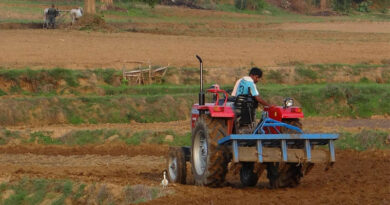
From the wheat farmer in Punjab to the sugarcane and cotton grower in Maharashtra, from the groundnut farmer in Rajkot to the paddy grower in Andhra Pradesh — the tractor is a part of every farmer’s farm. Many farmers hire tractors for tillage and planting. Critical tasks in sugarcane harvesting and transport are performed by tractors. For a small farmer, fuel expenditure constitutes 12–18% of total production costs. On a two-hectare holding, this comes to ₹8,000–15,000 per acre per cropping season. If these taxes were waived, each farmer family would save ₹4,000–5,000 annually — without any intermediary and without filling a single form.
Agriculture contributes approximately 18% to India’s GDP and employs 26 crore people. According to the FAO, approximately 70 crore Indians — nearly half the population — cannot afford a nutritious diet. In this context, the annual diesel tax burden per tractor exceeds ₹56,000. The farmer is India’s food provider, yet within the fiscal architecture of this country, the farmer is protected last. The government that allocates budget in the name of ‘public interest’ for airline companies — is food production not public interest? Is a tractor not a tool that contributes to GDP? The unjust tax on diesel is a silent but daily exploitation. The demands are clear, the data is clear, and the international precedents are solid. The time to act is now.
Disclaimer: The views and opinions expressed in this article are solely those of the author and do not necessarily reflect the official policy, position, or views of Global Agriculture, its editorial team, management, or affiliates. The publication is not responsible for the accuracy, completeness, or reliability of any information, statements, or opinions presented by the author.
Global Agriculture is an independent international media platform covering agri-business, policy, technology, and sustainability. For editorial collaborations, thought leadership, and strategic communications, write to pr@global-agriculture.com