From Genebanks To Farms: Growing Resilient Fruit Trees For Nutrition And Livelihoods
By Irene Sinoya
19 May 2026, Kenya: Climate change is placing growing pressure on agriculture across Africa. Droughts, floods, pests, erratic rainfall and declining biodiversity are threatening crop production, food security and rural livelihoods. Farming communities are struggling to cope with declining yields and increasingly unpredictable weather conditions.
In response, resilient fruit trees are emerging as an important solution for helping farmers adapt to climate change while improving nutrition and livelihoods. Across Africa, where malnutrition and stunting remain major challenges, many indigenous and exotic fruit species provide essential vitamins and minerals that can help improve diets and strengthen food and nutrition security for children and vulnerable communities.
To support farmers in accessing species and varieties that can thrive under changing climatic conditions, the Center for International Forestry Research and World Agroforestry (CIFOR-ICRAF), with support from the Australian Centre for International Agricultural Research (ACIAR), is conserving critical fruit-tree diversity through its in-house and field genebanks across Africa.
Through these genebanks, CIFOR-ICRAF is helping ensure that farmers plant the right tree, in the right place, and for the right purpose – particularly species and varieties that can withstand the adverse effects of climate change.
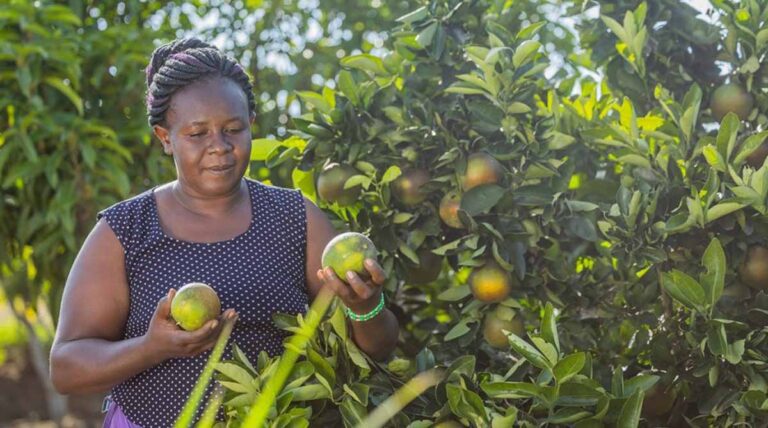
The genebanks conserve indigenous fruit-tree species such as baobab, marula, tamarind, wild loquat and wild mango, which are rich in essential vitamins and minerals that contribute to healthier diets and improved food security. They also conserve exotic fruit-tree species such as mango, avocado, citrus and papaya, which provide important sources of nutrition and income for farming households.
“Genebanks are the living insurance policy for Africa’s food and nutrition security. They safeguard the fruit-tree diversity that farmers depend on for resilient crops, nutritious diets and sustainable incomes,” says Alice Muchugi, the Theme Leader for Tree Diversity and Productivity at CIFOR-ICRAF.
From the genebanks, seeds are supplied to nurseries through a structured process that ensures their quality and viability before distribution to farmers and research centres. CIFOR-ICRAF has also been training nursery operators across Africa in seedling propagation and nursery management. This enables them to multiply and distribute high-quality, disease-free planting material.
Stephen Ndung’u, a nursery operator in Kenya’s Murang’a County, is one of the beneficiaries of the training. He now runs his own nursery, where he grafts and sells fruit-tree seedlings including citrus, apples, mandarins and grapes.
“The training equipped me with practical knowledge and skills in nursery management and fruit farming,” he says.
“I learned how to keep my nurseries clean, manage pests and diseases, graft trees, and prepare the right soil mixtures. The training enabled me to start a seedling business, and today I earn income by selling high-quality seedlings to other farmers. My business has expanded significantly because the demand for these seedlings is very high.”
At Chitedze in Malawi, CIFOR-ICRAF has established a field genebank that conserves indigenous fruit-tree species such as marula and wild medlar, which play an important role in household food security, particularly during drought periods.
The organization has also trained nursery operators such as Henry Tembo, who now supplies quality seedlings to local farmers and has shared his knowledge with more than 200 farmers, many of whom have established their own nurseries.
“The practice I appreciate most in fruit-tree farming is grafting. Seeing trees begin to produce fruit in less than three years makes me very happy, compared with planting seeds and waiting for a decade or more,” he says.
In Cameroon, CIFOR-ICRAF and local partners established Rural Resource Centres that provide farmers with practical knowledge on nursery development, tree propagation and post-harvest management. One beneficiary, the Merunga Women’s Group, established a wild mango nursery and a two-hectare agroforest that generates income while strengthening environmental conservation.
At Domboshawa in Zimbabwe, CIFOR-ICRAF supports a field genebank that conserves indigenous fruit-tree species such as wild loquats. Part of the collection, which had been in existence for over 20 years, was severely damaged by fire and tree poaching. With the absence of sustained funding, key protection measures could not be maintained, leaving only a few surviving trees.
Thanks to funding support from ACIAR, restoration efforts are now underway through coppicing – a technique that stimulates new shoots to grow from surviving tree stumps – along with improved fire-protection measures.
Once fully restored, the genebank will continue to provide high-quality planting material to nurseries and farmers.
Beyond Kenya, Zimbabwe, Malawi and Cameroon, CIFOR-ICRAF is also working in Niger, Mali and Burkina Faso to establish mother blocks and maintain high-quality planting material, particularly for fruit trees.
These efforts underscore the importance of sustained funding for genebanks. This is essential for the long-term conservation of valuable genetic resources and for ensuring a continuous supply of high-quality planting material to farmers across Africa through nursery networks.
Also Read: Insecticides (India) Limited Launches New Paddy Insecticide ‘Granuvia’
Global Agriculture is an independent international media platform covering agri-business, policy, technology, and sustainability. For editorial collaborations, thought leadership, and strategic communications, write to pr@global-agriculture.com