Eastern India’s Rice-Fallow Lands Emerge as New Frontier in India’s Pulses Push
20 May 2026, New Delhi: India is preparing to unlock the vast agricultural potential of Eastern India’s rice-fallow lands as the Centre sharpens its focus on pulses, oilseeds, integrated farming and soil health through a region-specific agricultural roadmap.
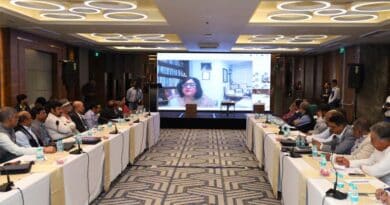
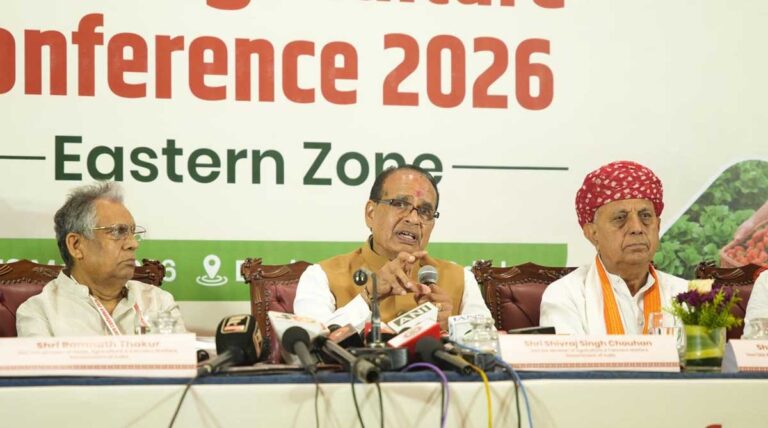
Addressing the media during the Eastern Regional Kharif Agriculture Zonal Conference in Bhubaneswar, Union Agriculture and Farmers’ Welfare Minister Shivraj Singh Chouhan said the future growth of Eastern India’s agriculture would depend on state-specific and crop-specific strategies jointly developed by the Centre and state governments.
The conference brought together representatives from Odisha, Bihar, Chhattisgarh, Jharkhand and West Bengal to deliberate on food security, crop diversification, integrated farming, natural farming, balanced fertilizer use, horticulture and agricultural infrastructure. According to the minister, zonal conferences are proving more effective than a single national-level consultation because of India’s highly diverse agro-climatic conditions and farming challenges.
The Centre has outlined three major priorities for the agriculture sector — ensuring food security, improving nutritional availability and increasing farmers’ incomes. To achieve these goals, the government is pursuing a six-point strategy focused on raising productivity, lowering cultivation costs, ensuring remunerative prices, providing compensation for crop losses and accelerating diversification in agriculture.
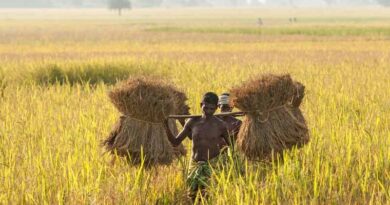
While India has achieved strong production levels in paddy and wheat, the country continues to depend on imports for pulses and edible oils. The government now sees Eastern India as a key region to bridge this gap. Shri Chouhan highlighted that millions of hectares of rice-fallow land remain unused after paddy harvest and can be utilized for pulses and oilseeds cultivation. He said these areas would be identified and supported through quality seeds, demonstrations, farmer incentives and procurement assistance under the PM-AASHA scheme to expand the production of urad, masoor and tur crops.
The minister also emphasized that diversification is not limited to shifting crops but is closely linked to long-term soil sustainability. Repeated cultivation of the same crop weakens soil fertility, whereas pulses improve soil health through nitrogen fixation.
Integrated farming emerged as another major theme during the conference. The government is promoting farming models that combine cereals with horticulture, vegetables, livestock, fisheries, beekeeping and agroforestry to create multiple income streams for small and marginal farmers. According to Shri Chouhan, Eastern India possesses significant potential for integrated farming systems that can substantially improve rural incomes.
The Centre also announced plans to strengthen local processing infrastructure through subsidies for dal mills and oil mills, aimed at supporting value addition closer to production centres.
On the issue of sustainable farming, the Union Minister announced a nationwide ‘Khet Bachao Abhiyan’ from June 1 to June 15. The campaign will focus on balanced fertilizer use, soil health awareness and farmer education. The government warned that excessive fertilizer application without soil-based recommendations increases production costs and negatively impacts soil, crop and human health.
Shri Chouhan also described Farmer ID as a transformative initiative that will digitally integrate landholding, crop and family details into a unified farmer identity. The initiative is expected to improve transparency in agricultural credit, DBT transfers, fertilizer distribution and delivery of government schemes while preventing diversion of subsidized fertilizers.
The government further indicated that stricter regulation of agricultural inputs is on the horizon. Shri Chouhan said new pesticide and seed laws are being prepared to curb the circulation of fake pesticides and substandard seeds through stronger punitive provisions.
Eastern India’s horticulture sector was also identified as a major opportunity area. The minister said crop-wise and state-wise roadmaps would be prepared based on soil conditions, climate and local suitability to maximize productivity and improve farm management practices. Cold storage and cold chain expansion will be supported through schemes such as MIDH, the Agriculture Infrastructure Fund and PM Kisan Sampada Yojana.
Reaffirming the government’s commitment to agriculture-led growth, Shri Chouhan said coordination among states, agricultural universities, Krishi Vigyan Kendras and scientists would remain central to ensuring that research, technology and best practices reach farmers efficiently.
Also Read: Insecticides (India) Limited Launches New Paddy Insecticide ‘Granuvia’
Global Agriculture is an independent international media platform covering agri-business, policy, technology, and sustainability. For editorial collaborations, thought leadership, and strategic communications, write