Punjab’s Farm Fire Count Reaches 1,612 as Paddy Season Winds Down
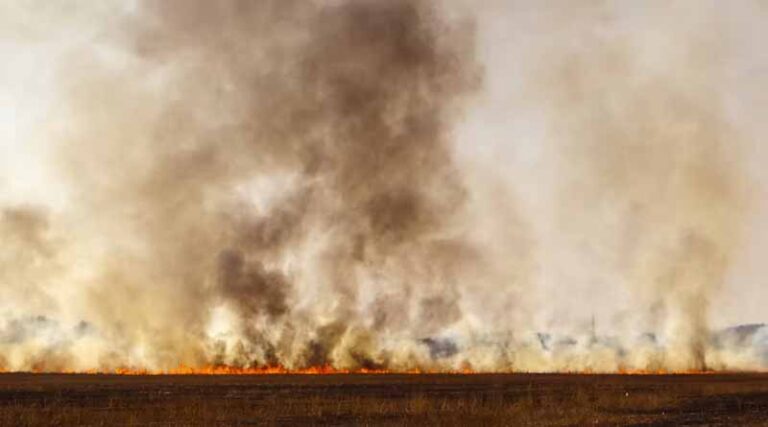
03 November 2026, Chandigarh, IN: Punjab recorded 98 fresh stubble-burning incidents on Monday, taking the state’s cumulative farm fire count for the season to 1,612, according to data reported November 2. Monday’s figure was down from 175 fires the previous day, continuing a decline from the season’s peak of 292 incidents on October 31.
Punjab’s tally stood at 1,514 as of November 1, when several other northern Indian states also reported their own farm fire counts for the ongoing crop residue burning season: Rajasthan recorded 671 incidents, Madhya Pradesh 566, Uttar Pradesh 345, Uttarakhand 176, Haryana 42, and Delhi 2.
Within Punjab, the district-wise breakdown showed Tarn Taran leading with 489 incidents this season, followed by Ferozepur with 193, Amritsar with 192, Gurdaspur with 100, and Kapurthala with 99. Farmers in the state burn leftover paddy stubble after the rice harvest to quickly clear fields for the next wheat sowing cycle, a practice that contributes heavily to seasonal air quality deterioration across northern India, including the capital region of Delhi, each autumn.
Air quality readings taken across several Punjab cities showed Patiala at 231, Ludhiana at 214, Jalandhar at 157, Mandi Gobindgarh at 153, and Amritsar at 123, figures that fall in the poor to moderately poor range on India’s air quality index scale.
Commission orders tighter district monitoring
The Commission for Air Quality Management in NCR and Adjoining Areas, the statutory body responsible for coordinating pollution control across Delhi and neighboring states, has moved to tighten oversight of the remaining weeks of the burning season. CAQM Member Secretary Tarun Kumar Pithode held a review meeting on Sunday with deputy commissioners, district magistrates, and senior superintendents of police from seven Punjab districts: Faridkot, Ferozepur, Barnala, Bathinda, Patiala, Malerkotla, and Sangrur.
Officials attending the meeting were directed to intensify surveillance, with particular attention to evening hours when stubble fires are more frequently set, and to enforce penalties promptly wherever violations are detected. The directive reflects a continuing effort by the Commission to coordinate enforcement across district lines rather than relying solely on state-level monitoring, given that farm fires in one district can affect air quality readings many kilometers away.
The paddy harvest and subsequent stubble-clearing period typically runs from mid-September through late November in Punjab, with the state government each year promoting alternatives to open burning, including crop residue management machinery that allows farmers to incorporate stubble into the soil or bale it for use as fuel or fodder, rather than setting it alight. Despite years of awareness campaigns, subsidized machinery programs, and monitoring efforts, farm fires continue to be reported across the state each autumn as farmers weigh the costs and logistical demands of alternative residue management against the speed and low cost of burning.
The current season’s fire count data is being tracked through a combination of satellite monitoring and ground-level reporting coordinated between state pollution control boards and the central Commission, which compiles daily figures from Punjab and neighboring states throughout the September-to-November window when crop residue burning is most prevalent across the Indo-Gangetic plain.
Also Read: India Says Finalized US Trade Deal Will Shield Its Farmers
Global Agriculture is an independent international media platform covering agri-business, policy, technology, and sustainability. For editorial collaborations, thought leadership, and strategic communications, write to pr@global-agriculture.com