
Winds Of Change – The Global Grain Trading Norm
25 August 2026, AU: Disclaimer: Market conditions and forecasts can change rapidly. The views and outlooks presented in this article reflect information available at the time (late July 2026).
As harvest approaches, growers and grain handlers turn their thoughts to potential markets. For both domestic and export markets, external factors can have significant impacts on the volume and prices accepted.
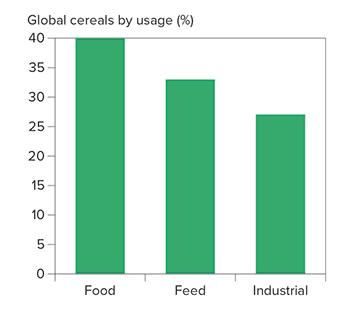
Grain has 3 main markets – food, feed and industry. Grains Australia General Manager – Insights and Engagement Dr Chris Carter says understanding short-term and longer-term drivers informs market opportunities for various end-uses.
He says there is increasing demand for stable quality and functionality to address the needs of flour millers, bakers, noodle manufacturers and cake makers.
Food products require different grain qualities for different end products. For example, classes such as APH (Australian Prime Hard) are used in baking, while ASW (Australian Standard White), a lower-protein wheat, is destined for products such as noodles in Asian markets.
“There is significant interest in export markets in the functionality of Australian wheat types,” says Dr Carter. “This includes our ability to address baking quality with stronger, more stable types of wheat, as well as the functionality of Australian Noodle Wheat (ANW) outside the traditional markets of Japan and South Korea. Customers are also interested in Australia’s ability to produce and export sustainable quantities of soft wheat for cake and cookie applications.”
Added to this, he says, is increasing interest in feed grains for livestock. “Consumers are growing wealthier and increasing their protein intake. This stimulates demand for livestock feed to meet that animal protein uptake.
Knowing which type of animal proteins are produced can influence which grains are valued in the feed ration. Understanding these types of drivers allows better (and more competitive) engagement with the market.
Domestic production and market outlook
In the months leading up to harvest 2026, the season featured a strong recovery in South Australia and Victoria, variable conditions within Western Australia and a dry start for northern NSW and Queensland. The Bureau of Meteorology’s outlook for an El Niño, however, may change yield expectations.
Insecurity around fertiliser and diesel due to conflict in the Middle East also changed the mix of crops planted, with growers looking to optimise returns through growing canola rather than wheat.
Figure 1: Australian wheat export markets – Asia
Domestic wheat prices have been ‘soft’ following last year’s bumper crop and the availability on global markets.
Andrew Whitelaw of Episode3 says that this is reducing any urgency for buyers to secure wheat, and if the forthcoming crop is on track, the supply is likely to keep wheat prices down.
Another supply-demand driver is livestock: “Most of the domestic demand is driven by livestock feed, especially for barley, feed wheat and sorghum. If livestock prices stay up, then feed is likely to remain in demand,” says Mr Whitelaw.
So, if seasonal conditions hold up, he says the market will need export demand to clear supply: “Demand will come mainly from Asia and the Middle East, but there will also be strong competition from Black Sea and European wheat producers.”
Of the other major grains, additional areas sown to canola will likely result in an increased exportable volume. Oats are expected to continue benefiting from markets increasingly looking to oats as a ‘healthy lifestyle’ cereal; however, they face price competition from Russian and potentially Chilean suppliers.
International production and Australian export opportunities
All indications suggest US wheat production will be poor due to weather conditions; however, this should be offset in global markets by strong production in Canada and Russia.
Australia’s main export markets for wheat and barley are Asia and the Middle East, while grain from Russia, Ukraine and Europe flows primarily into North Africa and the Middle East. The US exports wheat, maize and soybeans into Mexico, Japan, China and South Korea, competing with Australia for the food (wheat) sector and stock feed (barley, maize and soybeans).
Figure 2: Grain usage globally based on food, feed and industry
Beyond seasonal factors, ANZ Executive Director of Food, Beverage and Agribusiness Insights Michael Whitehead notes that policy changes, trade barriers and tariffs mean that demand is never set in concrete.
For Asian markets, a lower transport cost based on proximity makes Australian grains an appealing point of supply. However, Mr Whitehead points out that some competing exporters are supported by subsidies and policy settings that distort markets, so it’s not a level playing field.
While there was an expectation that the Middle East conflict’s impact on fuel, fertiliser and freight availability might in turn impact grain production, Mr Whitehead says alternative supplies have largely resolved this. Consequently, there has been little shift in forward wheat prices, which remain flat.
The other major grain producer and geopolitical hotspot, Ukraine, is continuously being monitored for any changes that might influence the global market and prices.
Trade barriers and non-tariff measures
Another hurdle for many exporters is non-tariff measures, which have recently been highlighted by Grains Australia. These measures include regulatory limits imposed for contaminants and maximum residue levels (MRLs), which are costly to manage and can change with little notice.
“Non-tariff measures are becoming more prevalent in export markets, with markets moving towards these as trade policy mechanisms,” says Dr Carter.
“This is partly in response to consumer pressure around issues like MRLs, but a lack of clarity in the rationale for some of these measures can make it challenging to provide clear messaging back to the industry and growers.”
In his presentation to the National Working Party on Grain Protection Conference in June this year, Mr Whitehead commented that growing grain was only the first of many steps to market. Returns to growers were shaped by market access, policy, supply, demand, geopolitical volatility and timing.
Markets may be open today, but that can change very quickly. We need to be aware of other opportunities.
“Also, our competitors may be armed with subsidies and strategic priorities that give them an edge, but on the plus side our production cycle offsets northern hemisphere production, giving Australian grains an advantage in timing, storage and flow into markets,” says Mr Whitehead.
Also Read: ASSOCHAM to Host 4th Agritech Summit 2026 in New Delhi on October 26
Global Agriculture is an independent international media platform covering agri-business, policy, technology, and sustainability. For editorial collaborations, thought leadership, and strategic communications, write to pr@global-agriculture.com