National Initiative Strengthens Grain Biosecurity Capacity
13 October 2026, AU: Big strides are being made to shore up Australia’s preparedness and response to high-priority pests and diseases through the National Grains Diagnostic and Surveillance Initiative collaboration.
As the movement of trade and people increases, Australia’s grain-growing regions face heightened biosecurity risks from incursions of insect pests and disease.
Figures from Infrastructure Australia show Australian ports handled more than 9.1 million standard containers in 2024-25, most of which were imports. This is forecast to grow significantly in the coming years with imports increasing by 34%, 55% and 66% through the major ports of Brisbane, Fremantle and Adelaide respectively by 2029-30.
It is estimated that a significant exotic incursion would, on average, cost $100 million to the grains industry in crop damage, control and trade impacts.
Consequently, preparedness against exotic pests and plant diseases is being strengthened through the National Grains Diagnostic and Surveillance Initiative (NGDSI). The program also aims to increase diagnostics and surveillance to help growers manage biotic threats already in Australia.
Established in 2024, the 5-year initiative is a $54 million co-investment between GRDC, the Australian Government Department of Agriculture, Fisheries and Forestry (DAFF) and agricultural departments from 5 states – Western Australia, South Australia, Victoria, New South Wales and Queensland.
Employing molecular technology and a range of other methods to manage continuing threats, the initiative aims to improve Australia’s biosecurity preparedness through diagnostics and surveillance for high-priority grains pests and diseases.
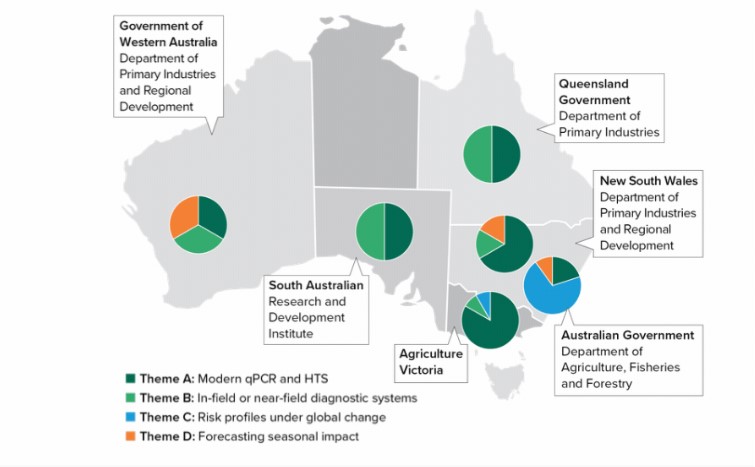
At the initiative’s midway point, work is progressing on dozens of projects co-designed and aligned with the priorities of different jurisdictions.
Themed response
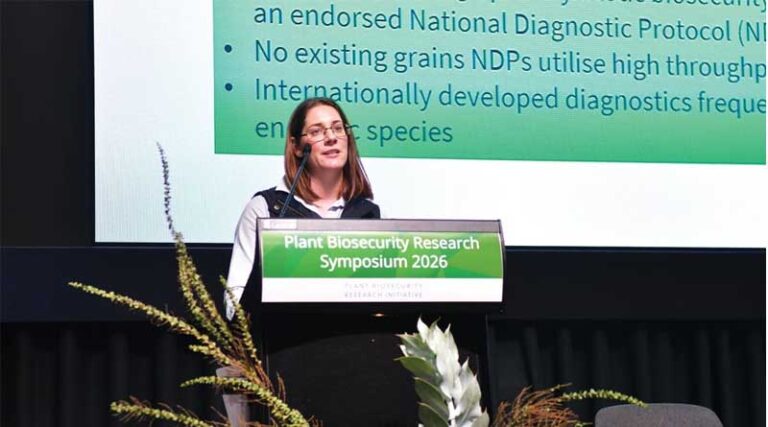
Presenting an NGDSI update at the 2026 Plant Biosecurity Research Initiative (PBRI) Symposium, GRDC Manager – Biosecurity Dr Amy Koschella outlined research underway across the initiative’s 4 themes.
- Theme A: The adoption of quantitative polymerase chain reaction (qPCR) and high-throughput sequencing (HTS) platforms as diagnostic standards for the grains industry.
- Theme B: The development of in-field or near-field diagnostic systems.
- Theme C: Risk analysis of exotic pests under global change.
- Theme D: Forecasting seasonal impact.
qPCR technology is a rapid molecular technique that measures the exact amount of a specific DNA or RNA fragment in a sample. HTS allows rapid sequencing of a large amount of DNA and RNA in one reaction, with benefits including the ability to identify a mixture of pests, diseases and beneficials in one sample (for example, from insect or spore traps).
As part of Theme A, the technology is being used to create diagnostic tools for 38 exotic and 30 endemic pests and diseases, enabling the fast and accurate detection of these biotic threats.
Under Theme B, in-field or near-field diagnostic systems are being developed and implemented for fast-tracked identification – in less than 48 hours – of 15 exotic and 20 endemic species.
Theme C includes risk analyses for high-priority grain pests to ensure import and post-entry quarantine requirements are fit for purpose. Global intelligence and climate science are also being used to better understand the evolving risk profiles of exotic pests related to shifting trade and climate conditions.
Research under Theme D aims to improve industry’s ability to forecast the occurrence and impact of pests and diseases across seasons. It includes looking at the seasonal impact on the magnitude and distribution of diseases and pests, developing forecasting models for key pests such as diamondback moth, and surveying endemic pathogens to understand how they vary within growing regions and which strains are most damaging.
Figure 1: National program – co-designed and aligned with jurisdiction priorities
Collaboration key
In her presentation, Dr Koschella said the initiative had bolstered national preparedness against incursions by not only improving diagnostic and surveillance capacity but also supporting a coordinated approach to biosecurity. Relationships had been strengthened between state and Commonwealth departments through annual forums and the sharing of outputs. This supports responses and impact on the ground.
“There’s been great collaboration and information sharing between the jurisdictions,” she said.
Efficient and effective communication during a biosecurity response is absolutely key, and having already established connections can make that so much easier.
She also discussed standardising testing procedures across states to help to build a more uniform picture of biosecurity threats and strengthen and streamline responses.
Key diagnostic tests (or assays) being developed as part of the program to identify specific exotic pests or diseases will also be validated across multiple states, building capacity.
“This will not only verify the accuracy, sensitivity and specificity of the test, but it will also upskill multiple jurisdictions to conduct that test, improving preparedness for our high-priority pests across the country,” she said.
Also Read: FMC Wins UK Approval for New Cyantraniliprole Formulations in Potatoes and Carrots
Global Agriculture is an independent international media platform covering agri-business, policy, technology, and sustainability. For editorial collaborations, thought leadership, and strategic communications, write to pr@global-agriculture.com