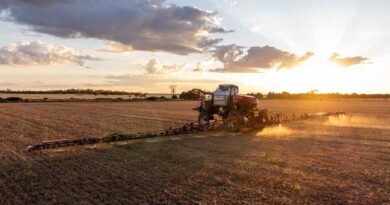
03 November 2026, Yverdon-les-Bains, CH: Swiss agricultural technology company Ecorobotix has added ten new artificial intelligence plant recognition models to its ARA robotic sprayer, including what the company says is the first system able to detect and treat yellow nutsedge, a weed that is notoriously difficult to control in vegetable and row crop fields. The update was announced on October 29, 2026, from the company’s base in Yverdon-les-Bains, Switzerland.
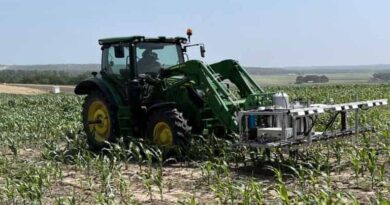
ARA is a trailed, camera-guided sprayer that farmers tow behind a tractor. Instead of spraying a whole field uniformly, as a conventional boom sprayer does, ARA uses onboard cameras and artificial intelligence to recognize individual plants as it moves across a field, then fires a small nozzle to treat only the weeds it identifies, leaving the crop and bare soil untouched. This approach, known in the industry as spot spraying or precision spraying, is designed to cut the volume of herbicide, fungicide, and other crop protection products a farmer needs to buy and apply.
Since its commercial launch, Ecorobotix says more than 1,000 ARA units are now working in over 20 countries, and the machines have treated a combined total of more than 600,000 hectares. The system currently carries more than 120 separate plant recognition models covering a range of crops and weeds.
The latest update adds ten models that will become commercially available to customers from March next year, including new recognition tools for garlic, leek, and potato crops. A further 55 models, including ones for pepper and zucchini, are being made available for free trial use to existing ARA customers ahead of a future commercial release. Among that second group is the yellow nutsedge model, which Ecorobotix describes as the first precision spraying tool capable of detecting the weed in the field.
Yellow nutsedge, a perennial sedge that spreads through underground tubers rather than relying only on seed, is a persistent problem in several row crops because it regrows even after the visible plant is cut or sprayed, and few herbicides registered for crops such as potato and sugar beet are effective against it. Ecorobotix cites research from Agroscope, the Swiss government’s agricultural research institute, estimating that yellow nutsedge causes yield losses of between 40 percent and 71 percent in Swiss sugar beet and potato fields when left uncontrolled.
Because conventional selective herbicides, which are formulated to kill certain weed species while sparing the crop, are limited against yellow nutsedge, growers have often had to rely on non-selective herbicides that would also damage or kill the crop if they touched it. Ecorobotix’s new model is built to let ARA apply a non-selective herbicide directly onto each identified nutsedge plant while avoiding the surrounding crop, a method the company says makes an otherwise unusable chemical option viable in the field.
Simon Gasser, an agronomist and crop algorithm product manager at Ecorobotix, said the new model gives growers a precision spraying option for a weed that previously had none. Luc Détroz, a potato grower in Belgium who trialed the new potato recognition model on roughly 300 hectares this season, said the tool had protected his crop, describing a specific instance where it caught an infestation that would otherwise have caused losses.
Company-reported figures from 2026 field use put the average reduction in crop protection product use at 86 percent compared with conventional broadcast spraying across the models tested with customers this year. Ecorobotix also reported that more than 11,000 hectares were treated in 2026 using its newly commercialized recognition models across more than 20 countries, and that hectares treated under its carrot detection model alone rose by more than 80 percent over the same period. These figures are company-reported and have not been independently verified.
A Lineup Still Expanding
The company has been steadily broadening ARA’s list of recognized crops and weeds since its initial launch, moving from a small set of row crops into a wider range of vegetable crops such as garlic, leek, pepper, and zucchini. Models made available for free trial, such as the new yellow nutsedge tool, are typically offered to existing customers before Ecorobotix decides whether and when to move them to full commercial release, a pattern the company has followed with earlier additions to the ARA platform.
The ten newly commercialized models, covering garlic, leek, and potato among others, will be billed to customers starting in March 2027, while the 55 trial models remain free to use for current ARA owners in the meantime.
Global Agriculture is an independent international media platform covering agri-business, policy, technology, and sustainability. For editorial collaborations, thought leadership, and strategic communications, write to pr@global-agriculture.com