BRICS should turn digital agriculture into a food-security public good
By Sayanta Ghosh, Senior Associate Fellow, Land Resources Division, The Energy and Resources Institute (TERI).
18 September 2026, New Delhi: At the BRICS Business Forum in New Delhi on September 11, Commerce and Industry Minister Piyush Goyal called on agri-tech startups across BRICS countries to jointly develop solutions for farmers and strengthen food security. It was a timely proposition. Climate extremes, supply disruptions, changing rainfall patterns and volatile input costs are making food security increasingly dependent not only on how much a country produces, but also on how quickly it can anticipate risks and get useful information to farmers.
For BRICS, the opportunity is unusually large. According to India’s agriculture ministry, BRICS countries account for about 42 per cent of the world’s agricultural land and more than 42 per cent of global agricultural production. Nearly 70 per cent of the world’s estimated 580 million small and marginal farmers live in BRICS countries. Cooperation on agricultural technology is therefore not a niche digital agenda. Done well, it could influence the resilience of a significant share of the global food system.
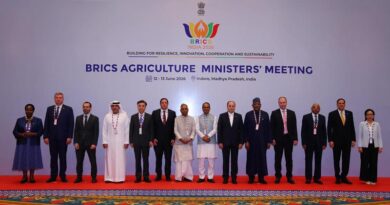
BRICS has also already created a foundation to build on. At the Agriculture Ministers’ Meeting in Indore in June, members adopted a joint declaration focused on food security, climate-resilient agriculture, trade, innovation and investment. Digital agriculture was part of that agenda. The question now is how to move from networks and declarations towards an architecture that farmers and governments can actually use.
From data to shared agricultural intelligence
The most useful next step would be to treat food-security intelligence as a digital public good across BRICS. This need not mean pooling every country’s agricultural data into one central database. It should mean building interoperable systems, common technical protocols and shared tools that allow national data to generate comparable and actionable intelligence while countries retain control over sensitive information.
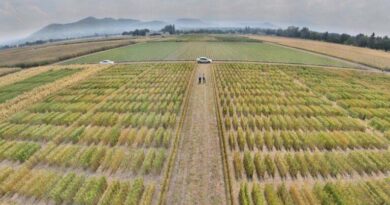
Satellite observations can detect crop stress, vegetation loss and drought conditions across large areas. Weather networks can improve short-term risk assessment. Artificial intelligence can support pest detection, yield forecasting and targeted advisories. Soil, water and crop information can help farmers use inputs more efficiently. Yet these capabilities remain uneven, and many useful systems operate within national or commercial silos.
BRICS could cooperate on common approaches to crop monitoring and drought indicators, jointly test agricultural AI models across different agro-climatic conditions, develop open reference datasets where appropriate and strengthen cross-border early-warning systems. A crop-stress model developed in one country, for example, should be easier to validate and adapt for comparable conditions elsewhere rather than rebuilt from scratch.
This would also complement the wider technology agenda emerging under India’s BRICS presidency. India has proposed a BRICS Incubator Network and Startup Innovation Fund to strengthen cooperation among startups and innovation ecosystems. Agriculture could become a practical test of whether such mechanisms can solve shared development problems rather than simply connect businesses.
The farmer must be the measure of success
The biggest danger is that digital agriculture becomes another collection of portals, dashboards and pilots that look impressive but remain distant from farm decisions. A sophisticated satellite drought map has limited public value if a farmer receives no timely advice on sowing, irrigation or crop choice. An AI pest-warning system matters only when the warning reaches farmers early, in a language and form they can act upon.
BRICS should therefore measure success through outcomes: whether warnings arrive earlier, crop losses fall, water and fertiliser use becomes more efficient, and small farmers gain access to technologies previously available mainly to large producers. With such a large proportion of the world’s small and marginal farmers living within BRICS economies, inclusiveness cannot be an afterthought.
Data governance will matter equally. Agricultural data have economic and strategic value. Farm-level information can reveal production patterns, land-use changes and supply vulnerabilities. A BRICS digital architecture should therefore be federated rather than centralised, with clear rules for privacy, ownership, commercial use and national sovereignty. The objective should be to share models, standards and useful intelligence without requiring countries or farmers to surrender control over sensitive data.
The BRICS Business Forum has put agri-tech collaboration on the table, while the Indore process has already established food security and digital agriculture as areas for cooperation. The next step should be practical: connect research institutions, startups, satellite intelligence, weather systems and farmer-facing services into a working network.
BRICS is often discussed in terms of GDP, trade and geopolitical weight. Food security offers a more immediate test of its usefulness. If its digital cooperation can help farmers anticipate drought, identify crop stress earlier, reduce input waste and respond better to climate shocks, technology diplomacy will have produced something tangible.
For a grouping that contains such a large share of the world’s farmers and agricultural resources, food-security intelligence could become one of its most valuable digital public goods.
Also Read: CropLife India Flags Narrowing Crop Protection Options for Farmers
Global Agriculture is an independent international media platform covering agri-business, policy, technology, and sustainability. For editorial collaborations, thought leadership, and strategic communications, write to pr@global-agriculture.com