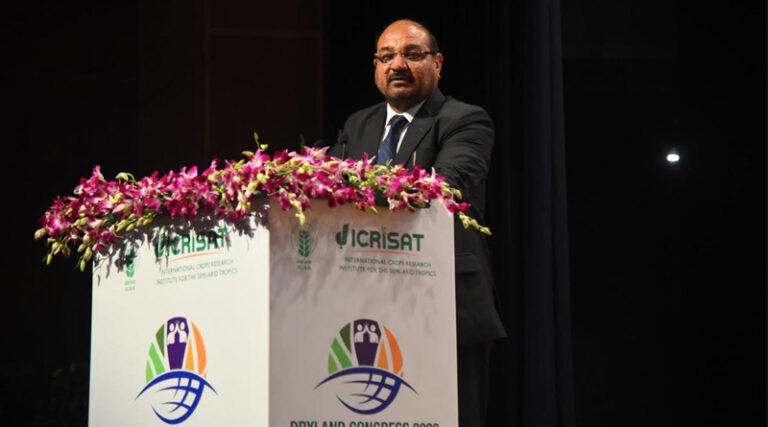
14 September 2026, New Delhi: The Dryland Congress 2026 concluded in New Delhi with a renewed push to move dryland agriculture from research and ideas to scalable solutions, placing South–South and triangular cooperation at the centre of the global dryland agenda.
The three-day Congress culminated in the adoption of the Delhi Declaration on Drylands (3D), which sets out a shared agenda for transforming dryland agriculture through collaboration, knowledge exchange, innovation and collective action across the Global South. The declaration was endorsed by participating governments, institutions, partners and delegates.
Addressing the closing session, Dr M. L. Jat, Secretary, DARE and Director General, ICAR, called for foresight to become central to dryland agriculture planning. He proposed a stronger institutional mechanism for foresight and said ICAR-NIAP should be mandated to lead foresight work on dryland agriculture. He also highlighted the need for robust data and information systems and for common innovation grounds or living laboratories that connect research with practice and policy.
Dr Himanshu Pathak, Director General, ICRISAT, stressed that drylands are strategically important to global food security and called for the Congress’s deliberations to translate into concrete action. He emphasised prioritising short- and long-term actions and moving from ideas to concepts and ultimately to implementation by bringing together expertise, knowledge and partnerships.
Innovation from the Global South
The Congress also highlighted the growing pool of agricultural innovations emerging across the Global South. The inaugural ISSCA Global Awards 2026 received 170 nominations from 34 countries spanning Asia, Southeast Asia, Africa, the Middle East and Latin America and the Caribbean.
Recognised innovations ranged from heat-tolerant wheat and early-maturing pulses to digital agriculture, land restoration, water management, livestock improvement, solar drying and women-led farming systems.
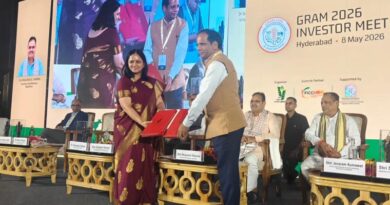
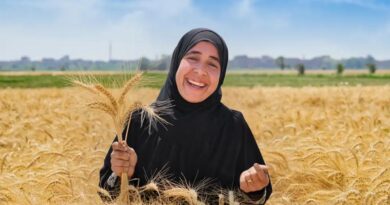
The ISSCA Global Award for Transformative Excellence was presented to ICARDA, Lebanon, for heat-tolerant wheat technologies; CIMMYT, Mexico, for e-Agrology 360; and the Odisha Livelihoods Mission, India, for women-led sustainable farming for nutrition and rural resilience.
Other recognised initiatives included climate-smart crop varieties from Bangladesh and Myanmar, Karnataka’s Krishi Bhagya programme, Bihar’s Aahar–Pyne landscape restoration, digital agriculture initiatives from Andhra Pradesh and Gujarat, and market and livestock innovations from Bangladesh, Kenya, Malawi and Nigeria.
The breadth of the awards underlined the Congress’s central message: solutions to dryland agriculture challenges are being developed across the Global South and can potentially be adapted and scaled across countries facing similar climate, resource and food-security pressures.
Cooperation beyond borders
The Congress placed particular emphasis on South–South and triangular cooperation as a mechanism for transferring and adapting agricultural knowledge. National agricultural research systems from Ethiopia, Senegal, Brazil, China and India, alongside CGIAR, FARA and APAARI, shared experiences on taking successful models to scale.
New partnerships were also announced, including agreements involving the Global Crop Diversity Trust, while ICRISAT exchanged MoUs with Avior Life Sciences, NIFTEM, Wipro Limited and the Angul and Rayagada district administrations of Odisha.
The Congress coincided with the United Nations Day for South–South Cooperation, reinforcing its broader focus on international collaboration. Representatives from ICRISAT, ICAR, CGIAR, RIS, NABARD and the CGIAR Capacity Sharing Accelerator reaffirmed their commitment to strengthening agricultural cooperation across the Global South.
Held under the theme “Transforming Dryland Agriculture with South–South Cooperation,” Dryland Congress 2026 ended with a clear shift in emphasis: from generating knowledge to applying it, from individual innovations to cross-border adaptation, and from promising concepts to scalable action for resilient and sustainable dryland agriculture.
Global Agriculture is an independent international media platform covering agri-business, policy, technology, and sustainability. For editorial collaborations, thought leadership, and strategic communications, write to pr@global-agriculture.com