Salt-Loving Plant’s Genome Reveals Toolkit for Saline Farmland
18 September 2026, Australia: An international research team led by the University of Newcastle in Australia has sequenced and compared the genomes of six species of Salicornia, an edible plant that thrives in seawater and salt-affected soils, uncovering a set of candidate genes that could help breeders develop food crops able to grow on land too salty for conventional agriculture. The study, published in Nature Communications on September 14, 2026, was led by plant scientist Dr. Vanessa Melino and involved 24 researchers from eight countries. The project originated at King Abdullah University of Science and Technology (KAUST) in Saudi Arabia, which funded the five-year effort.
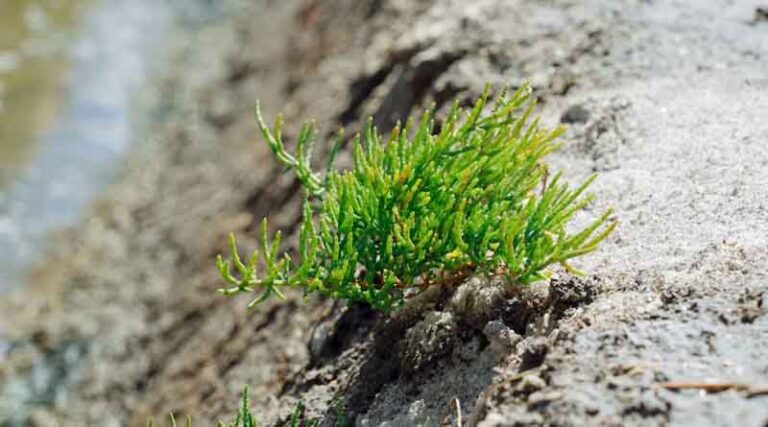
Salicornia, commonly known as sea asparagus or samphire, is a halophyte, a plant naturally adapted to grow in salt concentrations that would kill most crop species. Unlike research that searches for a single “salt tolerance gene,” Melino’s team took a comparative genomics approach, sequencing complete genetic blueprints from six related Salicornia species and analyzing DNA samples collected from 318 individual plants gathered from salt marshes and coastal sites around the world.
A more complex picture than expected
The comparison allowed the researchers to trace how different Salicornia species evolved and diverged from one another, and to pinpoint which genes were consistently associated with salt tolerance across the group rather than unique to a single population. Among the findings were candidate genes linked to how plants sense rising salt concentrations in the soil around their roots, as well as genes involved in the metabolic pathways plants use to manage that stress once detected. The team’s central conclusion is that salt tolerance in Salicornia is governed by a broad, interconnected network of genes rather than a small handful of switches, a more complex picture than earlier single-gene studies had suggested, and one that helps explain why efforts to transfer salt tolerance into conventional crops using one or two genes at a time have had limited success.
The five-year timeline and the scale of sampling, spanning wild populations on multiple continents rather than a single field site, are part of what distinguishes this study from earlier, narrower halophyte genetics work. By assembling reference genomes for six species side by side instead of one, the team could separate genes that appear tied to salt tolerance specifically from genes that simply vary between populations for unrelated reasons, a distinction that single-species studies are generally unable to make with confidence.
From wild halophyte to future crop
Because the genetic architecture behind salt tolerance in Salicornia is now mapped at the whole-genome level, breeders have a reference point for two different strategies. The first is domesticating Salicornia itself into a more productive food crop, since it is already edible and can be irrigated with seawater or saline wastewater rather than scarce freshwater. The second, longer-term goal is identifying which of the newly catalogued genes or gene networks might be introduced into conventional crops to improve their tolerance of salt-affected soils, a growing problem in irrigated agriculture worldwide as water tables rise and irrigation water quality declines. In Australia, the university noted potential applications for improving native samphire varieties and for using saline wastewater from the Murray-Darling Basin, one of the country’s most important agricultural water systems, as an irrigation source for salt-tolerant production.
The research is a foundational genomics resource rather than a finished agronomic product. No field trials of an improved Salicornia variety or a genetically modified conventional crop carrying these genes have been reported yet, and translating a candidate gene list into a commercial variety typically takes years of further validation and breeding
Also Read: CropLife India Flags Narrowing Crop Protection Options for Farmers
Global Agriculture is an independent international media platform covering agri-business, policy, technology, and sustainability. For editorial collaborations, thought leadership, and strategic communications, write to pr@global-agriculture.com