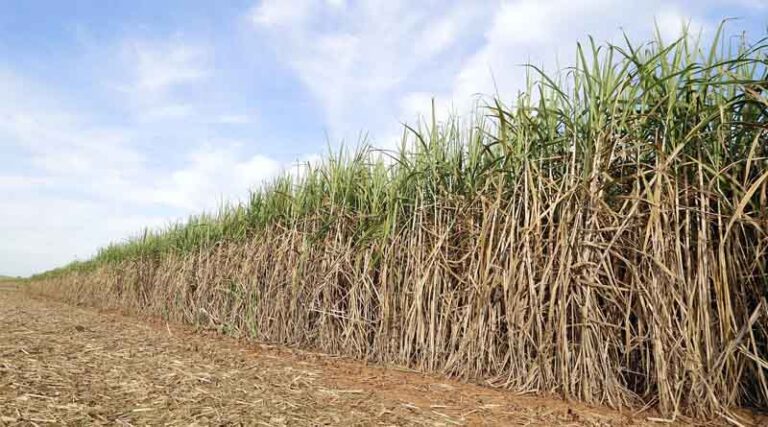
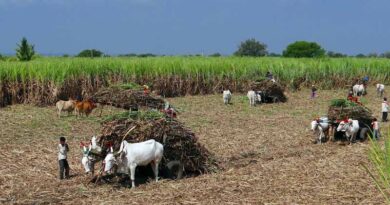
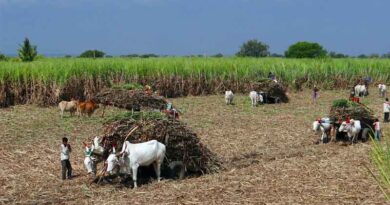
18 September 2026, Tamil Nadu, India: The ICAR-Sugarcane Breeding Institute (ICAR-SBI) in Coimbatore, Tamil Nadu, has three new sugarcane varieties in the final stage of government clearance, each bred to resist red rot and smut, the two fungal diseases that do the most damage to India’s cane crop. Institute director Dr. P. Govindaraj said the varieties are awaiting sign-off from the Central Variety Release Committee, with formal notification in the government Gazette expected later in 2026.
The three varieties are designed for different growing regions rather than to replace one another nationally. Co 20016, also called Karan 20, is an early-maturing type bred for the Northwest Zone, covering Haryana, Punjab, Rajasthan, Uttarakhand and western Uttar Pradesh, and is described by the institute as combining high cane yield with better adaptability and red rot resistance. Co 18003 is a mid-late maturing variety for the Peninsular Zone, spanning Tamil Nadu, Kerala, Karnataka, Andhra Pradesh, Gujarat, Maharashtra and Madhya Pradesh, and is pitched as an upgrade on Co 86032, a widely grown older variety, with better juice quality alongside red rot resistance. Co 09004 targets the East Coast Zone of coastal Tamil Nadu, Andhra Pradesh and Odisha, and carries resistance to both red rot and smut along with higher cane yield and juice quality.
Red rot, caused by the fungus Colletotrichum falcatum, is sugarcane’s most feared disease because it spreads through infected seed cane, can wipe out large sections of a field, and has no effective chemical cure once established, particularly in ratoon crops, meaning the regrowth harvested from the same root stock after the main crop is cut. Smut, caused by the fungus Sporisorium scitamineum, produces a distinctive whip-like black growth from the cane top and reduces both tonnage and sugar content. Breeding resistant varieties, rather than relying on fungicides, has long been the primary defense against both diseases in India.
How the varieties were developed
All three varieties came out of ICAR-SBI’s conventional breeding pipeline rather than gene editing or genetic modification. Breeders cross parent canes with desirable traits, then advance the resulting seedlings through progressively larger and more geographically spread trials over several years. According to the institute, its current pipeline holds roughly 1,850 clones in early-stage evaluation, 350 in advanced trials and 70 already in multi-location trials run jointly through the All India Coordinated Research Project on Sugarcane, along with the state-level Sugarcane Improvement Scheme and industry-run millers’ associations that host trial plots. This staged system tests candidate varieties across real growing conditions in multiple states before any variety is recommended for release, which is why a variety like Co 20016 can take years from first cross to Gazette notification.
For farmers, having zone-specific resistant varieties matters because red rot outbreaks in India have historically forced entire regions to abandon a popular variety within a few growing seasons once resistance broke down, as happened with earlier mainstay varieties in past decades. Spreading planting across several resistant varieties bred for local conditions, rather than one dominant variety, reduces the risk of a single disease outbreak causing widespread crop loss. Better juice quality and yield in the new varieties also has a direct financial effect for sugar mills, which pay farmers partly based on cane’s recoverable sugar content.
This matters beyond India’s own cane belt. India is the world’s second-largest sugarcane producer after Brazil, and ICAR-SBI’s breeding lines and disease-resistance germplasm are widely used as parent material by breeding programs in other cane-growing countries, including several in Africa and Southeast Asia. For global agri-input companies, seed cane multipliers and crop protection firms serving the sugar sector, the release timeline and resistance profile of new ICAR-SBI varieties are a practical signal of where fungicide demand, seed cane multiplication contracts and extension advisory needs will shift over the next few growing seasons. A widely adopted red rot resistant variety typically reduces near-term demand for red rot specific fungicide treatments in the zones where it is planted, while creating fresh demand for certified disease-free seed cane during the multiplication phase.
ICAR-SBI has not given an exact release date beyond “2026,” and commercial seed cane availability for farmers typically follows formal variety notification by one to two more growing seasons while breeder and foundation seed are multiplied. Even so, the pipeline signals a steady flow of zone-specific resistant varieties is likely to continue, given the scale of trials already under way behind these three.
Global Agriculture is an independent international media platform covering agri-business, policy, technology, and sustainability. For editorial collaborations, thought leadership, and strategic communications, write to pr@global-agriculture.com