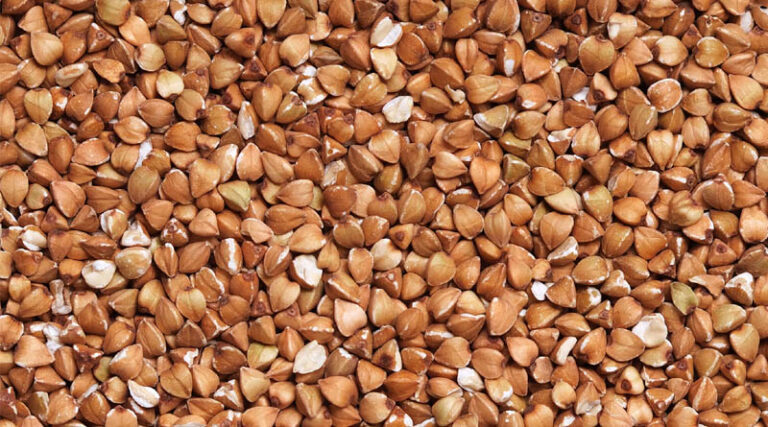
07 October 2026, Perth: An international research consortium spanning 22 institutions across 10 countries has bred a higher-yielding line of Tartary buckwheat by recovering two genes the crop lost thousands of years ago during domestication, using a genome-mapping technique called a pangenome rather than gene editing. The work was led by the Chinese Academy of Agricultural Sciences (CAAS) with Australia’s Murdoch University as a key partner, announced August 12, 2026, and published in the journal Cell.
Tartary buckwheat (Fagopyrum tataricum) is a hardy, short-season pseudocereal grown across the Himalayas, the Tibetan Plateau and parts of China, valued for tolerating cold, poor soils and high altitude better than most staple grains, even though its yields lag well behind domesticated cereals like wheat and rice. Breeders have long suspected that some of the wild crop’s toughness was bred out of it as farmers selected for easier-to-harvest, higher-yielding plants over centuries, without a clear way to find and recover what had been lost.
Mapping what domestication left behind
Conventional crop genomics usually relies on a single reference genome, essentially one plant’s complete genetic blueprint used as the species’ benchmark, which can miss variation present in other populations of the same crop. The researchers instead built what is called a pangenome: a combined genetic map assembled from 16 separate Tartary buckwheat genomes, including wild plants collected from high-altitude Himalayan populations and landraces, meaning traditional, farmer-saved varieties, gathered from around the world. They layered on genetic data from 994 further accessions across 15 countries and catalogued 123,131 structural variants, the term for larger-scale genetic differences such as insertions, deletions or duplicated segments, between the wild and cultivated genomes. That gave the team a map not just of what Tartary buckwheat’s genome looks like today, but of what had changed, and what had quietly disappeared, as the crop was domesticated.
That comparison turned up two genes present in wild, high-altitude buckwheat populations but missing or non-functional in the varieties farmers grow today. One, named FtRNH, helps repair DNA damage caused by ultraviolet-B radiation, a plausible defense for a plant native to thin, high-altitude air where UV exposure is higher. The other, FtPLATZ, carries extra gene copies and a mutation in its promoter, the genetic switch that controls when and how strongly a gene is active, which the researchers linked to larger seed size in the wild plants that carried it.
Using conventional crossing and marker-assisted selection, a breeding method that uses genetic markers as signposts to track and select for specific genes across generations without directly editing DNA, the team stacked both recovered traits into a single candidate breeding line. In subsequent high-altitude field trials, that stacked line showed stronger overall growth, larger seeds and significantly higher yield than a standard commercial buckwheat variety grown alongside it, the researchers reported, suggesting the two genes the crop had lost were working against each other’s usual trade-off between hardiness and productivity.
Because the approach relies on crossing and selection rather than inserting or editing DNA, the resulting buckwheat line would not face the same regulatory classification in many countries as a genetically modified or gene-edited crop, a practical advantage the research team pointed to for getting improved varieties into farmers’ hands without the longer approval timelines those technologies can face. Rajeev Varshney, director of Murdoch University’s Centre for Crop and Food Innovation and a co-corresponding author on the study, summarized the method’s broader logic simply: a pangenome, he said, “captures the whole vocabulary, including the words a crop lost along the way.” The team and its collaborators across the 22 participating institutions see the same lost-gene-recovery approach as applicable well beyond buckwheat, to other climate-stressed or minor crops that have had comparatively little formal breeding investment.
Global Agriculture is an independent international media platform covering agri-business, policy, technology, and sustainability. For editorial collaborations, thought leadership, and strategic communications, write to pr@global-agriculture.com