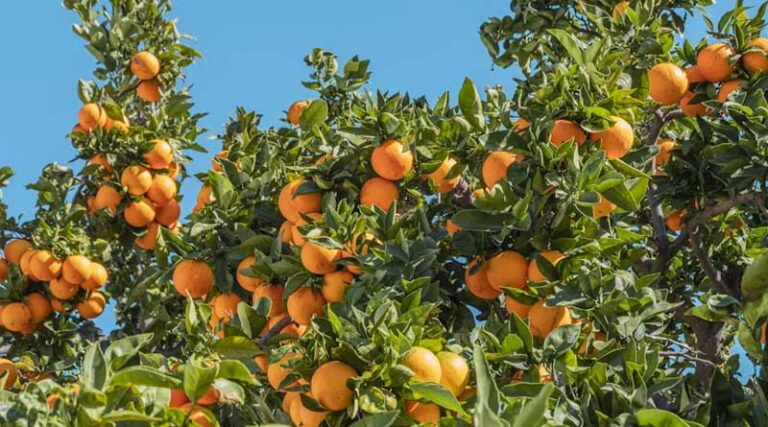
21 September 2026, Florida, United States: Florida citrus growers have ordered more than 300,000 trees of CarriCea T1, a CRISPR gene-edited rootstock bred to resist Huanglongbing, commonly called citrus greening, according to an August 25, 2026 update from the University of Florida’s Institute of Food and Agricultural Sciences (UF/IFAS). The rootstock stems from more than a decade of research by Nian Wang, an endowed biotechnology scholar at UF/IFAS’s Citrus Research and Education Center, and is now being commercialized by Soilcea, a company built around his laboratory’s discoveries.
Huanglongbing, often shortened to HLB, is caused by the bacterium Candidatus Liberibacter asiaticus and spread by a tiny sap-feeding insect called the Asian citrus psyllid. Since the disease was first detected in Florida in 2005, it has devastated the state’s citrus industry, which UF/IFAS says has lost about 95 percent of its production. There is no cure once a tree is infected, so growers have relied on insecticide programs to control the psyllid and on nutritional treatments to keep infected trees producing fruit as long as possible, neither of which stops the disease’s underlying spread.
Three Precise Edits, Not a Foreign Gene
CarriCea T1 works differently from earlier transgenic approaches to HLB resistance, which insert genes from other organisms into the citrus genome. Instead, it carries three targeted CRISPR edits to the tree’s own DNA, disabling two negative regulators of programmed cell death known as ACD2 and Lls1, along with a defense-related protein called PLCP. Ordinarily, when the HLB bacterium infects a tree, it releases effector proteins that suppress the tree’s programmed cell death response, a natural defense mechanism in which infected cells self-destruct to limit a pathogen’s spread. By editing out the genes that let the bacterium switch off this defense, the rootstock allows the tree to mount a stronger response. Bacteria are still present in treated trees, but at substantially lower levels than in untreated controls, according to Soilcea’s published technical materials.
Because the technique edits the citrus plant’s existing genes rather than inserting foreign DNA, the fruit produced is classified in the United States as non-bioengineered under current biotechnology rules, a distinction that has shaped the regulatory path. Field trials of individual gene edits began in June 2023, with the combined three-edit CarriCea T1 line entering trials in June 2025. Company materials cite early results showing reduced disease severity and more vigorous tree growth, along with one specific fruit-quality measurement: Valencia oranges grown on CarriCea T1 rootstock averaged 8.2 degrees Brix, a standard measure of sugar content, compared with 7.0 degrees Brix in untreated control trees.
The rootstock cleared two separate federal reviews earlier in 2026. The Environmental Protection Agency approved it as what regulators call a plant-incorporated pesticide, a category covering pest or disease resistance traits built into a plant’s own genetics, on April 28, 2026, after a public comment period that drew 54 supportive comments and no objections. The US Department of Agriculture’s Animal and Plant Health Inspection Service then determined the rootstock does not require further regulation on June 30, 2026. Soilcea chief executive Yianni Lagos said the product “works with the plant’s own biology to naturally protect against HLB,” according to Citrus Industry Magazine’s coverage of the UF/IFAS update.
A Long Road From Lab to Grove
By late August 2026, Soilcea reported that Florida growers had placed orders for more than 300,000 CarriCea T1 trees, with roughly 200,000 already moving through commercial nurseries toward planting. That volume, while still a small fraction of the several million citrus trees Florida growers plant in a typical year, represents one of the more concrete commercial deployments yet of a CRISPR-edited fruit tree rootstock in the United States. A second candidate rootstock from the same research program, referred to as Benicia D1, is reportedly in the pipeline behind CarriCea T1, though the company has not disclosed a timeline for it.
Huanglongbing and its psyllid vector have also been confirmed in citrus-growing regions of Asia, including parts of India, where the disease is often called citrus greening or, in some regions, dieback. Indian citrus and nursery businesses, along with agri-input companies supplying the sector, have a direct stake in how gene-edited, non-transgenic rootstocks like CarriCea T1 perform commercially and how regulators in the United States treat them, since India’s own biotechnology regulators have been working through comparable questions about how to classify gene-edited crops that contain no foreign DNA. A rootstock-based approach, grafted onto existing citrus varieties rather than replacing them outright, is also a model growers in India’s citrus belts, including Maharashtra, Madhya Pradesh and the Northeast, could eventually draw on if resistant rootstock lines suited to Indian mandarin and sweet orange varieties are developed, given that HLB has already forced replanting programs in several of those states.
Global Agriculture is an independent international media platform covering agri-business, policy, technology, and sustainability. For editorial collaborations, thought leadership, and strategic communications, write to pr@global-agriculture.com