25 September 2026, Florida, USA: Zane Grabau, an associate professor of nematology in the University of Florida’s Institute of Food and Agricultural Sciences (UF/IFAS) entomology and nematology department, published results on August 24, 2026 from two seasons of replicated field trials comparing a lineup of conventional and biological nematicides for controlling root-knot nematode in commercial carrot production, one of the first university head-to-head comparisons of several newer non-fumigant products against the industry’s longstanding fumigant standard.
Root-knot nematodes, microscopic worm-like pests in the genus Meloidogyne that live in soil and attack plant roots, are a particular problem for root crops like carrot because the galls, or knots, they cause disfigure the harvested root itself. That makes nematode damage as much a quality and marketability problem as a yield problem, since even lightly galled carrots are often unsellable regardless of how large the crop’s total tonnage is.
Testing five options against the fumigation standard
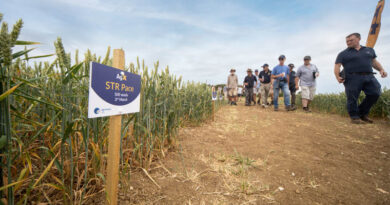
Grabau’s team ran replicated small-plot field trials at two UF research stations in north-central Florida, one near Live Oak and one near Citra, over the fall 2025 to winter 2026 carrot growing season, under naturally occurring and in places severe nematode pressure. The trial compared Telone II, a pre-plant soil fumigant that has long served as the benchmark treatment for nematode control in Florida vegetable production, against three newer non-fumigant conventional nematicides applied to the soil or through drip irrigation: Salibro (active ingredient fluazaindolizine, from Corteva), NIMITZ (fluensulfone, from ADAMA) and Velum (fluopyram, from Bayer), along with one unnamed experimental compound and two unnamed biological nematicides formulated from beneficial microbes or plant-derived compounds rather than synthetic chemistry.
Fumigation with Telone II delivered the most consistent nematode control and the highest yields at both locations, which helps explain why it remains the benchmark treatment despite requiring specialized application equipment and the broader environmental and regulatory scrutiny that soil fumigants generally attract. At the Live Oak site, where nematode pressure was comparatively moderate, Salibro and NIMITZ each performed comparably to fumigation, suggesting growers on less heavily infested fields may be able to achieve similar protection without fumigating. At Citra, where pressure was more severe, every non-fumigant conventional product underperformed fumigation, underscoring that product choice needs to be matched to a field’s actual pest pressure history rather than applied as a one-size-fits-all program. Both biological nematicides tested showed no measurable efficacy under the severe pressure conditions present in the trials, a result growers should weigh carefully before substituting a biological product for conventional chemistry on fields with a known history of heavy nematode infestation.
Grabau’s own summary of the work, published through the department’s extension blog, concluded that effective options exist for managing root-knot nematode in carrot even under extreme pressure, but that growers need to select products based on their own field’s conditions rather than assuming every registered nematicide performs identically across locations and pressure levels.
Global Agriculture is an independent international media platform covering agri-business, policy, technology, and sustainability. For editorial collaborations, thought leadership, and strategic communications, write to pr@global-agriculture.com