CGIAR Researchers Participate in Global Counterterrorism Forum (GCTF) 26th Coordinating Committee Meeting
29 July 2026, US: Climate change can affect peace and security, but the relationship is rarely direct or predictable. Climate shocks may increase competition, worsen existing grievances, and encourage harmful coping strategies. At the same time, conflict and weak institutions can make communities more vulnerable to future climate impacts. How these risks unfold depends heavily on local conditions.
One area receiving growing attention is the relationship between climate change and violent extremism (VE). Climate-related shocks do not directly cause radicalisation or recruitment. However, they can intensify established drivers of VE by worsening inequality, weakening public services, disrupting livelihoods, and deepening mistrust between communities and the State. Climate responses that are not conflict-sensitive may also reinforce these pressures.
VE groups can exploit such conditions. After climate-related shocks, they may take advantage of weakened State presence, provide services, control resources, or present themselves as alternative authorities in vulnerable communities. The United Nations has increasingly recognised these risks, including through discussions on climate change and international peace and security and UN Security Council Resolution 2349 on the Lake Chad Basin.
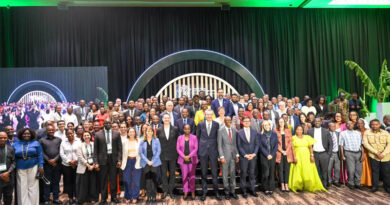
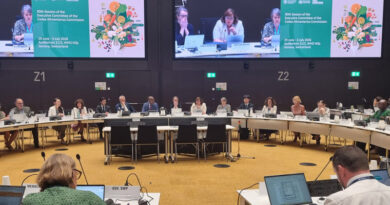
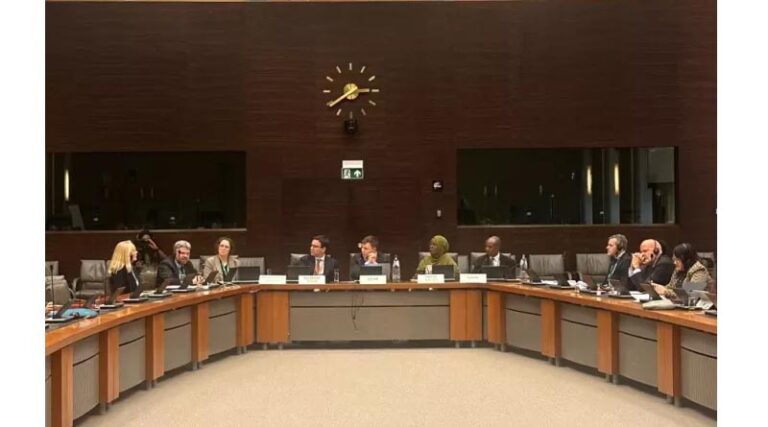
CGIAR contributed to this still relatively nascent field by participating in a series of regional dialogues organised by the GCTF in support of the development of the Nairobi Toolkit on Addressing the Nexus between Climate Change and Violent Extremism, as well as the Toolkit’s launch at the GCTF’s 26th Coordinating Committee meeting in June 2026, in Brussels.
Participating as an expert contributor, a member of the Alliance of Bioversity-CIAT’s Climate Security team provided evidence and framing in support of the Toolkit’s launch, highlighting several key takeaways. Firstly, in recognition of the intrinsic complexity of the nexus of climate change and VE conducive to terrorism, the nature of the stakeholder coalitions required to address the nexus is necessarily broad. Climate-related VE risks involve the often unpredictable interaction of biophysical, socio-economic, psychosocial, cultural, and other variables, thereby demanding coordination amongst actors with a diverse set of mandates to reduce vulnerability to recruitment and radicalisation in the context of the climate crisis. Within these partnership networks, the importance of boundary spanning entities – such as the Alliance’s Climate Security team – increases due to the capacity of such teams to combine biophysical, socio-economic, and conflict-related risk monitoring into coherent compound risk frameworks.
Secondly, to reflect the nexus’s localised nature, the importance of localised and where possible participatory evidence generation was highlighted. Particularly in contexts characterized by conflict, insecurity, and inequality – or when dealing with topics that are perhaps contested or of a highly interconnected nature within a given society or community – it is essential to recognize that knowledge and understanding is co-constructed. Perspectives on complex risk landscapes likely differ depending on who you are, how you as an individual relate to your broader social environment, and the structural obstacles you may face as part of this.
The Climate Security team’s Community Voices on Climate, Peace, and Security series, for instance, deployed a social learning approach to data collection and analysis that enabled participating communities analyze their reality, become aware of their own and others conception of such reality, and thereby jointly evolve a new perception through critical reflection. Deploying these kinds of social learning approaches in researching the relationship between climate change and drivers of VE conductive to terrorism can lead to the conscious transformations of cognitive perceptions, practices, and societal relations, and spark collective explorations of the broader normative and cultural contexts that may be acting as an incentive for VE.
Lastly, CGIAR research informed reflections around a set of concrete policy and research actions that could be pursued in the short-term to strengthen preventative and recovery-oriented responses to the nexus, including recommendations to develop a conceptual exchange between climate change and VE conducive to terrorism and several key topics within climate action. These include – firstly – the Just Transition, where there exists an urgent need to focus on the potential, implications of the energy transition in fragile settings, particularly for economies and governments that are inherently reliant upon hydrocarbon-based income generation models, derive much of their social legitimacy and stability from the fiscal benefits this affords, and have a history of VE terrorist group conflict dynamics. Secondly, foundational theory building might be explored in relation to Anticipatory Action, within which integrating preventing and countering violent extremism (PCVE)-specific indicators into anticipatory forecast models may diminish the risk of climate shocks contributing to the further proliferation of VE.
Going forward, it is inherently necessary for organizations with food, land, and water system (FLWS)-related mandates to develop a greater awareness of the interface between climate change and VE conducive to terrorism. Despite not possessing a security or humanitarian mandate, actors like CGIAR nonetheless have an important contribution to make to the field’s advancement by providing the approaches and tools necessary to unpack compound risk dynamics, as well as by developing scalable FLWS solutions to improve the resilience and sustainability of such systems in fragile and conflict-affected areas. CGIAR therefore stands ready to contribute to the evolution of this field of practice with state-of-the-art scientific evidence and innovations.
Also Read: Bayer Launches New Insecticide Trance for Cotton in India
Global Agriculture is an independent international media platform covering agri-business, policy, technology, and sustainability. For editorial collaborations, thought leadership, and strategic communications, write to pr@global-agriculture.com