EU Deforestation Law Puts Brazil’s Soymeal Trade at Risk, Argentina Sees an Opening
30 October 2026, Mato Grosso, Brazil: Argentina’s grain trade is preparing to capture European soymeal business that European buyers worry Brazil may no longer be able to supply, as a European Union law requiring deforestation-free sourcing takes effect on December 30. The regulation, known as the EU Deforestation Regulation (EUDR), will require importers to prove that soy and other covered commodities are not linked to land cleared after 2020, with penalties for companies that cannot demonstrate compliance.
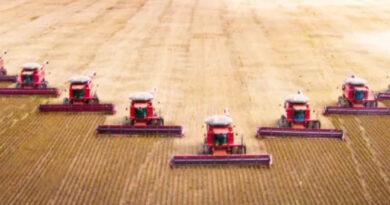
Brazil supplies roughly half of the European Union’s soymeal imports and shipped a record 23.3 million metric tons in 2025, according to Reuters reporting published October 28. But FEFAC, the European compound feed manufacturers’ federation, has warned that up to 4 million tons of that trade, around 17 percent of Brazil’s exports, could be shut out once the rules bite, because much of Brazil’s soy growing land in the central and northeastern states sits on cleared ecosystems and far from export ports.
Argentina, the world’s largest soymeal exporter at roughly 27 million tons shipped last year, about a quarter of it to Southeast Asia, is positioning itself as the more reliable alternative. Argentine soy farms lie within about 350 kilometers of the Rosario river port hub, compared with more than 2,000 kilometers for farms in Brazil’s central growing state of Mato Grosso. FEFAC currently rates Argentina and Paraguay as “low risk” for deforestation exposure, against a “medium” rating for Brazil, and projects that nearly all of Argentina’s soymeal crop in the first half of 2027 will meet the EU’s standards.
Rosario based grains broker Max Agro’s research manager, Dante Romano, said Argentina stands to benefit if Brazilian shipments fall short, while Brazil could end up redirecting more of its soy to other markets instead of Europe. Gustavo Idigoras, president of Argentina’s CIARA-CEC grains exporters and crushers chamber, said the country’s VISEC traceability system is fully operational and ready to meet the new requirements, telling Reuters simply that “Argentina is ready.”
Brazil pushes back on the EU’s timing
Brazilian growers argue the rule unfairly singles them out. Mauricio Buffon, president of the soy growers’ association Aprosoja, said restoration work is already under way in parts of the country and argued that “Brazil’s environmental problems are much smaller than the size of our agriculture.” Argentine industry estimates suggest Brazil could still lose 5 million to 6 million tons of EU bound exports once enforcement begins, a volume that would have to find buyers elsewhere or be absorbed domestically.
The timing adds a political dimension. The EUDR takes effect only days before Luiz Inacio Lula da Silva begins a new term as Brazil’s president, and it follows a provisional EU-Mercosur free trade agreement reached in May that was meant to ease trade frictions between the two blocs, not add new ones. Paraguay, the other major South American soy exporter, says it is also well placed to gain. Its crushing industry group CAPPRO points out that the country’s main growing region, Region Oriental, has banned new agricultural deforestation since 2004, giving it a structural head start on compliance.
A scramble for paperwork, not just supply
For companies on the ground, the practical effect is a scramble to map supply chains down to the farm plot before the December 30 deadline, since EU buyers will increasingly demand geolocation data and chain of custody documentation rather than taking a supplier’s word for it. Traders who cannot provide that paperwork risk losing contracts even if their soy was never grown on recently cleared land.
Also Read: India Tops $4.39 Billion Emerging-Market AgTech Funding
Global Agriculture is an independent international media platform covering agri-business, policy, technology, and sustainability. For editorial collaborations, thought leadership, and strategic communications, write to pr@global-agriculture.com