India’s Pesticide Industry Defends Three Export Molecules at Rotterdam Convention Review
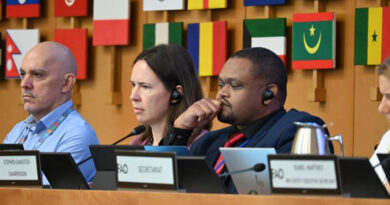
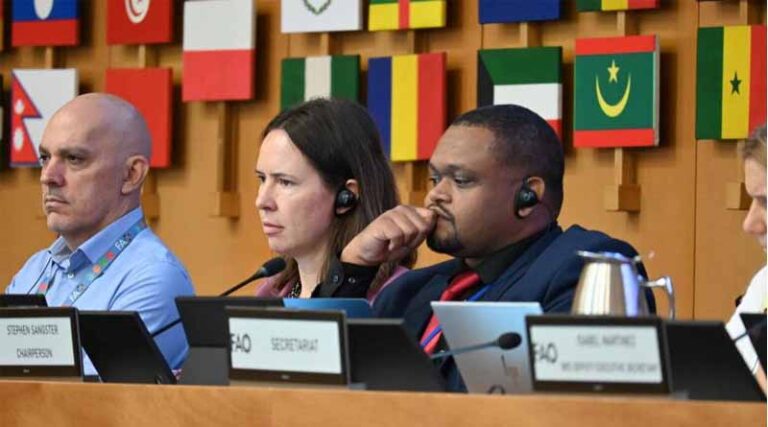
23 October 2026, Rome: India’s Pesticide Manufacturers and Formulators Association (PMFAI) successfully pushed back, at least for now, against international moves that could have subjected three widely exported Indian-made pesticide molecules, profenofos, phenthoate and quinalphos, to additional prior-consent trade controls. The outcome came out of the 22nd meeting of the Rotterdam Convention’s Chemical Review Committee (CRC-22), held in Rome from September 15 to 18, 2026.
The Rotterdam Convention is a multilateral treaty that governs international trade in hazardous chemicals and pesticides through a Prior Informed Consent (PIC) procedure. When a chemical is added to the treaty’s Annex III, exporting countries must obtain explicit consent from importing countries before shipments can proceed, a step that typically adds paperwork, cost and delay to cross-border agrochemical trade and can prompt some importing markets to restrict or phase out use altogether. India is a major global exporter of technical-grade pesticides, including all three molecules reviewed at CRC-22, making the outcome of this review directly relevant to the country’s agrochemical export trade.
Ahead of the meeting, PMFAI formed expert task forces to prepare technical defenses for each of the three molecules and submitted reports to Indian government ministries and to the Rotterdam Convention Secretariat. A PMFAI delegation led by Dr. K.N. Singh of Gharda Chemicals Ltd and Dr. Samir Dave of AIMCO Pesticides Ltd presented the industry’s case in Rome, coordinating with India’s Ministry of Environment, Forest and Climate Change, the Department of Chemicals and Petrochemicals, and the Department of Agriculture and Farmers Welfare.
The committee’s decisions varied by molecule. For profenofos, an insecticide used widely on cotton, the committee deferred consideration of a listing notification submitted by Malaysia; the treaty’s Bureau will decide whether to place the molecule back on the agenda at a future CRC meeting, meaning the question is postponed rather than resolved. For quinalphos and phenthoate, both organophosphate insecticides, the committee found that the notifications supporting their listing did not meet the Convention’s technical criteria at this stage, effectively keeping both molecules off Annex III for now.
PMFAI characterized the result as a significant win for the Indian pesticide manufacturing sector, though the profenofos outcome leaves that molecule’s long-term export status unresolved rather than settled. Indian agrochemical companies, along with trade bodies such as the Crop Care Federation of India, have previously warned that losing unrestricted export access to key markets for actives like these would hurt the country’s position as a low-cost global supplier of technical-grade pesticides.
This matters to global agribusiness readers because Rotterdam Convention listing decisions directly affect the cost and complexity of cross-border agrochemical trade, particularly for generic, off-patent actives that are manufactured at scale in India and exported to Africa, Latin America and parts of Asia.
A PIC listing does not ban a chemical outright, but it gives importing countries a formal mechanism to refuse shipments, which can push buyers toward alternative suppliers or substitute chemistries and can affect formulation costs for downstream crop protection companies that rely on these actives. Because profenofos remains under deferred review, companies sourcing or exporting it should expect the issue to resurface at a future CRC meeting, and multinational formulators with supply chains that touch Indian-manufactured technical material may want to track the Bureau’s next scheduling decision.
Also Read: Super Typhoon Champi, 2026’s Strongest Storm, Bears Down on Taiwan and East China
Global Agriculture is an independent international media platform covering agri-business, policy, technology, and sustainability. For editorial collaborations, thought leadership, and strategic communications, write to pr@global-agriculture.com